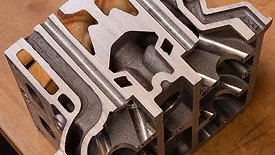
High-value metal components produced through machining, casting, welding, and fabrication often contain internal features that cannot be evaluated by direct line of sight.
Across industries that depend on advanced composite components, the common feature has been that meaningful quality inspection happens at the end of the production process.
Keri Ginn is an NDT ASNT Level Three as well as a senior quality manager at AAR Government Services. She's an expert in NDT quality management, supplier audits, and business analytics and she's recently written an article for Quality about recruiting the next generation of NDT professionals.
Nondestructive testing has never been more essential to public safety, infrastructure reliability, and industrial quality, yet the profession faces a mounting workforce challenge.
Today’s planning tools enhance the ability to tailor inspections to asset-specific conditions, but they do not eliminate the necessity of engineering judgement.
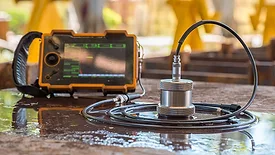
Modern nondestructive testing (NDT) is undergoing measurable change across multiple stages of the inspection cycle, to include planning, data acquisition, analysis, and personnel training and qualification.
In assessing how digital learning might be introduced responsibly, BINDT is also informed by regulatory guidance from adjacent safety-critical sectors.
The British Institute of Non-Destructive Testing (BINDT) Burns Supper Seminar, held in January, provided a timely forum for industry discussion on professional development, competence assurance, and the evolving demands placed on technical training systems.
In a rapidly changing world filled with technology, advanced science, and self-healing materials, nondestructive testing (NDT) stands at the forefront by offering creative solutions that keep the world safe.
Aircraft lap joints can be fast-screened for surface deformation caused by hidden corrosion using visual inspection or an automated machine vision system.
 RSS
RSS