NDT
Modern Nondestructive Testing (NDT)
Today’s planning tools enhance the ability to tailor inspections to asset-specific conditions, but they do not eliminate the necessity of engineering judgement.
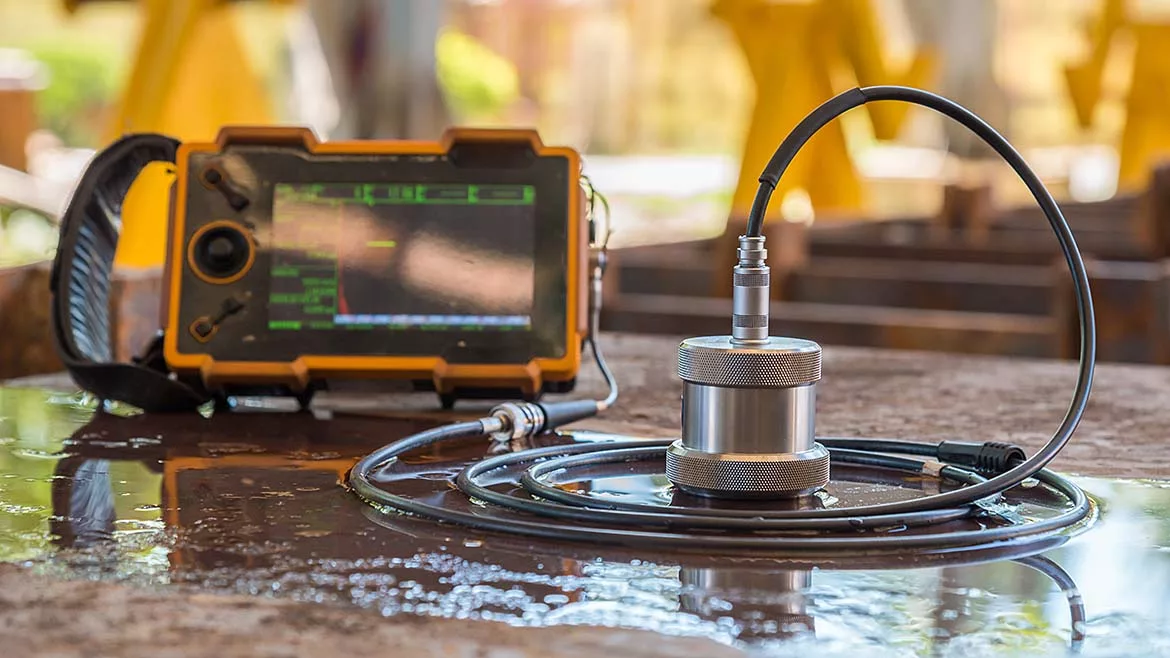
Modern nondestructive testing (NDT) is undergoing measurable change across multiple stages of the inspection cycle, to include planning, data acquisition, analysis, and personnel training and qualification. While advances in inspection equipment (hardware and software) are often highlighted, the broader shift is systematic, not just purely technological. Inspection planning draws heavily on risk-based methodologies and any operational data available, more and more.
Data acquisition can now generate larger, more complex datasets. Analytical tools help with data interpretation and the evaluation of trends. While these advances are moving at one pace, personnel certification and training frameworks are adapting often at an uneven pace to those advances. In this article, as we examine these changes, we will emphasize technical implications, limitations, and their impact on inspection reliability rather than specific technologies or commercial solutions.
Inspection Planning: Consistent Objectives and Evolving Inputs
The availability of historical and operational data, and structured risk-based methodologies are increasingly used to inform inspection planning in modern NDT environments. Risk-based Inspection (RBI) frameworks allow inspection scope, technique selection, and implementation to align with assessed likelihood and consequence of failure, when properly implemented. Concurrently, probability of detection (POD) data, if available, has begun to also influence planning decisions by providing quantitative insight into the capability of methods rather than solely relying on nominal technique classification.
Advances in data modeling and management have expanded the use of degradation modeling and digital representations of assets. These tools can support inspection planning by integrating damage mechanisms, inspection history, and present operating conditions to identify where there is elevated uncertainty or risk. These approaches, when applied appropriately, have the potential to improve inspection effectiveness by prioritizing coverage where it is absolutely the most impactful. Inevitably, with more sophistication comes potential sources of uncertainty and additional dependencies.
POD data is often limited to specific inspection conditions, flaw types and geometries that may not fully represent field variability. Additionally, RBI outcomes are susceptible to assumptions regarding consequence modeling, damage rates, and failure modes. An overreliance on modeling outputs without proper validation can result in unintended inspection gaps or misplaced confidence. Despite these changes, the fundamental inspection planning objectives remain the same: to support fit-for-service inspections, manage risk and provide reliable information for integrity decision-making. It is true that modern planning tools enhance the ability to tailor inspections to asset-specific conditions, but they absolutely do not eliminate the necessity of engineering judgement, periodic reassessment as operating conditions and asset knowledge change, and conservative assumptions where data is limited.
Data Acquisition: Increased Complexity and Expanded Capability
In NDT, data acquisition has evolved primarily through advances in digital integration, automation, and sensor capability. Across various NDT methods, today’s modern systems provide improved repeatability and enable more complete spatial coverage when compared to traditional manual processes by acquiring higher-density datasets. Automated scanning systems have expanded access to areas that were difficult or too dangerous to inspect previously. This is especially true in cases where remotely operated and/or robotic platforms are deployed.
Improved digitization and synchronization facilitate the simultaneous collection of multiple data streams during a single inspection. This could look like the primary inspection signal coupled with environmental parameters, positional encoding, and inspection-specific system settings. With proper application and management, traceability, repeatability, and post-acquisition analysis could be supported with these additional data elements, resulting in a more comprehensive understanding of inspection conditions and results.
New operational and technical challenges come with expanded capability. A greater demand for storage, transfer and configuration control arises with increased data volumes. This really comes into play with repeated inspections over long asset lifecycles. Rigorous controls are imperative for variability in acquisition parameters, hardware configurations, and software versions to minimize or eliminate the complication of data comparability over time.
Automation primarily reduces sources of operator variability; therefore, acquisition quality remains sensitive to boundary condition assumptions, setup, and calibration. Effective data acquisition lays the foundation for subsequent analysis and interpretation. It is important to note that improved inspection outcomes are not inherently guaranteed by the ability to acquire more data. Signal-to-noise considerations, alignment between acquisition strategy and damage mechanisms, as well as data relevance all remain critical factors.
Analysis and Interpretation: Retained Accountability and Assisted Evaluation
Increases in data volume, complexity and computational ability are driving a focal point of change in modern NDT that is represented by analysis and interpretation. Analytical tools are increasingly used to support data visualization, feature extraction, and signal processing across multiple inspection methods. Engineers and inspectors are using these tools to improve consistency for better comparison across inspections, which leads to the identification of trends over time.
Such tasks as indication detection and sizing assistance can be fully automated or semi-automated with techniques like rule-based algorithms and data-driven models. These tools can reduce some sources of subjectivity and support more repeatable evaluations, specifically in long-term or high-volume monitoring applications, with appropriate development and validation. Enhanced visualization can help put inspection results into perspective relative to geometry, operating conditions, or historical data.
Along with the application of analytical tool advancements comes new technical and organizational considerations as well. The embodied characteristics, traceability and quality of underlying data collectively determine algorithm performance. If models are trained on limited and/or idealized datasets, it is not likely that they will reliably generalize to field conditions in cases where damage mechanisms, acquisition parameters and geometries differ from those assumed during their development. The lack of transparency in certain analytical processes can also complicate regulatory acceptance, validation, and auditing.
The intended use of analytical tools is to provide additional information to be used in making judgement, not replace it altogether. This information must be examined within the broader context of asset-specific risks, inspection objectives, and method limitations. Effective and efficient use of assisted analysis requires technical proficiency with the actual tools as well as a clear understanding of each tool’s uncertainties, their assumptions, and appropriate boundaries of application. As the cognitive load shifts from manual data collection to complex digital interpretation, the definition of ‘competence’ must also evolve.
Certification and Training: Adapting to Complexity
As NDT equipment, methodologies and technologies evolve, new implications for personnel competency emerge. The automated analysis, integrated digital workflows and increased data density that comes with modern inspection systems require inspectors and engineers to have data literacy, an understanding of equipment limitations and method-specific knowledge. In order for training programs to remain in-step with inspection planning, acquisition, and analysis as they become more interconnected, they must address multidisciplinary skills rather than isolated techniques. Current certification structures have slowly adapted to the complexity of modernized NDT with an emphasis on method-specific proficiency and periodic reassessment.
Much variability persists in how organizations implement and enforce certification and qualification standards. We must keep in mind that competence demonstrated in one operational context does not automatically translate to another, especially where new analytical tools and technologies are deployed. Therefore, regulators and employers are faced with the challenge of ensuring formal certification and qualification align with practical capability.
Effective training strategies shall combine on-the-job experience, scenario-based assessment, and formal certification. This unified approach supports consistent inspection reliability and informed decision-making by putting an emphasis on the reciprocity between technical knowledge, data interpretation, and judgment calls.
Modern NDT is a direct reflection of integrated evolution across inspection planning, data acquisition and personnel certification and qualification. While inspection capabilities are enhanced by technological and methodological advances, effective implementation is still heavily dependent on sound engineering judgment, validated processes, and well-trained, skilled personnel. In this transition, our industry’s success will not be measured by the refinement of its sensors, but by the precision of its validation frameworks. In order to ensure that ‘modern NDT’ remains synonymous with ‘reliable NDT,’ employers and regulators must prioritize the synchronization of human expertise with digital capability.
Looking for a reprint of this article?
From high-res PDFs to custom plaques, order your copy today!