Quality Magazine logo
search
cart
facebook twitter linkedin youtube
  • Sign In
  • Create Account
  • Sign Out
  • My Account
Quality Magazine logo
  • NEWS
  • PRODUCTS
    • FEATURED PRODUCTS
    • SUBMIT YOUR PRODUCT
  • CHANNELS
    • AUTOMATION
    • MANAGEMENT
    • MEASUREMENT
    • NDT
    • QUALITY 101
    • SOFTWARE
    • TEST & INSPECTION
    • VISION & SENSORS
  • MARKETS
    • AEROSPACE
    • AUTOMOTIVE
    • ENERGY
    • GREEN MANUFACTURING
    • MEDICAL
  • MEDIA
    • A WORD ON QUALITY PUZZLE
    • EBOOKS
    • PODCASTS
    • VIDEOS
    • WEBINARS
  • EVENTS
    • EVENT CALENDAR
    • IMTS
  • DIRECTORIES
    • BUYERS GUIDE >
      • Supplier Insights
    • NDT SOURCEBOOK
    • VISION & SENSORS
    • TAKE A TOUR
  • INFOCENTERS
    • Digital Quality Management Systems
    • NEXT GENERATION SPC & QUALITY ANALYTICS
  • AWARDS
    • ROOKIE OF THE YEAR
    • PLANT OF THE YEAR
    • PROFESSIONAL OF THE YEAR
  • MORE
    • Expert Columns
    • NEWSLETTERS
    • QUALITY STORE
    • INDUSTRY LINKS
    • SPONSOR INSIGHTS
  • EMAG
    • eMAGAZINE
    • ARCHIVES
    • CONTACT
    • ADVERTISE
  • SIGN UP!

Quality Measurement: Select the Right Video System

By Michelle Bangert
April 1, 2007

Video measurement provides noncontact dimensional measurements with speed, accuracy, and above all, flexibility. Whatever type of system is used, it must match the application. These systems help ensure product quality, so getting the best system is crucial.

But how can operators ensure video will work for them? Like any system, video measurement has to be applied correctly, says Mark Arenal, president of Kinemetric Engineering LLC (Laguna Hills, CA). Certain applications work well with video or vision, while others are better suited to a coordinate measuring machine-style application. In general, with features that are mainly microscopic, or with flat parts where operators cannot physically touch an edge, such as 2-D, it is best to use a vision system. Vision is strong in these areas, and yields faster throughput than tactile measuring systems. When looking at a 2-D part, such as a thin gasket, video systems can grab many features in the field of view. Speed is an advantage, particularly with microscopic features, because the cameras can quickly capture all of the detail.

Arenal says video measurement may be the answer if the application requires the ability to resolve very small features. “Video lends itself very nicely to parts that are soft or pliable because you can’t always touch them,” Arenal says.


This OGP SmartScope Quest 650 multisensor measurement system has dual, heavy-duty rotary tables to accommodate complex parts such as the turbine blade shown, measured with both video and touch-probe sensors. Source: OGP

Video measurement can be used for consumer products, aerospace, automotive, medical, plastics, metals and rubber. It can be used for parts that have a dimensional drawing, and it can measure edges anywhere on a part, using a variety of lighting techniques, says Steve Flynn, president of Optical Gaging Products (OGP, Rochester, NY).

An advantage of some video measurement systems is the ability to use multiple sensors, such as a touch probe or laser, on a single machine. A multisensor video machine can measure hundreds of data points, while a touch probe can reach areas not accessible with video. Also, a laser can scan surface contours. Video is fast and capable, and when other sensors are used, there are few dimensions that cannot be measured.
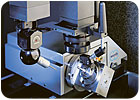


Werth VideoCheck IP is a multisensor coordinate measuring machine with two rams and one CNC rotary axis. Source: Werth

Another advantage, says Jeff Bibee, vice president of sales and marketing at Werth Inc. (Old Saybrook, CT), is that optical measurement systems has a distinct advantage over tactile measurement systems. “Anything that you can measure optically, you can measure faster or more accurately,” Bibee says.

Often application-specific, optical systems can help filter out irregularities. Manufacturers may want video measurement because parts were rejected or because they were unable to measure certain parts with their current equipment.

Sometimes optical measurement is not enough, such as when measuring the taper or squareness of a hole, and a probe is needed, but multisensor systems can take care of that, Bibee says.

With optical measurement, a common fallacy is that people think color is good, Bibee says. The system reduces it to grayscale value. “Vision measurement should be made in black and white. Color adds nothing to accuracy,” Bibee says. “It’s a lot sexier but it doesn’t help you measure accurately.”


Selecting a System

Whether vision is incorporated into shop-floor operations depends on the shop and the staff. Some companies have relied on vision for many years and have it well integrated into their shop, while others have standalone units. However it is organized, it is important to have a setup that operators can use effectively.

“It’s all about applying the product,” Arenal says. “Getting a machine in is one thing, but properly applying it is another.” Many times manufacturers do not know exactly what they need-they just want the correct system for their application, without overspending or buying unnecessary equipment.

Several things drive purchases: budget, staff capability and application. “Sometimes somebody will buy just on price, and that’s a mistake,” Arenal says. Price may obscure other key factors in selecting a system, and the cheaper system may not deliver the needed efficiency or throughput.

Sometimes manufacturers will purchase a manual-type machine instead of a motor-driven one that can be programmed and run automatically; the motor-driven machine may cost more at the start but save money over time.

On the other hand, a more sophisticated machine may seem too complicated, and a cheaper, basic machine would suffice. Therefore, Arenal says the role of sales engineers is important. They can determine what type of system will work best for the application. The sale is not the end of the deal, Arenal says, and the company should help the customers use the technology.

Greg Hollows, vision integration partners coordinator at Edmund Optics (Barrington, NJ), has specialized in video measurement for eight years and has some pointers on selecting a video measurement system. He suggests that customers make two columns: needs and wants.

Hollows compares this process to car shopping: “The customer may want a BMW SUV, but they only need something that runs reliably.” For example, the operator needs to measure a part to a certain tolerance or accuracy, but he may want to measure five parts at a time. There should not be a gray area between the columns, Hollows says, and customers should not let the wants list cloud their judgment.

Then after manufacturers decide to implement vision into their system, they should consider location and space restrictions. System location is important in metrology and inline quality inspection, so operators should examine where it will go and what it will do. Manufacturers can have the machines brought to their facilities, so they can see benefits of the technology right on their shop floor. This allows them to easily find out if the technology fits their application.

Finally, customers should consider the budget and determine how much money they have to spend. Operators should consider if machine vision is a customer requirement, or if it can reduce costs for their customers.

If manufacturers have done a thorough assessment of their needs, a vision integrator can provide a quick budget number, Hollows says, but before selecting a system provider, manufacturers should pay attention to who has the better support and knowledge. Customers should be sure to get various quotes on a package, and ask the reasons for the price. Then they should take all that information, stack it up, make a decision against it, he says.

Also listen to the questions from the sellers about the application. Hollows says manufacturers should look for experts; if companies are slightly more expensive, this may indicate a strong engineering staff.

Customers should ask why they need this and how to make it work. Operators should ask about long-term guarantees and the support level after the purchase. Getting a system up and running is one thing, but ensuring that the production line is running at 3 a.m. is another, Hollows says.

After a company has selected a video measurement system, they should get a detailed proposal. It is important to state expectations up-front to prevent the list from getting longer and more complicated, which can lead to a difficult application.


Selecting a System

• Make two columns: needs and wants.

• Consider the location and space restrictions for the video measurement system.

• Determine how much money is available for the project.

• Listen to the questions from the sellers about the application. Customers should ask why they need this and how to make it work.

• Finally, get a detailed proposal.


The OGP SmartScope Quest 250 benchtop multisensor measurement system shows the white LED SmartRing light for video measurement and a star-touch probe. Source: OGP

Choose Wisely

When choosing a system, manufacturers should be sure that the machine performance specifications suit their application, Flynn says. Most customers come to OGP with a specific application, part in hand, he says, and they want the fastest, most efficient way to measure the part accurately. Some customers want to do batch sampling, while others do 100% inspection. Some measure lots of the same part, while others measure a variety of different parts. This is why the flexibility of video measurement is a key selling point. Choosing a system designed for flexibility allows customers to dictate their needs and the system to meet those needs.

Video measurement technology is widely accepted, though many people have not stayed current with the latest advances, sensors and software. For those not up-to-date, they may not be aware of the greater measurement capabilities and larger work envelopes that accommodate large parts. “Back in the early 1980s, if you had a large, prismatic part, you couldn’t measure it with video,” Flynn says. “Now, because of multisensor technology, you can.”

While technology has dramatically improved, measurement basics have not. “Sound metrology is always important,” Arenal says. “You can’t make up for poor metrology and mechanical platforms.” Q

For more information on the companies mentioned in this article, visit their Web sites:

Edmund Optics Inc., www.edmundoptics.com

Kinemetric Engineering, www.kinemetric.com

OGP, www.ogpnet.com

Werth Inc., www.werthinc.com


Tech Tips

• Video measurement provides noncontact dimensional measurements with speed, accuracy and flexibility.

• Video measurement can be used with consumer products, aerospace, automotive, medical, plastics, metals and rubber.

• Buy the correct system for the application, without overspending or buying unnecessary features.

Share This Story

Looking for a reprint of this article?
From high-res PDFs to custom plaques, order your copy today!

Qm0520 clmn editnoteguest author michellebangert 0520

Michelle Bangert is the managing editor of Quality Magazine. She can be reached at [email protected]

Recommended Content

JOIN TODAY
to unlock your recommendations.

Already have an account? Sign In

  • 2024 Quality Rookie of the Year Justin Wise 1440x750px banner with "Quality Rookie of the Year" logo inset

    Meet the 2024 Quality Rookie of the Year: Justin Wise

    Justin Wise is an exceptional individual who has been...
    Aerospace
    By: Michelle Bangert
  • Man with umbrella and coat stands outside while it rains at night looking at a building.

    Nondestructive Testing: Is there an ethics problem?

    I was a whistleblower who exposed fraudulent activities...
    NDT
    By: Dale Norwood
  • Unraveling Deflategate: Football stadium with closeup of football on field

    Unraveling the Tom Brady Deflategate

    The Deflategate scandal erupted following the 2014 AFC...
    Measurement
    By: Greg Cenker and Henry Zumbrun
Manage My Account
  • eMagazine Subscriptions
  • Newsletters
  • Online Registration
  • Subscription Customer Service
  • Manage My Preferences

More Videos

Sponsored Content

Sponsored Content is a special paid section where industry companies provide high quality, objective, non-commercial content around topics of interest to the Quality audience. All Sponsored Content is supplied by the advertising company and any opinions expressed in this article are those of the author and not necessarily reflect the views of Quality or its parent company, BNP Media. Interested in participating in our Sponsored Content section? Contact your local rep!

close
  • Key Takeaways for Quality Leaders
    Sponsored byComplianceQuest

    Key Takeaways for Quality Leaders from the 2026 Gartner Magic Quadrant™ for QMS

  • This image shows a person seated next to a Bobcat T66 compact track loader.
    Sponsored byPolyWorks by InnovMetric

    Supercharging Digital Gauging at Bobcat North America

  • Dorsey Calibration Lab photo by Tom LaBarbera Picture this Studios
    Sponsored byDorsey Metrology International

    Ensuring Product Quality in a Competitive Manufacturing Landscape

Popular Stories

iStock-1352825159-jpg.jpg

U.S. Should Substantially Boost Support for Manufacturing USA Program, Issue National Industrial Manufacturing Strategy, Says New Report

Dorsey Calibration Lab photo by Tom LaBarbera Picture this Studios

Ensuring Product Quality in a Competitive Manufacturing Landscape

Visions Sensors Ebook

eBook | How AI-driven Vision Systems Are Transforming Automotive Quality Control

2026 Quality Professional of the Year!

Events

June 22, 2026

Automate 2026

Automate is North America's largest robotics and automation event — and the best place to take your ideas from insight to impact.
 
Our show floor features the world’s leading automation solutions, from AI and robotics to motion control, vision systems, and more. Plus, our educational conference is second to none, led by the brightest minds in automation today.
 
Ready to transform the way you work? Take the next step at Automate.
July 14, 2026

Quality Leaders Forum: Better Communication, Better Quality Data

The Quality Leaders Forum is a quarterly, editor-moderated fireside chat series hosted by Quality Magazine, featuring candid conversations with senior manufacturing and operations executives shaping enterprise-level quality.

View All Submit An Event

Products

Lean Manufacturing and Service Fundamentals, Applications, and Case Studies

Lean Manufacturing and Service Fundamentals, Applications, and Case Studies

See More Products
Rookie of the Year Custom Content

Related Articles

  • Source: Aven

    How to Select the Right Microscope or Video Inspection System

    See More
  • software & analysis: Select the Right Gage R&R Calculation Method

    See More
  • QM 0823 CLMN Face of Quality Manufacturing

    Do the Right Thing at the Right Time for the Right Reason

    See More

Related Products

See More Products
  • Getting Factory Automation Right (The First Time)

  • louis hannigan.jpg

    The Non-Idiot's Guide to ISO 9001:2015: Understanding and Using the Quality Management System Standard to your benefit

  • The FDA and Worldwide Quality System Requirements Guidebook for Medical Devices, Second Edition

See More Products

Events

View AllSubmit An Event
  • June 24, 2025

    From Compliance Chaos to Certification Confidence: How QA Teams Can Win Audits With the Right Systems & Partners

    On Demand Audits don’t have to be stressful. In this session, you'll learn how to confidently prepare for ISO and regulatory audits by understanding the distinct roles of certification bodies and implementation partners.
View AllSubmit An Event

Related Directories

  • Quality System Consultants

    We have experience developing and maintaining quality systems and have a commitment to the relentless improvement of the regulatory systems of our clients. Whether you are a startup or an established firm, Quality System Consultants can help you implement a range of quality management systems. We have: • Built inspection procedures and testing methods to improve efficiency • Achieved ISO 13485 certifications for clients ahead of schedule • Managed compliance for Class I through Class III medical devices • Averaged a 10-1 return on investment on projects we're involved with • Been voted 7th by Quality Magazine for continuous improvement to quality systems and contribution to bottom-line profitability. Unlike some of the competition, we aren't interested in stacking up billable hours at the expense of your project. We succeed when you succeed, and we're committed to solving the problems you bring to us. If you want an experienced, dedicated firm to work with you through an otherwise intimidating regulatory environment, you want to call Quality System Consultants.
×

Stay in the know with Quality’s comprehensive coverage of
the manufacturing and metrology industries.

Newsletters | Website | eMagazine

JOIN TODAY!
  • RESOURCES
    • Advertise
    • Contact Us
    • Directories
    • Manufacturing Division
    • Store
    • Want More
  • SIGN UP TODAY
    • Create Account
    • eMagazine
    • Newsletters
    • Customer Service
    • Manage Preferences
  • SERVICES
    • Marketing Services
    • Market Research
    • Reprints
    • List Rental
    • Survey/Respondent Access
  • STAY CONNECTED
    • LinkedIn
    • Facebook
    • YouTube
    • X (Twitter)
  • PRIVACY
    • PRIVACY POLICY
    • TERMS & CONDITIONS
    • DO NOT SELL MY PERSONAL INFORMATION
    • PRIVACY REQUEST
    • ACCESSIBILITY

Copyright ©2026. All Rights Reserved BNP Media, Inc. and BNP Media II, LLC.

Design, CMS, Hosting & Web Development :: ePublishing