Quality Magazine logo
search
cart
facebook twitter linkedin youtube
  • Sign In
  • Create Account
  • Sign Out
  • My Account
Quality Magazine logo
  • NEWS
  • PRODUCTS
    • FEATURED PRODUCTS
    • SUBMIT YOUR PRODUCT
  • CHANNELS
    • AUTOMATION
    • MANAGEMENT
    • MEASUREMENT
    • NDT
    • QUALITY 101
    • SOFTWARE
    • TEST & INSPECTION
    • VISION & SENSORS
  • MARKETS
    • AEROSPACE
    • AUTOMOTIVE
    • ENERGY
    • GREEN MANUFACTURING
    • MEDICAL
  • MEDIA
    • A WORD ON QUALITY PUZZLE
    • EBOOK
    • PODCASTS
    • VIDEOS
    • WEBINARS
  • EVENTS
    • EVENT CALENDAR
    • IMTS
  • DIRECTORIES
    • BUYERS GUIDE >
      • Supplier Insights
    • NDT SOURCEBOOK
    • VISION & SENSORS
    • TAKE A TOUR
  • INFOCENTERS
    • Digital Quality Management Systems
    • NEXT GENERATION SPC & QUALITY ANALYTICS
  • AWARDS
    • ROOKIE OF THE YEAR
    • PLANT OF THE YEAR
    • PROFESSIONAL OF THE YEAR
  • MORE
    • Expert Columns
    • NEWSLETTERS
    • QUALITY STORE
    • INDUSTRY LINKS
    • SPONSOR INSIGHTS
  • EMAG
    • eMAGAZINE
    • ARCHIVES
    • CONTACT
    • ADVERTISE
  • SIGN UP!

Quality 101: Making GD&T Work

By Bill Tandler
January 29, 2010
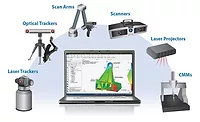
The GD&T Approach Source: Multi Metrics


Why is Geometric Dimensioning and Tolerancing (GD&T) so often considered “Grim, Depressing and Troublesome,” when, in so many ways, it is the “Greatest Design Tool” and essential for cost-effective manufacturing and reliable metrology, assembly and operation?

There are several reasons:
  • It is complex , but in fact no more complex than the imperfect real world of machine part geometry.
  • It is only used now and then, and if you do not use it all the time, you’ll definitely lose it down the line.
  • Its application is poorly set forth in various standards-ASME Y14.5 and ISO 1101-and as a result, GD&T is all too commonly used to “decorate” computer-aided design (CAD) models for later “interpretation” rather than to “encode” feature functions for later “decoding.”
The benefits missed by ignoring it are that GD&T is the only tool with which:
  • to research, refine and ultimately encode the function of each feature of a machine part by imposing function guaranteeing limits on imperfection.
  • to enable truly scientific tolerance stack-up analysis, and therefore to guarantee assembly and operation prior to model release.
  • to specify strictly decodable requirements for manufacturing.
  • to enable logic-based coordinate metrology and therefore, truly meaningful 3-D manufacturing process feedback and management.
If CAD is all about defining, manipulating and communicating the geometry of a machine part, GD&T aided design (GAD) is all about researching, refining and encoding the functions of its features so as to impose limits on imperfection which guarantee assembly and operation. CAD without GAD is surely BAD, but how can we make GD&T work smoothly and reliably. If we misuse it, we:
  • fool ourselves into believing we have defined a part which can be guaranteed to assemble and operate, when in fact it may fail in all respects.
  • burden our machine shops with misinformation, and lay the blame on them for manufacturing useless parts.
  • increase the prices quoted by machine shops for the reasons stated in the previous item.
  • force metrologists to interpret drawings because the so-called code is in fact pure decoration.
  • waste time and money, and ultimately hold GD&T responsible for our problems, which are actually only due to its misuse.
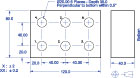

The Classical Approach. Source: Multi Metrics

Application

The two drawings, one classical and the other GD&T encoded, enable a demonstration of their contrasting abilities to assess and guarantee assembly and operation before drawing release, as well as their abilities to define precise manufacturing, metrology and operational objectives. Given that the illustrated part serves as a staging fixture for the primary purpose of tightly mutually orienting and locating six Ø19.6±0.2 x 70 mm long pins perpendicular to its base plane, take a look at the comparative clarity with which the two alternatives encode its functions.

The Classical Approach merely implies the stated functional objectives by using tight tolerances on relative relationships and loose tolerances on global relationships, and further complicates matters by failing to define a reliable method for establishing the implied, asymmetric coordinate system in a part which has three planes of symmetry. The classical drawing therefore makes tolerance stack-up analysis, manufacturing, metrology and assembly entirely dependent on tribal understandings.

The GD&T Approach specifies the functional objectives explicitly using a loose Position control to coarsely locate the bore pattern relative to the periphery of the fixture, and a tight Position control to impose the more critical mutual relationship of the bores. It does so using a datum feature based, precisely defined coordinate systems of which ABC is still asymmetric, but is now referenced to a part whose symmetry has been broken by the addition of a chamfer. The GD&T drawing also imposes a Projection modifier to further guarantee functionality, and is therefore uniquely decodable for reliable, function based tolerance stack-up analysis, manufacturing, metrology and assembly.

Fulfilling Promises

Given the technical and financial contributions GD&T can make if properly applied, how can we make it fulfill its promises? Whereas most efforts to improve the proper encoding and decoding of GD&T are focused on training, most users do not have the time or even the desire to become adequately expert in GD&T. They simply want to use it, and over time, their expertise fades and tribal understandings take over again. In order to overcome the barriers of complexity and sporadic use, and enable companies to profit from GD&T, there is no alternative but to largely automate the encoding and decoding processes.

This has been successfully, even if not widely accomplished in metrology, where some software systems are able to download a CAD model with truly functional GD&T and automatically turn it into a full-fledged inspection process with essentially no operator involvement.

The same may soon be successfully accomplished in tolerance stack-up analysis, again however, only given truly functional GD&T code. The greatest problem remains how to at least partially automate the encoding process to ensure the code is truly functional and syntactically correct in the first place.

Some CAD companies have shown interest, and some have even begun to attack the problem. But they are dragging their feet because management does not hear users banging on their doors, and users do not bang on their doors because they cannot imagine that such things might be possible.

In fact, artificial intelligence support for encoding GD&T is eminently possible after GD&T has been reduced to a thoroughly rule-based system. Since this is essentially in hand, it is time to raise a din to get on with it. The promises of GD&T can only be realized with artificially intelligent, such as smart GD&T encoding technology.

Share This Story

Looking for a reprint of this article?
From high-res PDFs to custom plaques, order your copy today!

Bill Tandler is president and founder of Multi Metrics Inc. (Menlo Park, CA). For more information, call (650) 328-0200, e-mail [email protected] or visit www.multimetrics.com .

Recommended Content

JOIN TODAY
to unlock your recommendations.

Already have an account? Sign In

  • 2024 Quality Rookie of the Year Justin Wise 1440x750px banner with "Quality Rookie of the Year" logo inset

    Meet the 2024 Quality Rookie of the Year: Justin Wise

    Justin Wise is an exceptional individual who has been...
    Aerospace
    By: Michelle Bangert
  • Man with umbrella and coat stands outside while it rains at night looking at a building.

    Nondestructive Testing: Is there an ethics problem?

    I was a whistleblower who exposed fraudulent activities...
    NDT
    By: Dale Norwood
  • Unraveling Deflategate: Football stadium with closeup of football on field

    Unraveling the Tom Brady Deflategate

    The Deflategate scandal erupted following the 2014 AFC...
    Measurement
    By: Greg Cenker and Henry Zumbrun
Manage My Account
  • eMagazine Subscriptions
  • Newsletters
  • Online Registration
  • Subscription Customer Service
  • Manage My Preferences

More Videos

Sponsored Content

Sponsored Content is a special paid section where industry companies provide high quality, objective, non-commercial content around topics of interest to the Quality audience. All Sponsored Content is supplied by the advertising company and any opinions expressed in this article are those of the author and not necessarily reflect the views of Quality or its parent company, BNP Media. Interested in participating in our Sponsored Content section? Contact your local rep!

close
  • This image shows a person seated next to a Bobcat T66 compact track loader.
    Sponsored byPolyWorks by InnovMetric

    Supercharging Digital Gauging at Bobcat North America

  • Dorsey Calibration Lab photo by Tom LaBarbera Picture this Studios
    Sponsored byDorsey Metrology International

    Ensuring Product Quality in a Competitive Manufacturing Landscape

  • This image displays a Eddyfi Technologies Cypher portable inspection instrument alongside a scanner for non-destructive testing (NDT).
    Sponsored byEddyfi Technologies

    A Safer, Smarter Approach to Weld Inspection: Why Advanced Ultrasonic Testing Is Redefining Industry Standards

Popular Stories

MicroRidge MobileCollect wireless measurement system

Before AI Can Help, the Data Has to Be Ready

a titanium diaphragm speaker driver

The One Thing Elon Gets Right Is Designed to Scare You

This image shows a person seated next to a Bobcat T66 compact track loader.

Supercharging Digital Gauging at Bobcat North America

2026 Quality Professional of the Year!

Events

June 4, 2026

Scaling Manufacturing Quality with Automation for Greater ROI

If you need to do more with the same resources or build a new tech foundation, this session shows where to start and how to create a more efficient, scalable, cost-conscious quality process.

June 9, 2026

Future-Proof your Quality Processes with Advanced 3D Optical CMM Technology

Discover how to effortlessly capture complex data, leverage true multi-sensor automation, and ensure continuous operation without creating inspection delays.

View All Submit An Event

Products

Lean Manufacturing and Service Fundamentals, Applications, and Case Studies

Lean Manufacturing and Service Fundamentals, Applications, and Case Studies

See More Products
Quality Podcast Channel Custom Content

Related Articles

  • It is important the model-based inspection software serve as a common platform and communicate openly with all CAD software and all metrology devices.

    Model-Based Definition Puts GD&T Data to Work

    See More
  • Quality 101: Defining GD&T

    See More
  • gas detection systems

    Helium 101: Making the most of trace-gas-based leak testing

    See More

Related Products

See More Products
  • leaner.jpg

    Leaner Six Sigma: Making Lean Six Sigma Easier and Adaptable to Current Workplaces

  • Work Measurement DVD

See More Products

Related Directories

  • OpusWorks by The Quality Group

    OpusWorks accelerates enterprise transformation with scalable training, project management, and AI-powered insights. Our platform delivers role-based learning and STATWORKS! to drive Continuous Improvement. Open Enrollment supports data-driven decision-making and performance optimization. CPI Portal complements this by offering access to enterprise tools, pre-configured classes and resources for individuals and teams.
  • MAN/T&P

    Modern Applications News (MAN) and Tooling & Production (T&P) are industry-respected, monthly electronic eNewsletters with a combined circulation of more than 90,000 qualified machine tool/metalworking professionals. MAN's target market is the high-tech job shop, OEM and contract manufacturer in both machining and fabricating environments. T&P targets large OEMs.
  • Quality System Consultants

    We have experience developing and maintaining quality systems and have a commitment to the relentless improvement of the regulatory systems of our clients. Whether you are a startup or an established firm, Quality System Consultants can help you implement a range of quality management systems. We have: • Built inspection procedures and testing methods to improve efficiency • Achieved ISO 13485 certifications for clients ahead of schedule • Managed compliance for Class I through Class III medical devices • Averaged a 10-1 return on investment on projects we're involved with • Been voted 7th by Quality Magazine for continuous improvement to quality systems and contribution to bottom-line profitability. Unlike some of the competition, we aren't interested in stacking up billable hours at the expense of your project. We succeed when you succeed, and we're committed to solving the problems you bring to us. If you want an experienced, dedicated firm to work with you through an otherwise intimidating regulatory environment, you want to call Quality System Consultants.
×

Stay in the know with Quality’s comprehensive coverage of
the manufacturing and metrology industries.

Newsletters | Website | eMagazine

JOIN TODAY!
  • RESOURCES
    • Advertise
    • Contact Us
    • Directories
    • Manufacturing Division
    • Store
    • Want More
  • SIGN UP TODAY
    • Create Account
    • eMagazine
    • Newsletters
    • Customer Service
    • Manage Preferences
  • SERVICES
    • Marketing Services
    • Market Research
    • Reprints
    • List Rental
    • Survey/Respondent Access
  • STAY CONNECTED
    • LinkedIn
    • Facebook
    • YouTube
    • X (Twitter)
  • PRIVACY
    • PRIVACY POLICY
    • TERMS & CONDITIONS
    • DO NOT SELL MY PERSONAL INFORMATION
    • PRIVACY REQUEST
    • ACCESSIBILITY

Copyright ©2026. All Rights Reserved BNP Media, Inc. and BNP Media II, LLC.

Design, CMS, Hosting & Web Development :: ePublishing