Medical Device Manufacturing
While the medical device manufacturers themselves may be aware of the inherent risks in manufacturing, often suppliers may be manufacturing components for a variety of applications. Pat La Londe says that it is important to explain the stakes to suppliers. If the supplier’s staff knows that a component is going into a respirator, they will be more likely to monitor the quality carefully. La Londe, chair of the ASQ World Conference Board, has been in the quality field since the late 1970s and in medical devices since 1991, and has seen this happen firsthand on supplier visits. In fact, during one such presentation to suppliers when she would bring in the actual medical device and clinician to show the product in use in the field, two people left the room. She later found out they both had family members in the hospital at that time.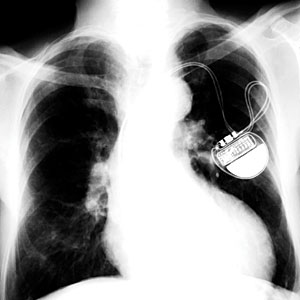
Although ideally all products would receive careful attention to quality, it can be difficult to maintain across the board, La Londe says.
For those in the quality field, it may seem obvious that quality should be a central theme throughout an organization. But it’s important to communicate these ideas throughout the staff for best results and to avoid an Us vs. Them mentality. And keep in mind that when resources are cut, this can cost more in the long term.
Success with Standards
Long-time members of the medical device manufacturing industry will have seen a lot of changes. “When I started, there were no FDA regulations for medical devices,” says Art Ward, president of AJW Technology Consultants Inc., who has more than 40 years of experience in medical devices. In addition, Ward, author of the book “ISO Certification, Coming of Age,” says ISO has lead to fundamental changes in how companies operate. Today, individuals responsible for the quality system should also understand both FDA regulations and the ISO standard. Although they do overlap, it is important to understand both, Ward says.
Just as the field has gotten more complicated, and medical devices get smaller, the number of standards has grown. But, according to Duane Kari, sales manager at Top Tool, Quality’s2013 Plant of the Year and an ISO 9001: 2008 and ISO 13485: 2003 certified company, this is a
significant change, and a good one.
“If you’re a non-ISO company and you take on ISO, you think it just means more paperwork. In reality, I believe you become a much better company as soon as you dive into the ISO pool,” Kari says. “The profile of your work goes up [and] you can support bigger and better processes. The documentation creates awareness.”
Barry Craner, vice president of QA/RA at Stellartech Research Corp., agrees that regulations and standards should be a top priority. When asked what quality professionals should do to improve their chances of success in medical device manufacturing, Craner offered this advice: “Simple: Know the regulations and follow them. Be sure that your procedures reflect your business requirements and comply [with] the regulations and standards.” He continues, “Don’t be so detailed in your procedures. It can cost a lot of unneeded time and money if you complicate your own requirements beyond what is regulated.”
He offers the example of one company with a 60-page validation procedure, and another with a four-page procedure. Neither company has had any functional issues. “It’s a swinging of the pendulum,” Craner says. “You don’t want too little or too much.”
Zero Defects
Richard Holman, Booz & Co. partner and leader of the innovation and product development practice, co-authored a report that lists three factors affecting medical device quality: “a siloed, reactive approach to quality; a lack of focus on continuous improvement; and the ever-increasing complexity of medical devices.”
Holman explains that the medical device field can benchmark from other industries, such as aviation. “With commercial aviation, if you take out pilot error, and think about Six Sigma, commercial aviation exceeds seven Sigma in terms of the product. Why shouldn’t medical products operate at the same level? They don’t today. It’s not to the equivalent of commercial aviation. Why not? Products are complex and you’re dealing with the human body.”
And since these products involve the human body, when errors or defects do occur, they must be tracked down and eliminated. The Six Sigma approach may not be enough.
“In the medical device industry, the idea is really to get to zero defects,” La Londe says. “Six Sigma is 3.4 defects per million. Which 3.4 defects on which patients? Do you want it on you?”
In the medical device field, you design for redundancies, La Londe continues. It is not a catastrophic failure if your phone breaks, but it might be if your respirator does.
But Six Sigma methodology does have value, La Londe says, and it is good at finding root cause. “Once you find that root cause, you need to find how to prevent the defect from ever happening again,” La Londe says. If a problem keeps happening even after it has been supposedly resolved, she says you might find that “they did resolve one of the potential causes, but there might be three potential causes. The reality is: if you have three potential causes of defect, you need to address all three.”
Audit for Improvement
While it is important to have successful manufacturing practices at all times, when regulatory agencies come round, it is important to be able to demonstrate these practices. The company has to consider what auditors might ask and continue to run their business at the same time. The solution, La Londe says, is to always keep the customer in mind. This will lead you in the right direction. The idea is to have a big picture approach to the business, and aim to improve instead of just meet the regulations.
|
TECH TIPS |
|
After these systems are in place, coaching can help with the rest. Elaine Messa spent 30 years with the FDA, and says it is important to train staff before an inspection, in terms of both knowledge and behavior. Messa, now executive vice president of the medical device practice at Becker & Associates Consulting Inc., says staff should be confident and know their processes, but only answer the questions they are asked.
“Talking too much is a very big problem,” Messa says. When she coaches people for inspections, she tells them: “Listen to the question. Answer that question. Then, stop talking.”
She says the FDA inspectors are well trained, and will use a pregnant pause to see if you add any more information. Staff should try to prevent some other verbal tics as well. “It doesn’t happen frequently but every once in a while someone from a company will say, ‘Off the record,’ but nothing is off the record with the FDA. Stop talking,” Messa says.
Instead, it’s important to start listening, says Mary Getz, vice president, quality systems–medical devices at Becker & Associates Consulting. If an issue does crop up with the FDA, Getz says it is important to understand what it is: “Humility is important. Hear what they are telling you.”
And instead of looking for excuses, consider what you could learn from the experience. ‘“We’ve always done it this way’ is not a valid argument,” says Getz. “I have heard this more than once…Well, just because you’ve always done it that way doesn’t mean it’s right.”
Prevention is the Cure
New techniques might help improve quality—and not necessarily at a high price. “It’s extremely important for them to understand that quality doesn’t have to cost a lot,” Getz says. “If you do it right, it’s a competitive advantage.”
And if this carrot approach to quality doesn’t work, there is always the stick. Getz says there should be financial consequences and a sense of accountability when things go wrong. Companies should always invest in quality before it becomes an issue. She has seen manufacturers with only a skeletal quality staff, and then they don’t know how they received a warning letter from the FDA. But when they do receive a warning letter, “Then all these resources are available and come flying out of the sky,” Getz says.
Those resources could have been better put to use in the beginning, as La Londe points out, “It’s extremely expensive when you get to warning letters and recalls. It could be a hundred times more expensive than preventative work.”
The Future
Elaine Messa remembers when the first drug-eluting stent (a stent that releases medication over time) came onto the market, and today she says the artificial pancreas is receiving attention. It’s just another example of the innovative work being done in the medical field, and Messa expects it to continue: “I think the future of medical device manufacturing will continue to be interesting and challenging.”
It’s up to quality professionals to ensure that those medical devices receive the proper attention during the manufacturing process. With the right processes, your company can stay on the FDA’s good side, avoid warning letters or recalls, and—most importantly—improve patient health.
Looking for a reprint of this article?
From high-res PDFs to custom plaques, order your copy today!