Quality Magazine logo
search
cart
facebook twitter linkedin youtube
  • Sign In
  • Create Account
  • Sign Out
  • My Account
Quality Magazine logo
  • NEWS
  • PRODUCTS
    • FEATURED PRODUCTS
    • SUBMIT YOUR PRODUCT
  • CHANNELS
    • AUTOMATION
    • MANAGEMENT
    • MEASUREMENT
    • NDT
    • QUALITY 101
    • SOFTWARE
    • TEST & INSPECTION
    • VISION & SENSORS
  • MARKETS
    • AEROSPACE
    • AUTOMOTIVE
    • ENERGY
    • GREEN MANUFACTURING
    • MEDICAL
  • MEDIA
    • A WORD ON QUALITY PUZZLE
    • EBOOK
    • PODCASTS
    • VIDEOS
    • WEBINARS
  • EVENTS
    • EVENT CALENDAR
    • IMTS
  • DIRECTORIES
    • BUYERS GUIDE >
      • Supplier Insights
    • NDT SOURCEBOOK
    • VISION & SENSORS
    • TAKE A TOUR
  • INFOCENTERS
    • Digital Quality Management Systems
    • NEXT GENERATION SPC & QUALITY ANALYTICS
  • AWARDS
    • ROOKIE OF THE YEAR
    • PLANT OF THE YEAR
    • PROFESSIONAL OF THE YEAR
  • MORE
    • Expert Columns
    • NEWSLETTERS
    • QUALITY STORE
    • INDUSTRY LINKS
    • SPONSOR INSIGHTS
  • EMAG
    • eMAGAZINE
    • ARCHIVES
    • CONTACT
    • ADVERTISE
  • SIGN UP!
Management

Legal Insight

Develop the Habits of an Effective Executive

Effectiveness Means Accomplishing the Right Things

By Bryan Berson
May 1, 2014

Peter Drucker (1909-2005) was among the most insightful managerial consultants and scholars of the 20th century. While most management books focus on managing others, Drucker’s “The Effective Executive” focuses on managing oneself.

To Drucker, effectiveness means accomplishing the right things. In spite of what the financial press portrays, executives are not born effective, and they don’t graduate that way from business schools. Effectiveness is not a function of IQ, knowledge, or time clocked on the job. Smart, hard-working people can be ineffective. Executives must learn and practice effective behaviors until they become habitual.

Knowledge workers dominate the contemporary economy. They produce information and ideas. They cannot be micromanaged, but their supervisors can help them. Continually thwarting their contribution demoralizes them. It turns them into time servers who clock in, go through the motions, and clock out.

Drucker’s conceptions of “top management” and “subordinates” are not intuitive. By focusing on their contribution to the performance of a system, workers who take responsibility and act accountably are top management. Workers who do not supervise others can always manage themselves. Managers who can’t manage themselves can’t manage others. Those who stress their downward authority—in spite of a lofty rank and title—make themselves into subordinates.

Focusing on contribution fosters productive relationships. In a supply chain, each party must produce a product that is fit for use by its intended recipient. This requires effective communication. Managers must know what their workers do, materials they need to accomplish their job, opportunities they see, and dangers they perceive. Usually, capable front-line workers have a very different perspective than the CEO does.

Due to pressure to perform, people tend to report information to their supervisors that is at least a little bit rosier than reality. After a few rounds of reporting up the chain of command, the CEO could be the worst-informed person in the company. Managers must want to learn about problems as early as possible so that they can address them before they become incurable crises. Once management “shoots the messenger” of bad news, the flow of information will dry up. Problems won’t go away; they will just get buried.

A knowledge worker’s contribution tends to be defined by its results, but this concept can be misapplied. In “Out of the Crisis,” W.E. Deming noted that “no amount of care or skill in workmanship can overcome fundamental faults of the system.” He wrote that an individual’s performance is the result of many factors including the individual, co-workers, job, materials, equipment, customers, management, supervision, and environmental conditions (e.g., noise, confusion, cafeteria food quality). People cannot be held accountable for things that are beyond their control.

Effectiveness requires time management. An executive’s time belongs to everyone else. To accomplish anything, one must reduce unproductive time demands by saying ‘no’ to some requests and consolidating discretionary time into large blocks. For example, those who draft documents know that spending only a few minutes every day over an extended period of time can be futile. To produce a “zero draft,” one needs hours to research and write. Eventually, the zero draft can be refined into a readable first draft.

Most meetings waste time, and a surplus of meetings is a symptom of bad organization. Brainstorming is important, but an effective meeting requires a purpose and an agenda. Participants must convey pertinent information, and the leader must ask questions and listen. Managers should attempt to understand sincerely held dissenting opinions rather than punishing or banishing them and drawing comfort from consensus and “yes men.”

Organizations must build and develop personnel. Young workers must be taught to appreciate disciplines other than their own specialty and avoid the common habit of developing contempt for other disciplines. Routines must be developed to guide workers and eliminate recurrent, predictable crises.

 To succeed, executives must focus on a few core strengths. They should prefer to make fewer decisions of high quality rather than many quick, superficial decisions. By taking action to change the reality that they operate in, effective executives can influence the flow of events rather than being at their mercy. 

KEYWORDS: effectiveness habits organizational success time management

Share This Story

Looking for a reprint of this article?
From high-res PDFs to custom plaques, order your copy today!

Bryan L. Berson, Esq. is an attorney and mediator at The Berson Firm, P.C., a commercial and civil law firm specializing in business law, real estate, mediation and litigation. His e-mail is [email protected]. Connect with The Berson Firm on Facebook and Bryan on LinkedIn.

Recommended Content

JOIN TODAY
to unlock your recommendations.

Already have an account? Sign In

  • 2024 Quality Rookie of the Year Justin Wise 1440x750px banner with "Quality Rookie of the Year" logo inset

    Meet the 2024 Quality Rookie of the Year: Justin Wise

    Justin Wise is an exceptional individual who has been...
    Aerospace
    By: Michelle Bangert
  • Man with umbrella and coat stands outside while it rains at night looking at a building.

    Nondestructive Testing: Is there an ethics problem?

    I was a whistleblower who exposed fraudulent activities...
    NDT
    By: Dale Norwood
  • Unraveling Deflategate: Football stadium with closeup of football on field

    Unraveling the Tom Brady Deflategate

    The Deflategate scandal erupted following the 2014 AFC...
    Measurement
    By: Greg Cenker and Henry Zumbrun
Manage My Account
  • eMagazine Subscriptions
  • Newsletters
  • Online Registration
  • Subscription Customer Service
  • Manage My Preferences

More Videos

Sponsored Content

Sponsored Content is a special paid section where industry companies provide high quality, objective, non-commercial content around topics of interest to the Quality audience. All Sponsored Content is supplied by the advertising company and any opinions expressed in this article are those of the author and not necessarily reflect the views of Quality or its parent company, BNP Media. Interested in participating in our Sponsored Content section? Contact your local rep!

close
  • Key Takeaways for Quality Leaders
    Sponsored byComplianceQuest

    Key Takeaways for Quality Leaders from the 2026 Gartner Magic Quadrant™ for QMS

  • This image shows a person seated next to a Bobcat T66 compact track loader.
    Sponsored byPolyWorks by InnovMetric

    Supercharging Digital Gauging at Bobcat North America

  • Dorsey Calibration Lab photo by Tom LaBarbera Picture this Studios
    Sponsored byDorsey Metrology International

    Ensuring Product Quality in a Competitive Manufacturing Landscape

Popular Stories

This image shows a person seated next to a Bobcat T66 compact track loader.

Supercharging Digital Gauging at Bobcat North America

a professional in the aviation field performing maintenance, repair, and overhaul (MRO) work

Manufacturing Retention: Strategies for Improving Company Culture, Engagement and Skill Development

Dorsey Calibration Lab photo by Tom LaBarbera Picture this Studios

Ensuring Product Quality in a Competitive Manufacturing Landscape

2026 Quality Professional of the Year!

Events

June 22, 2026

Automate 2026

Automate is North America's largest robotics and automation event — and the best place to take your ideas from insight to impact.
 
Our show floor features the world’s leading automation solutions, from AI and robotics to motion control, vision systems, and more. Plus, our educational conference is second to none, led by the brightest minds in automation today.
 
Ready to transform the way you work? Take the next step at Automate.
July 14, 2026

Quality Leaders Forum: Better Communication, Better Quality Data

The Quality Leaders Forum is a quarterly, editor-moderated fireside chat series hosted by Quality Magazine, featuring candid conversations with senior manufacturing and operations executives shaping enterprise-level quality.

View All Submit An Event

Products

Lean Manufacturing and Service Fundamentals, Applications, and Case Studies

Lean Manufacturing and Service Fundamentals, Applications, and Case Studies

See More Products
Quality Podcast Channel Custom Content

Related Articles

  • Value Stream Mapping against the wall

    The Secrets to Creating an Effective Value Stream Map

    See More
  • John Vandenbemden Column.  Staff meeting presentation.

    An Effective Management System and Lean Enterprise Require a Cultural Change

    See More
  • 1/28/08 Lockheed Martin and Project Lead The Way Partner to Develop the Next Generation of Engineers

    See More

Related Products

See More Products
  • Optimizing Factory Performance: Cost-Effective Ways to Achieve Significant and Sustainable Improvement

  • ZEuCDwAAQBAJ.jpg

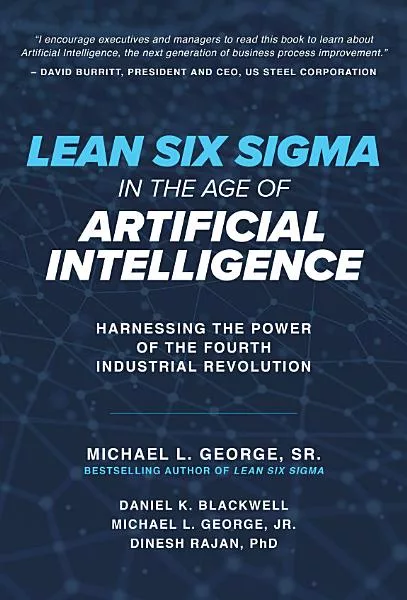
    Lean Six Sigma In The Age Of Artificial Intelligence: Harnessing The Power Of The Fourth Industrial Revolution

  • 118631.jpg

    The Art of Integrating Strategic Planning, Process Metrics, Risk Mitigation, and Auditing

See More Products
×

Stay in the know with Quality’s comprehensive coverage of
the manufacturing and metrology industries.

Newsletters | Website | eMagazine

JOIN TODAY!
  • RESOURCES
    • Advertise
    • Contact Us
    • Directories
    • Manufacturing Division
    • Store
    • Want More
  • SIGN UP TODAY
    • Create Account
    • eMagazine
    • Newsletters
    • Customer Service
    • Manage Preferences
  • SERVICES
    • Marketing Services
    • Market Research
    • Reprints
    • List Rental
    • Survey/Respondent Access
  • STAY CONNECTED
    • LinkedIn
    • Facebook
    • YouTube
    • X (Twitter)
  • PRIVACY
    • PRIVACY POLICY
    • TERMS & CONDITIONS
    • DO NOT SELL MY PERSONAL INFORMATION
    • PRIVACY REQUEST
    • ACCESSIBILITY

Copyright ©2026. All Rights Reserved BNP Media, Inc. and BNP Media II, LLC.

Design, CMS, Hosting & Web Development :: ePublishing