Quality Magazine logo
search
cart
facebook twitter linkedin youtube
  • Sign In
  • Create Account
  • Sign Out
  • My Account
Quality Magazine logo
  • NEWS
  • PRODUCTS
    • FEATURED PRODUCTS
    • SUBMIT YOUR PRODUCT
  • CHANNELS
    • AUTOMATION
    • MANAGEMENT
    • MEASUREMENT
    • NDT
    • QUALITY 101
    • SOFTWARE
    • TEST & INSPECTION
    • VISION & SENSORS
  • MARKETS
    • AEROSPACE
    • AUTOMOTIVE
    • ENERGY
    • GREEN MANUFACTURING
    • MEDICAL
  • MEDIA
    • A WORD ON QUALITY PUZZLE
    • EBOOK
    • PODCASTS
    • VIDEOS
    • WEBINARS
  • EVENTS
    • EVENT CALENDAR
    • IMTS
  • DIRECTORIES
    • BUYERS GUIDE >
      • Supplier Insights
    • NDT SOURCEBOOK
    • VISION & SENSORS
    • TAKE A TOUR
  • INFOCENTERS
    • Digital Quality Management Systems
    • NEXT GENERATION SPC & QUALITY ANALYTICS
  • AWARDS
    • ROOKIE OF THE YEAR
    • PLANT OF THE YEAR
    • PROFESSIONAL OF THE YEAR
  • MORE
    • Expert Columns
    • NEWSLETTERS
    • QUALITY STORE
    • INDUSTRY LINKS
    • SPONSOR INSIGHTS
  • EMAG
    • eMAGAZINE
    • ARCHIVES
    • CONTACT
    • ADVERTISE
  • SIGN UP!
Measurement

Case Study

Material Properties

Factoring them into simulation leads to higher performance spinal disc implants that deliver long-term pain relief.
By Thomas Mosnier
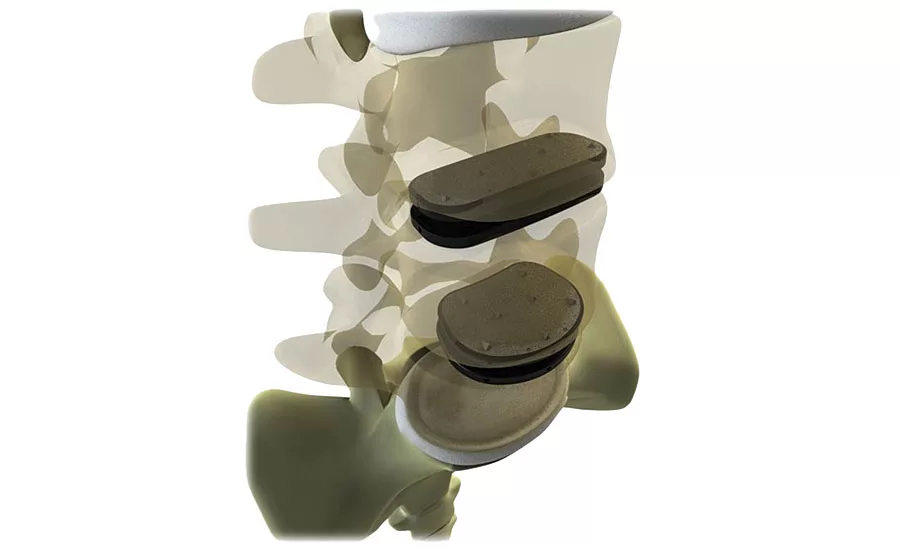
spinal disc implant

Source: MSC Software Corporation

Simulation software

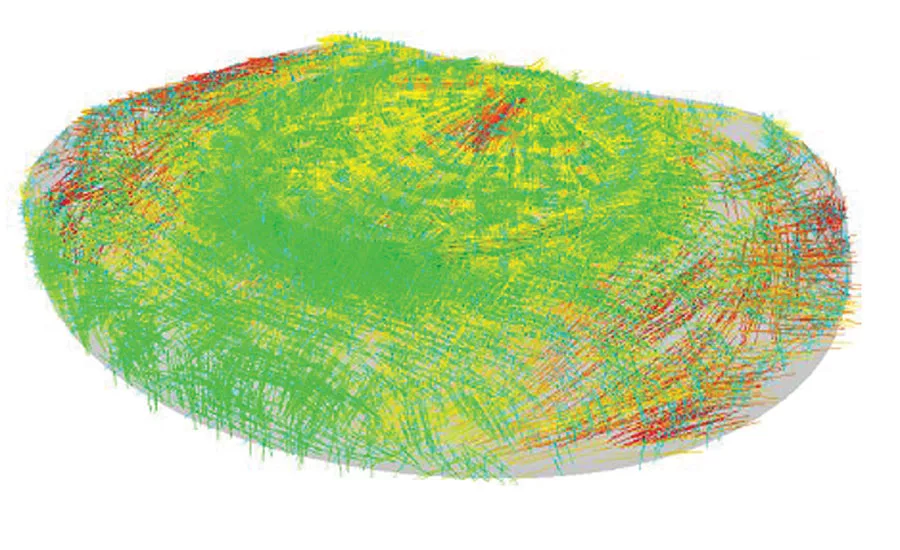
Fig. 1 Simulation software that incorporates material properties data produces  more accurate predictions of the composite behavior for materials such the fiber reinforced plastics used to create spinal disc implants such as the one depicted by this simulation model. Source: MSC Software Corporation
compressive stresses

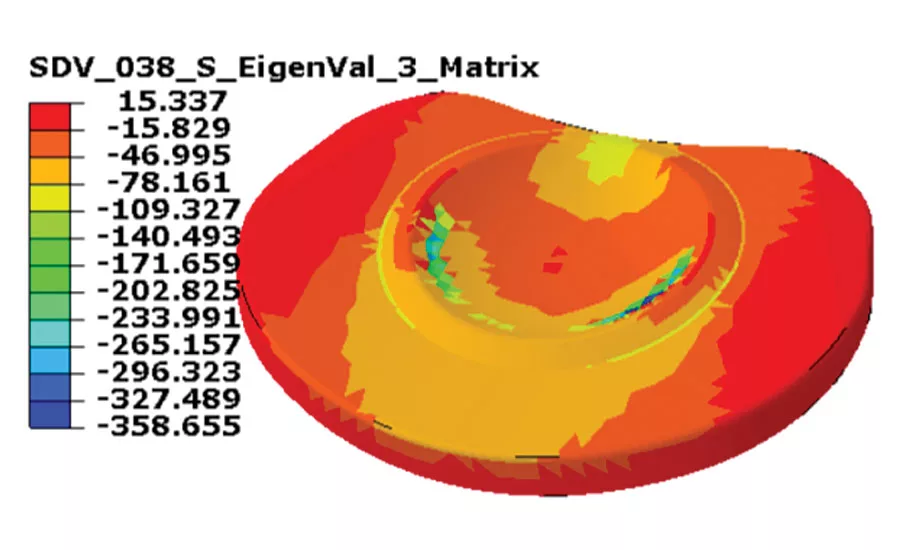
Fig. 2 The contour shows high compressive stresses in the plastic matrix near the inside of the endplate. Source: MSC Software Corporation
Digimat material model

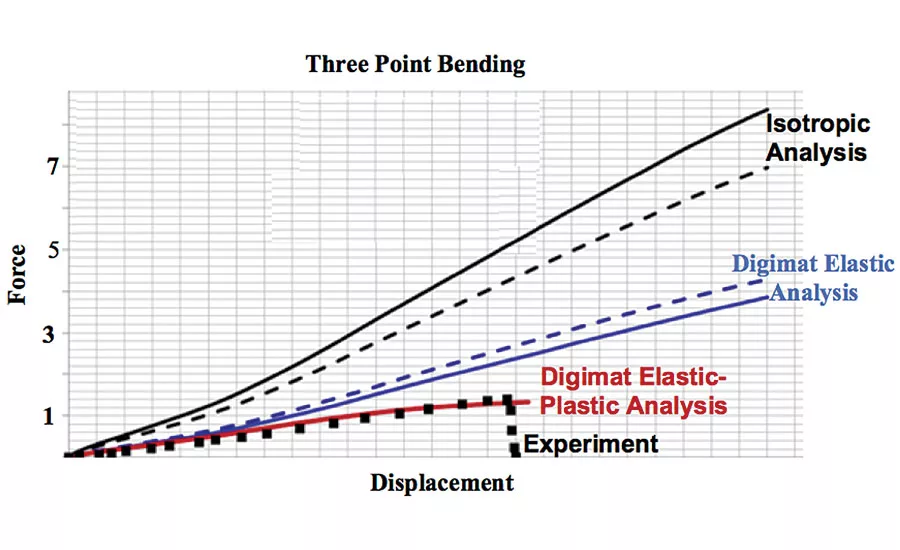
Fig. 3 Digimat material model accounting for manufacturing process results in more accurate simulations that reduce test/analysis iterations and improve performance predictions by more than 170 percent. Source: MSC Software Corporation

spinal disc implant
Simulation software
compressive stresses
Digimat material model
May 1, 2016

One of the most promising surgical options for treating spinal injury and deterioration of spinal discs is the use of artificial discs to replace the patient’s natural spinal disc.

The materials used in these artificial discs are an important factor in the development of this technology. The discs must be made from materials that are safe to be implanted in the human body, do not cause allergic reactions, and are wear resistant and compatible with medical imaging (MRI for example). Fiber-reinforced plastics are used more and more in today’s orthopedic implants because of their resistance to wear and improved mechanical properties. 

The challenge when designing implants that take advantage of reinforced plastics is in predicting the as-manufactured material performance. The mechanical properties of an implant designed with fiber reinforced plastics can vary widely depending on the use of the material and how the implant is manufactured. The injection molding process used to manufacture the implant will affect the fiber orientations throughout the part and the induced mechanical properties. 

Typical analysis assumes the material is homogeneous and isotropic for simplicity. In reality, fiber alignments continuously change throughout the implant, resulting in a heterogeneous, anisotropic material. Wrongly aligned fibers or not appropriately accounting for the fibers’ effect on material performance can lead to a softer or stiffer implant than designed, and even premature, unpredictable failure. 

SOLUTION 

Medicrea solved the isotropic versus anisotropic problem by using MSC Software’s Digimat, a non-linear multi-scale material and structure modeling software platform, to create a micromechanical material simulation of the implant design. Unlike a homogeneous isotropic analysis, Digimat’s heterogeneous anisotropic analysis considers the variation in fiber content and alignments and how they affect material properties. Figure 1 depicts how a simulation model shows variations in fiber orientation throughout the plate of a spinal implant.

Medicrea used the software to produce accurate predictions of the composite behavior for materials such as fiber reinforced plastics. Medicrea was able to start with the same finite element model of the implant that was used for the previous analysis because the simulation software works with any major finite element solver.
Next, engineers requested the injection mold simulation results from the manufacturer. This analysis assures that the implant’s mold has been designed properly for manufacture, but the results can also be used in the finite element analysis of the implant itself. 

By selecting intelligent material models of the reinforced plastic from the software’s material library and creating models using integrated tools, Medicrea engineers mapped the fiber orientations, residual temperatures and residual stresses onto the structural analysis model. The intelligent material model is a function of fiber orientations instead of an approximate/guessed value, so it adjusts the material stiffness at every location throughout the implant. 

With this preliminary work done, engineers were ready to conduct the usual analysis with one key exception: the approximate value for material stiffness will be replaced by the local material model. The simulation software takes care of tying the intelligent material into the analysis solution so that the analyst can focus on designing the implant’s performance, not guessing at which material property might give the best results. Figure 2 depicts the results of a simulation that incorporates material property data and fiber alignment into the analysis.

The attention to material details yields more accurate simulations that reduce test/analysis iterations and improve performance predictions. In the case of the spinal implant design, the original isotropic simulation over-predicted the implant’s stiffness by as much as 170 percent (Figure 3).The same simulation using a material model that accounted for both changes in fiber orientations, as well as plastic deformations, matched the test results almost perfectly. These simulation capabilities promote optimization of production processes that yield mechanically efficient implants that can be implanted safely, perform to or exceed design specifications, and last for years to spare patients repeat surgeries.
 

KEYWORDS: medical imaging simulation software

Share This Story

Looking for a reprint of this article?
From high-res PDFs to custom plaques, order your copy today!

Thomas Mosnier is research and development manager at Medicrea Inc.

For more information, visit MSC Software Corporation. www.mscsoftware.com

Recommended Content

JOIN TODAY
to unlock your recommendations.

Already have an account? Sign In

  • 2024 Quality Rookie of the Year Justin Wise 1440x750px banner with "Quality Rookie of the Year" logo inset

    Meet the 2024 Quality Rookie of the Year: Justin Wise

    Justin Wise is an exceptional individual who has been...
    Aerospace
    By: Michelle Bangert
  • Man with umbrella and coat stands outside while it rains at night looking at a building.

    Nondestructive Testing: Is there an ethics problem?

    I was a whistleblower who exposed fraudulent activities...
    NDT
    By: Dale Norwood
  • Unraveling Deflategate: Football stadium with closeup of football on field

    Unraveling the Tom Brady Deflategate

    The Deflategate scandal erupted following the 2014 AFC...
    Measurement
    By: Greg Cenker and Henry Zumbrun
Manage My Account
  • eMagazine Subscriptions
  • Newsletters
  • Online Registration
  • Subscription Customer Service
  • Manage My Preferences

More Videos

Sponsored Content

Sponsored Content is a special paid section where industry companies provide high quality, objective, non-commercial content around topics of interest to the Quality audience. All Sponsored Content is supplied by the advertising company and any opinions expressed in this article are those of the author and not necessarily reflect the views of Quality or its parent company, BNP Media. Interested in participating in our Sponsored Content section? Contact your local rep!

close
  • Key Takeaways for Quality Leaders
    Sponsored byComplianceQuest

    Key Takeaways for Quality Leaders from the 2026 Gartner Magic Quadrant™ for QMS

  • This image shows a person seated next to a Bobcat T66 compact track loader.
    Sponsored byPolyWorks by InnovMetric

    Supercharging Digital Gauging at Bobcat North America

  • Dorsey Calibration Lab photo by Tom LaBarbera Picture this Studios
    Sponsored byDorsey Metrology International

    Ensuring Product Quality in a Competitive Manufacturing Landscape

Popular Stories

a titanium diaphragm speaker driver

The One Thing Elon Gets Right Is Designed to Scare You

This image shows a person seated next to a Bobcat T66 compact track loader.

Supercharging Digital Gauging at Bobcat North America

Dorsey Calibration Lab photo by Tom LaBarbera Picture this Studios

Ensuring Product Quality in a Competitive Manufacturing Landscape

2026 Quality Professional of the Year!

Events

June 9, 2026

Future-Proof your Quality Processes with Advanced 3D Optical CMM Technology

Discover how to effortlessly capture complex data, leverage true multi-sensor automation, and ensure continuous operation without creating inspection delays.

June 22, 2026

Automate 2026

Automate is North America's largest robotics and automation event — and the best place to take your ideas from insight to impact.
 
Our show floor features the world’s leading automation solutions, from AI and robotics to motion control, vision systems, and more. Plus, our educational conference is second to none, led by the brightest minds in automation today.
 
Ready to transform the way you work? Take the next step at Automate.
View All Submit An Event

Products

Lean Manufacturing and Service Fundamentals, Applications, and Case Studies

Lean Manufacturing and Service Fundamentals, Applications, and Case Studies

See More Products
Quality Podcast Channel Custom Content

Related Articles

  • Breakdown of Materials Science Into Metals And Non-Metals

    An Overview of Fundamental Material Properties

    See More
  • Quality Test & Inspection: Invisible to the Human Eye

    See More
  • Test Figure 8

    Compression Testing Fundamentals

    See More

Related Products

See More Products
  • Orlicky's Material Requirements Planning 3/E

  • Flexible Material Handling DVD

See More Products

Related Directories

  • ibg NDT Systems Corp.

    Design and build nondestructive eddy current test instruments and systems for material properties, crack detection and grinder burn.
  • Taber Industries

    Taber Industries manufactures test instruments that aid in the understanding of material physical properties including resistance to abrasion, scratch, and bending resiliency. Used in research & development, process control, and quality assurance, Taber products continue to be considered the standard for comparison and are referenced in numerous international test methods.
×

Stay in the know with Quality’s comprehensive coverage of
the manufacturing and metrology industries.

Newsletters | Website | eMagazine

JOIN TODAY!
  • RESOURCES
    • Advertise
    • Contact Us
    • Directories
    • Manufacturing Division
    • Store
    • Want More
  • SIGN UP TODAY
    • Create Account
    • eMagazine
    • Newsletters
    • Customer Service
    • Manage Preferences
  • SERVICES
    • Marketing Services
    • Market Research
    • Reprints
    • List Rental
    • Survey/Respondent Access
  • STAY CONNECTED
    • LinkedIn
    • Facebook
    • YouTube
    • X (Twitter)
  • PRIVACY
    • PRIVACY POLICY
    • TERMS & CONDITIONS
    • DO NOT SELL MY PERSONAL INFORMATION
    • PRIVACY REQUEST
    • ACCESSIBILITY

Copyright ©2026. All Rights Reserved BNP Media, Inc. and BNP Media II, LLC.

Design, CMS, Hosting & Web Development :: ePublishing