Stepping up to the Factory of the Future
Predictive simulation is underpinning the factories of the future through immersive visualization of the vast amount of data from Industry 4.0 components and machines.
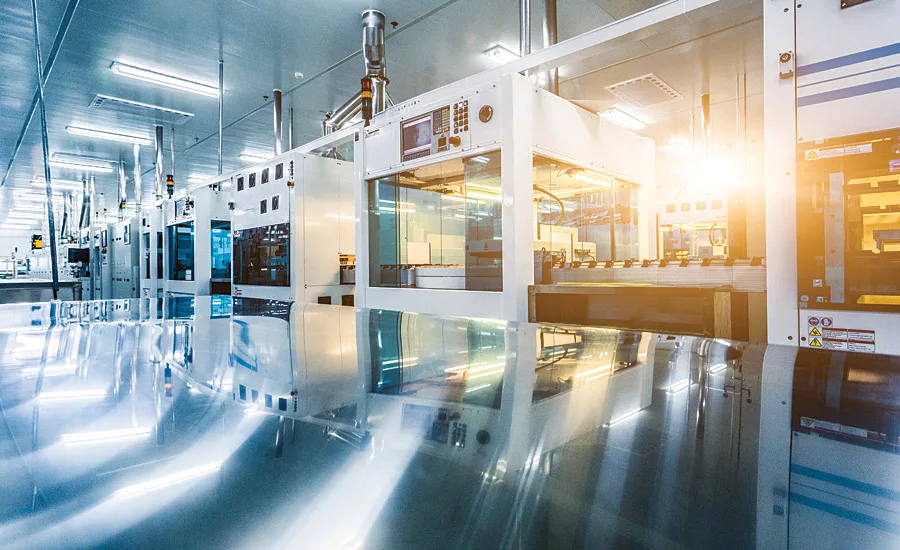
According to a recent article, the factory of the future is “the product of fast-changing, disruptive technologies hitting manufacturing like a cyclone.” When put like that, you’d be forgiven for thinking that this factory of the future, based on the concept of Industry 4.0, is a thing to fear. But, in reality, these disruptive technologies have the potential to radically transform manufacturing, increasing efficiencies, productivity and overall profitability for businesses throughout the globe.
Driven in part by the Internet of Things, Industry 4.0 arguably represents the most revolutionary change to impact the manufacturing sector for some time, with businesses driven to pursue digital models that embrace connectivity, data analytics and customer focus. The overarching aim of this fourth industrial revolution is to facilitate the execution of a ‘smart factory,’ where the multiple data sources at play will result in greater automation, more insights and optimized decision-making.
Tech Tips
|
AN ABUNDANCE OF DATA
For the cheerleaders of Big Data, they claim that all data is valuable and must therefore be useful. The reality for most companies is that they don’t know what to do with their data or are still working out what questions they need to ask of it. Manufacturers could have the most efficient, comprehensive data analytics solutions in place but it’s futile to throw contextualized data at inefficient and outdated processes and operations. For those businesses not wishing to be left behind when the ‘cyclone’ hits, now is the time to start making sense of your data requirements, putting the solid framework in place upon which to build the factory of the future.
This is where predictive simulation comes into play. To optimize results, simulation must take its rightful place as an integral business process, which is vital to not only scope and design the factory of the future but also to facilitate communication of future operations before embarking on any transformation. The effective use of simulation raises key process management questions to ensure that stakeholders understand the dynamic and interconnected nature of their business, providing new insights into how processes are run and how policies are applied, highlighting areas of particularly valuable yet missing data, and ensuring businesses are as efficient and productive as possible.
MANAGING COMPLEXITY
So, what are the specific features of tomorrow’s factories that simulation can help to prepare for? Firstly, a new smart workforce is required to manage the factory of the future. This workforce will need to both understand in-play operations and also act on insights found in data that smart factories are able to produce. Adapting to take advantage of these new opportunities carries many risks, amplified through the inherent complexity of the smart factory. Interconnected operational processes, variability (which can never fully be removed), feedback or repeat process steps, resource sharing and priority policies—all increase the level of governance such an operation requires.
The need for a solution that is able to handle this level of intricacy is paramount for successfully equipping a new smart workforce with knowledge of their existing operation and the foresight to ensure policy changes, investment decisions and resource allocations are going to achieve the desired outcome.
By mapping and analyzing a spectrum of production variables across a particular operational model, predictive facilitates an understanding of the complex relationship between processes at multiple and various stages. Models can be tested using different scenarios to discover strategic and tactical changes for optimized production. In particular, processes that involve high connectivity, variability, disruptions and interaction complexity are ideal for simulation. Other techniques for measuring such processes, such as Excel spreadsheets and Value Stream Maps, often ignore or treat attributes as static averages, which may have critical implications on decision-making. And, as companies become more digitally complex and connected with Industry 4.0, these implications can become game-changers.
SUPPLY CHAIN EXPANSION
This new level of complexity doesn’t end with processes. An integral part of the factory of the future is the extension and expansion of supply chains, breaking down traditional business barriers and transcending the four walls of a single facility to work ever-closer with customers, suppliers, industry bodies and the world of academia. This idea of the extended enterprise is fundamental to the whole concept of Industry 4.0, where this collaborative way of working is seen as the only way to optimize productivity.
Simulation has the ability to model an entire eco-system of manufacturing and supply chain components, such as lead times, costs, distances, suppliers, etc.; facilitating an even deeper understanding of the complex relationships between not only internal business processes but also between business partners, or customer and supplier. By bringing clarity and control to collaborative partnerships, simulation can maximize a business’ potential, smoothing the links and establishing the most efficient communications channels to ease the transition to the smart factory way of working.
SPEED IS OF THE ESSENCE
The shorter timescales and increased efficiencies that are by-products of optimized processes up the ante in terms of the need to improve the overall agility of the business. To achieve true operational excellence, reaching the levels of agility required to rapidly respond to, and even predict, new business opportunities and market changes, businesses need to make high velocity decisions, more efficiently. Even the most efficient operations will be slowed down by delays in decision-making, particularly if the decisions aren’t the right ones when they do finally materialize.
The only way to ensure this faster, more efficient decision-making is by having access to the right information, at the right time, in the right context. Again, simulation is key. The information produced by carrying out predictive simulation throughout the business is robust, real time and contextualized. Decision-makers can then use this to inform and underpin any decisions, safe in the knowledge that decisions are based on the best available information. Adopting a modelling-led culture for decision-making at board level ensures that simulation is the first port of call when it comes to making complex decisions, something that will stand the business in good stead as the speed of decision-making ramps up in line with the increasing business tempo of the factory of the future.
EASE OF USE
Another area where simulation is driving the factory of the future is in the usability of the technology. Once the sole preserve of modellers and simulation experts, simulation is coming out of the shadows and on to the desktops of business users. The interdependent nature of the factory of the future will mean that more non-tech, non-specialists will be involved, making it all the more important that tools provide the much-needed robust levels of performance but in a usable, accessible and visual package.
Virtual reality (VR) is a great example of this. A simulated model of your business provides powerful future state data in an easily consumable medium, demystifying much of the analytical process by providing an interactive visual experience, helping both analysts and business decision-makers understand their processes, data and how they affect one another. By taking problems from the real world into the virtual reality world, dynamically visualizing the various potential outcomes and selecting the best course of action, simulation affords businesses the luxury of exhaustive testing without the associated risks and costs of testing in a live environment, optimizing processes in readiness for the factory of the future.
RECIPE FOR SUCCESS
For many, data is the key enabler for the factory of the future. However, before trying to respond to this data, it’s vital that businesses know which data to collect, how to contextualize it and how to use it. And while there’s no single solution that will transform a business into a high-performing digital enterprise overnight, businesses could do much worse than adopting predictive simulation capabilities as a means to ready themselves for the factory of the future transition.
Now is the time to reassess processes and procedures. Before moving into the realm of Big Data analytics, businesses should work closely their simulation provider to ensure they are making full use of the software. Only then will they be in the prime position to embrace the factory of the future in all its glory.
Looking for a reprint of this article?
From high-res PDFs to custom plaques, order your copy today!