Manufacturing Excellence
Leadership for Manufacturing in the 21st Century
Major changes have taken place, thus requiring dynamic quality leadership.
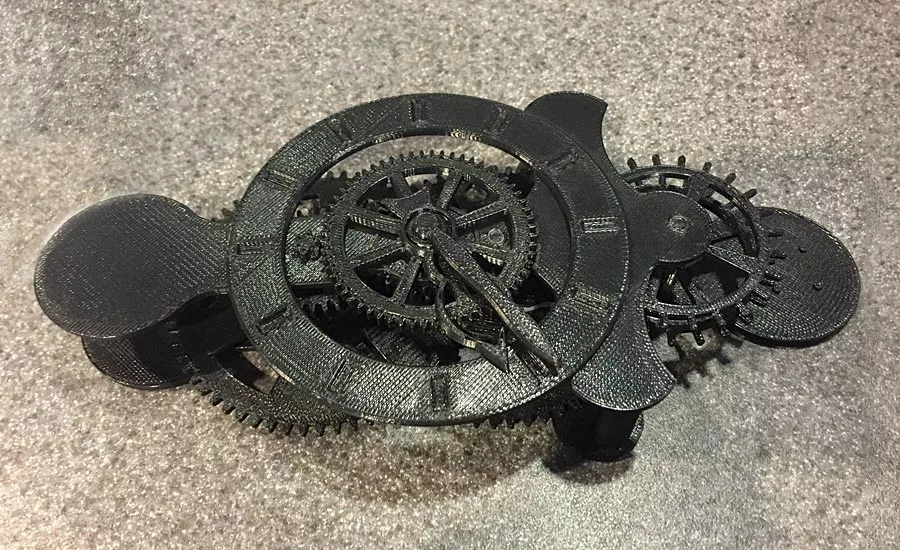
Precision 3D Manufacturing by Stratasys Direct Manufacturing. Source: All photos taken by the author at the Chicago IMTS (International Manufacturing Technology Show) 2016: Advances in Manufacturing - 3D Technology
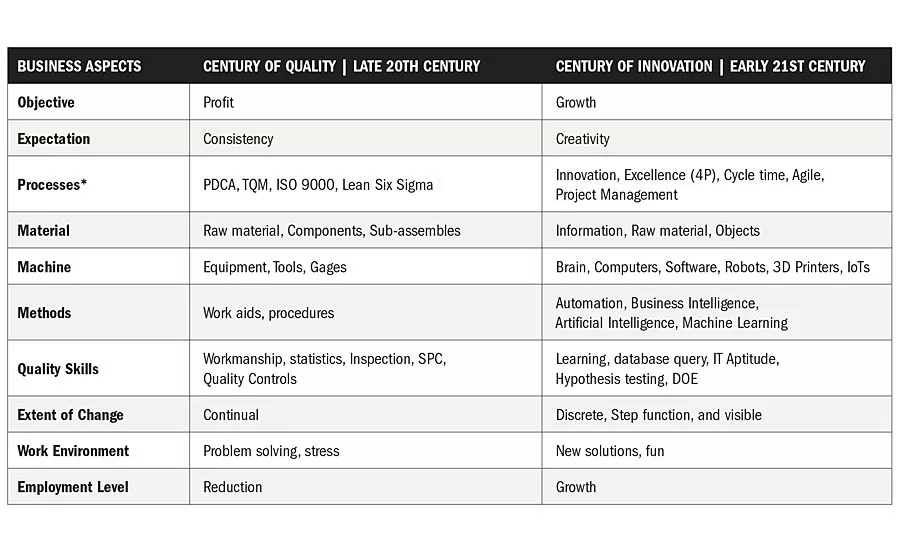
Figure 1. Observing changes taking place in manufacturing. *PDCA – Plan, Do, Check and Act; 4P – Prepare, Perform, Perfect and Progress. Source: All photos taken by the author at the Chicago IMTS (International Manufacturing Technology Show) 2016: Advances in Manufacturing - 3D Technology
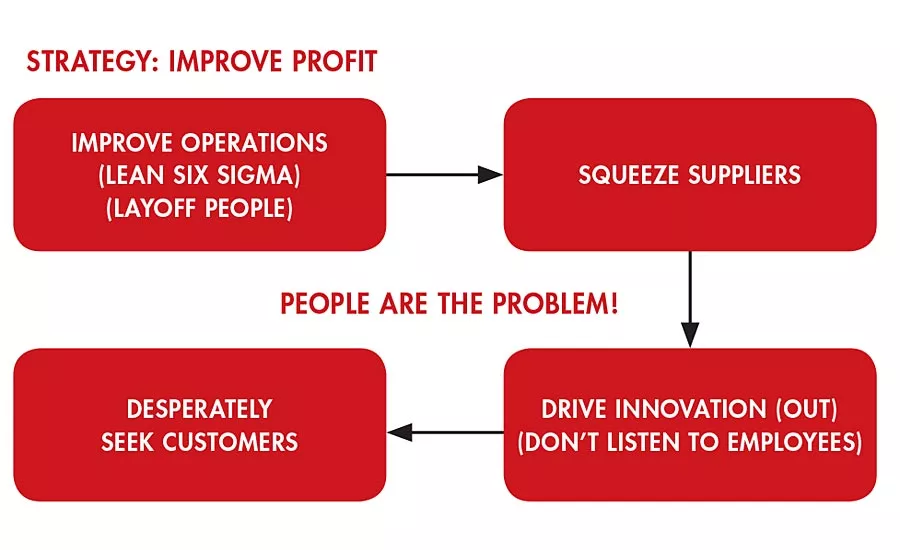
Figure 2. Business Model – Improve Profit represents a conventional approach to managing business. Source: All photos taken by the author at the Chicago IMTS (International Manufacturing Technology Show) 2016: Advances in Manufacturing - 3D Technology
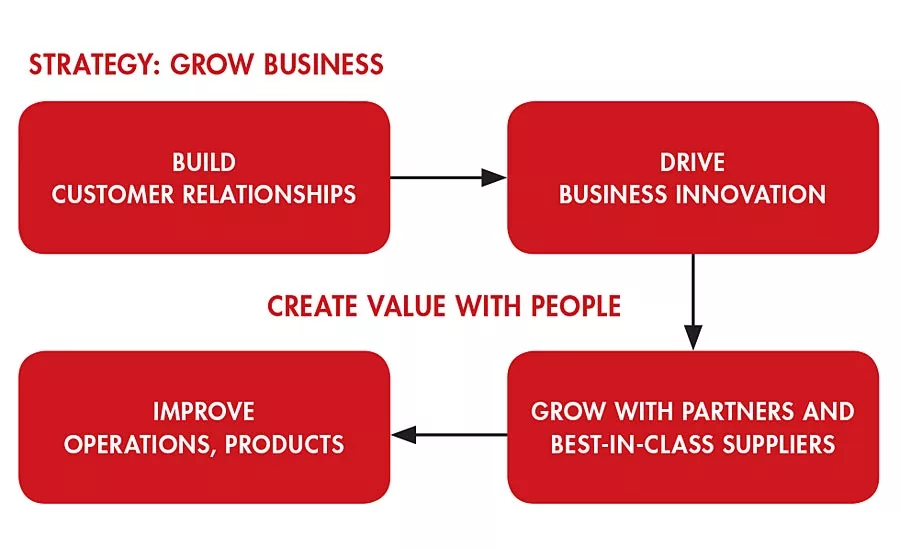
Figure 3. Business Model – Grow Business. Bill Gates shared his business model in his keynote at CES 2007, similar to what is shown here. Source: All photos taken by the author at the Chicago IMTS (International Manufacturing Technology Show) 2016: Advances in Manufacturing - 3D Technology
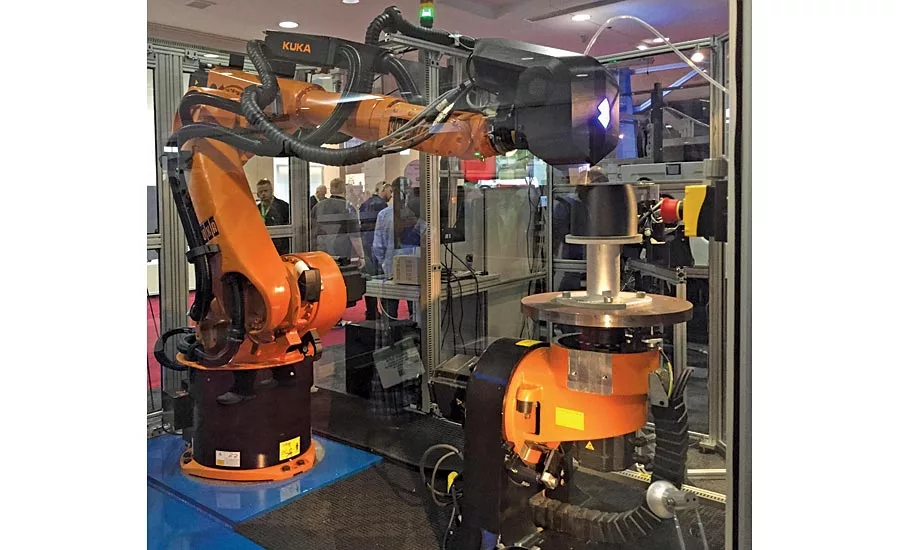
Commercial 3D Printer by Kuka Robotics. Source: All photos taken by the author at the Chicago IMTS (International Manufacturing Technology Show) 2016: Advances in Manufacturing - 3D Technology
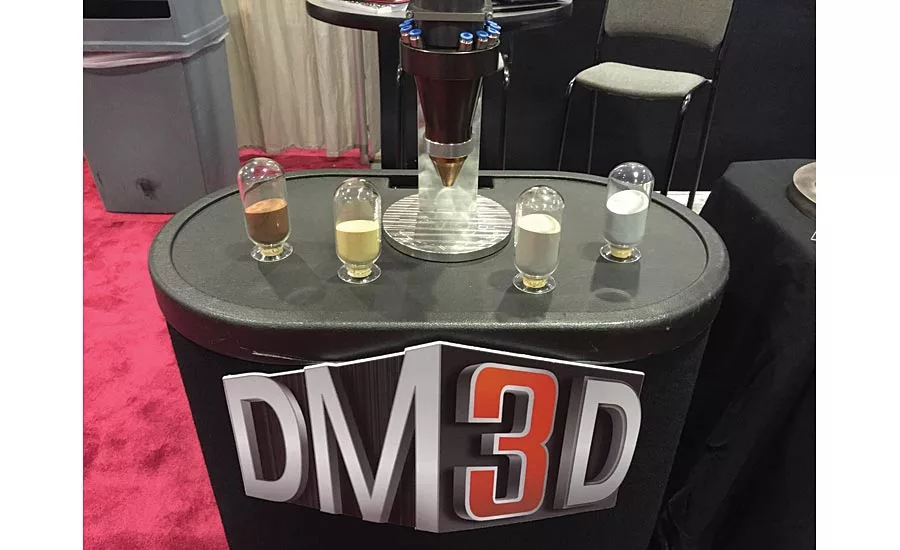
3D Printing Raw Material by DM3D Technology. Source: All photos taken by the author at the Chicago IMTS (International Manufacturing Technology Show) 2016: Advances in Manufacturing - 3D Technology
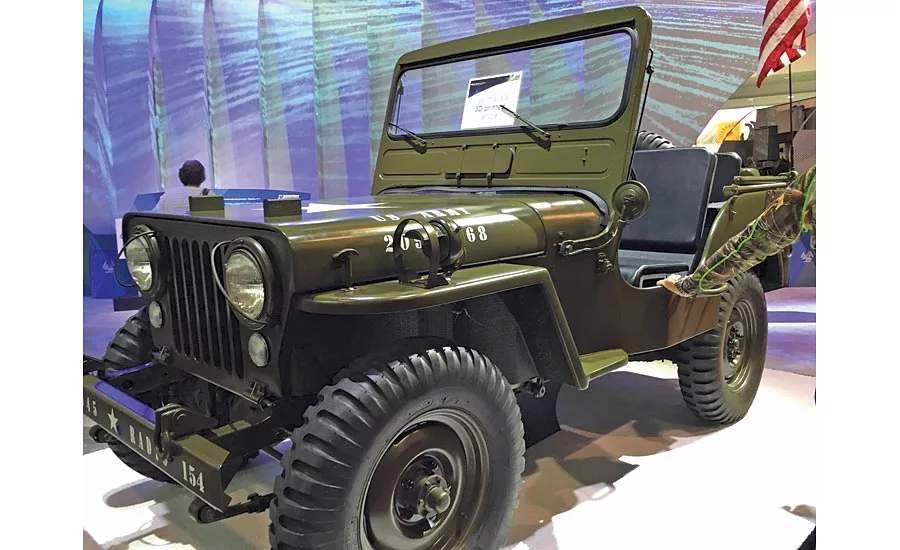
3D Printed Jeep by Oak Ridge National Laboratory. Source: All photos taken by the author at the Chicago IMTS (International Manufacturing Technology Show) 2016: Advances in Manufacturing - 3D Technology
In 1984, I joined the wafer quality group at Motorola Semiconductors Sector in Austin, TX. My first quality act was to join the American Society for Quality. At that time, competition from global organizations had already started; the main reason for losing market share was inferior quality. The simple measure was the first pass yield, which is the percentage of product produced defect-free for the first time without any repair or rework. As I remember our yields were in the 40% range, and for our competitors the yields were in the 80% and 90% range. The direct impact of higher yields was the lower product cost, which was half of the price of chips built in the U.S.
Motorola showed its quality leadership in 1981, when its leaders decided to improve quality by 10x in five years—which they soon realized was not sufficient to keep up with the competition. In 1986, Motorola leadership decided to improve quality by 10x in two years, and 100x in four years, and Six Sigma in five years. Motorola launched Six Sigma in 1987, which is widely used globally even today.
Since then, major changes have taken place, thus requiring dynamic quality leadership. For example, in the late 1980s, manufacturing leadership planned throughput at the lower yields with a certain cost of poor quality. Lower yields led to higher inventories. This led to Just-in-time methods to reduce inventories, and eventually to Lean methods to reduce waste. Leadership adopted Six Sigma and Lean methods to improve quality and responsiveness. Lean included cycle time reduction and Just-in-time methods, and Six Sigma included quality improvement and process control methods.
During the late ‘80s and throughout the ‘90s manufacturing diminished due to outsourcing for better quality, then for lower cost, and now for a faster turnaround at lower cost, and 24/7 operations and support. With new challenges and new tools, a different leadership style is required. In the early stages of quality, product control and flow were key aspects of leadership, then engineering management, supply chain management, improvement management, and then the entire system management. Quality became the business. As Bob Galvin, the founder’s son and CEO of Motorola, told his leaders, if they took care of quality, business would be taken care of. Galvin was one of the key quality leaders in the 1980s. During his time, quality came to the forefront of leadership.
In the 20th century quality highlighted the need for consistency in high-volume or mass production processes. Now mass personalization, rapid innovation and quality are given. Product life cycles are getting shorter, and perfect quality is assumed. There is literally no time for quality improvement programs for some products.
Key differences observed in the early 21st century include creativity over consistency, excellent over acceptable, speed over perfection, agile over Six Sigma, smart over automation, robots over humans, 3D printing over the entire factory, machine learning over software, and database queries over SPC software.
Changing Leadership
Kouzes and Posner, in “The Leadership Challenge,” have identified four key attributes of leadership: honesty, integrity, visionary, and knowledge. One can assemble a long list of attributes that make a successful leader. Conventionally, leadership has been considered an art—learnable, but more on the side of soft skills. However, with the exponentially growing role of technologies such as software, devices, hardware, and data, today’s leadership requires some hard skills too. That is why in many technology companies, CEOs are technology savvy people.
Many corporate executives focus on reducing cost through quality improvement or operational excellence initiatives. Their objective is to save money by improving operations through value stream mapping, quality improvement or better utilization of resources. The ultimate measure is savings, which primarily is measured through a reduction in the workforce. A long list of companies have tried this route and eventually could not survive. Their business model is to launch an operational excellence initiative, demand suppliers reduce price, prioritize projects that can yield short-term savings and starve projects with potential for growth, and then desperately grow the salesforce to sell sustaining or dying products. This model could have worked with products with a long lifecycle time, however it is a challenge in an entrepreneurial economy.
Bill Gates shared his business model in his keynote at CES 2007. It begins with building relationships with partners and customers. Listen to them, empathize with them, and understand their needs to develop innovative solutions. Collaborate with channel partners and suppliers to build and sell the solution quickly. Then, continually improve the product and operations.
These two business models require different skill sets. Cost reduction initiatives require more management skills while the growth oriented strategy requires leadership skills. Both styles are equally important as both require creativity. Cost reduction leadership requires process creativity, while the growth oriented leadership requires product creativity. However, cost reduction can hit limits. Growth has no ceiling, and thus offers more opportunities. Chris Galvin, former CEO of Motorola, has said that leadership is about taking your people to a horizon where they have never been. I have observed that cost reduction initiatives cause high anxiety and stress for employees, and growth normally causes excitement and a little anxiety.
Key Changes of the 21st Century
The internet has been a great equalizer, fitting all of us into a small world. We are less than 10 seconds apart in time, and walking to the next-door neighbor takes longer than electronically contacting someone thousands of miles away. This virtual closeness has resulted in wider collaboration, and 24/7 working hours with a distributed workforce.
A global workforce speeds up the rate of innovation, thus requiring faster lifecycle processes to respond to the speed of new product development. Organizations must manage a portfolio of products for short term and long term business objectives. R&D, development and manufacturing engineering processes must be evaluated for productivity and performance.
Information has been exponentially growing in recent years. Every five years we generate more information than the information accumulated until then. Excessive information will be analyzed, summarized and exploited in predicting future products, performance and planning. Much of routine human decision making would be transferred to smart devices, thus leaving the higher level understanding of causative relationships, i.e., dumbing down human thinking. It may lead to more knowledge based applications to make life easier. These new applications and corresponding new internet-based devices (Internet of Things) all connected in the cloud pose a risk for mass disruption. Leadership must develop an interest in data security, business intelligence, and use of big data.
As personalization and mass customization provide new products and services, 3D printing will play a role in growing manufacturing capacity. 3D printing has proven its capability to build anything, including cars and artificial limbs. 3D printers, prototyping and robots for mass customized production is not far from reality.
Finally, sustainability and conservation of natural resources will become a reality. There is only so much nature can give us, people need to find a way to share globally. The challenge of a growing population, increasing concentration of wealth, contentious distribution of resources, and fights for limited resources can become global corporate issues. Business and government will need to collaborate in the production and distribution of resources.
Leadership is about learning, understanding, predicting, envisioning and leading the change to the future. Leadership for new manufacturing requires the management skills of an administrator, empathy for people, love for technology, and knowledge of an engineer. Instead of maximizing one attribute of a business, leaders must learn to optimize multiple variables, and deal with a variety of constraints. A new framework of leadership must evolve that develops strategic and execution skills, social and technology skills. In today’s economy, entrepreneurship has bloomed and re-energized the next generation.
Conclusion
Leadership has always been a challenging role that everyone wants to do, but only a few lead well. Leadership is about building the business, growing revenue, and inspiring people to bring out their best. As organizations grow in complexity, leaders will be more knowledgeable, entrepreneurial, and data driven decision makers.
Looking for a reprint of this article?
From high-res PDFs to custom plaques, order your copy today!