Quality Magazine logo
search
cart
facebook twitter linkedin youtube
  • Sign In
  • Create Account
  • Sign Out
  • My Account
Quality Magazine logo
  • NEWS
  • PRODUCTS
    • FEATURED PRODUCTS
    • SUBMIT YOUR PRODUCT
  • CHANNELS
    • AUTOMATION
    • MANAGEMENT
    • MEASUREMENT
    • NDT
    • QUALITY 101
    • SOFTWARE
    • TEST & INSPECTION
    • VISION & SENSORS
  • MARKETS
    • AEROSPACE
    • AUTOMOTIVE
    • ENERGY
    • GREEN MANUFACTURING
    • MEDICAL
  • MEDIA
    • A WORD ON QUALITY PUZZLE
    • EBOOK
    • PODCASTS
    • VIDEOS
    • WEBINARS
  • EVENTS
    • EVENT CALENDAR
    • IMTS
  • DIRECTORIES
    • BUYERS GUIDE >
      • Supplier Insights
    • NDT SOURCEBOOK
    • VISION & SENSORS
    • TAKE A TOUR
  • INFOCENTERS
    • Digital Quality Management Systems
    • NEXT GENERATION SPC & QUALITY ANALYTICS
  • AWARDS
    • ROOKIE OF THE YEAR
    • PLANT OF THE YEAR
    • PROFESSIONAL OF THE YEAR
  • MORE
    • Expert Columns
    • NEWSLETTERS
    • QUALITY STORE
    • INDUSTRY LINKS
    • SPONSOR INSIGHTS
  • EMAG
    • eMAGAZINE
    • ARCHIVES
    • CONTACT
    • ADVERTISE
  • SIGN UP!
Management

Managing the Cost of Quality

We owe it to the customers and employees to keep track of these costs and continuously seek to improve them.
By Paul W. Critchley
Managing the Cost of Quality
August 15, 2018

The cost of quality isn’t discussed much. More often, the cost of poor quality hogs the limelight and the headlines. Cost of poor quality costs are believed to be 100% avoidable, and thus are assigned resources to expend extra attention and efforts to eliminate. Conversely, the costs of good quality (prevention and appraisal) are simply accepted as necessary evils, the cost of doing business.

But are they really? At a previous employer, I had an experience that made me question this notion.

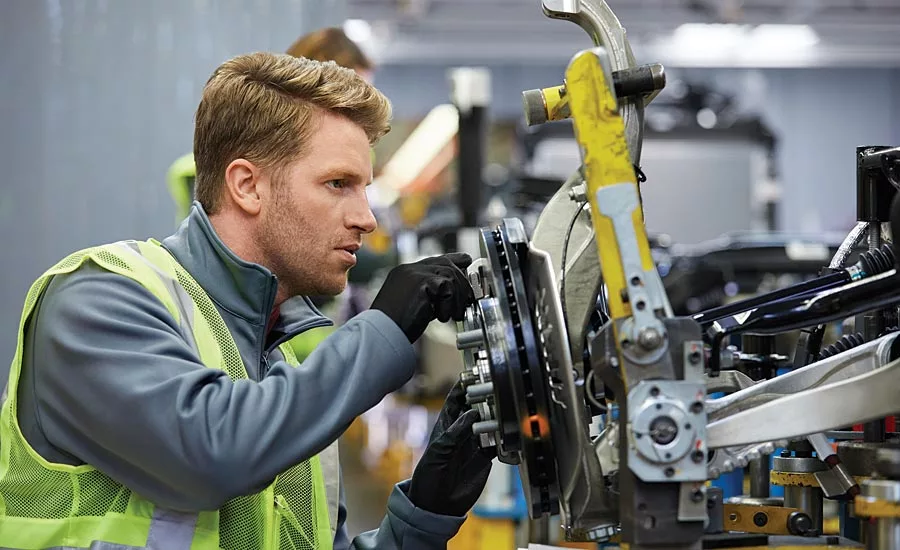
As the manufacturing engineering manager, I had a lot of responsibilities, one of which was spearheading our continuous improvement efforts. During one of my gemba walks, I spent some time in one of our higher-volume assembly cells. I was watching, listening and asking lots of questions of the folks in the cell, since I hadn’t spent any real quality time there in a while.

A Closer Look

Overall, the cell ran pretty well. It met its takt time consistently, had minimal downtime, and the associates were happy. Given that most of the assembly was hand work, I paid particular attention to each station’s ergonomics, and those looked good as well. As I was asking questions, though, I could sense that there was something awry. I pressed the issue, and finally the workers did mention that there was one station in particular that everyone hated. “Great!” I said. “Let’s take a look!”

They walked me through the operation, and I honestly didn’t see much that looked wrong, or even iffy. Noticing my confusion, the team lead explained that ergonomically, the station was fine. “It’s these stupid things that we all hate!” she exclaimed, holding up a small solenoid.

She handed it to me, and I turned it over in my hand. I handed it back to her, and she assembled it into a unit. She then tested the unit, which promptly failed. “Happens about every third or fourth unit,” she said, and then went on to show me how she had to disassemble the unit, get a new solenoid, and repeat the assembly process all over again. She would do this until the unit passed test, which didn’t always happen on the second try.

“So what happens to the bad solenoids?” I asked. With a bit of a knowing smirk, she pointed behind me. “See for yourself.”

I turned around and almost lost my breath. Under the stairs to a mezzanine was a 4’x4’x4’ box FULL of solenoids! The sheer number of them was enough to cause this lean practitioner to panic—forget the fact that each one cost us about seven dollars to buy, and that didn’t include all the labor we’d spent to assemble and disassemble them into units.

After I composed myself (which admittedly took a few seconds), I asked her how long this had been going on. “Years,” she replied. Clearly, the process, or many processes actually, was broken.

I convened the team and we set out to solve this puzzle. After some work (I’ll spare you the details—if you’re reading this, then you’ve likely been there!), we figured out what had happened.

The Problem

Years ago, before many of us had joined the company, our customer had encountered a problem and reported back to us about it. Back then, the folks who were involved in problem solving didn’t have the training nor the support to really find the root cause, so instead they just threw the kitchen sink at the issue. Fast was better than good, especially if a customer was unhappy. One of the things that got changed was the assembly line’s solenoid test acceptance criteria. Instead of allowing the entire spec to be used (say, 1-10 milliamps), engineering narrowed the acceptance criteria to be 3-7 milliamps. This action (along with a few others) seemed to make the problem go away, so it was implemented.

What didn’t make its way back to the floor was that the problem DID come back a couple months later, and engineering DID eventually figure out what the root cause was. Turned out that it had nothing to do with the solenoid at all (go figure!). However, no one ever circled back around to revert the test criteria back to our original, allowable 1-10 milliamps. What’s worse is that our vendor blueprint had never been updated, even from the beginning, so we’d been purchasing parts under a 1-10 mA specification, sorting them down to be between 3-7 mA, and throwing the rest away. And we’d done that for years. Let that sink in for a minute. We’ll come back to it in a second.

Fixing the Situation

Needless to say, after we figured all of this out, we sought to rectify the situation ASAP. Although engineering was confident that root cause had been previously identified and addressed, they were still hesitant in giving us our entire 1-10 mA spec back. We eventually settled on 2-9 mA, which we could live with since our vendor agreed to control their process to stay within this tolerance without charging us any extra money. So, we updated the operation sheets (and the blueprints!) and implemented our changes.

Now, if we’d been throwing away solenoids that didn’t meet spec, I feel confident that we would have noticed long before several years had elapsed. In fact, not only would we have had a method of tracking it, we’d have visited the vendor, charged them back for bad product, and forced them to issue root cause/corrective action/preventive action statements. However, since this instance had originally evolved as an “engineering thing” under the umbrella of solving an important customer issue, no one kept tabs on it or thought to question it. We didn’t have a method or a process to track the effect of the changes that had been made. We simply chalked it up to an appraisal cost of quality and assumed it was unavoidable.

When it comes to the cost of quality, it all counts. Some of it is necessary, sure, but that doesn’t mean we shouldn’t continuously measure, monitor and question it. Businesses exist to make money because if they don’t, they aren’t in business for long. We owe it to the customers and the employees to keep track of these costs and continuously seek to improve them—even if they don’t make the veritable naughty list that is the cost of poor quality. Q

KEYWORDS: assembly technology cost of poor quality defects manufacturing

Share This Story

Looking for a reprint of this article?
From high-res PDFs to custom plaques, order your copy today!

Paul headshot
Paul W. Critchley is the president of New England Lean Consulting. For more information, visit www.newenglandleanconsulting.com.

Recommended Content

JOIN TODAY
to unlock your recommendations.

Already have an account? Sign In

  • 2024 Quality Rookie of the Year Justin Wise 1440x750px banner with "Quality Rookie of the Year" logo inset

    Meet the 2024 Quality Rookie of the Year: Justin Wise

    Justin Wise is an exceptional individual who has been...
    Aerospace
    By: Michelle Bangert
  • Man with umbrella and coat stands outside while it rains at night looking at a building.

    Nondestructive Testing: Is there an ethics problem?

    I was a whistleblower who exposed fraudulent activities...
    NDT
    By: Dale Norwood
  • Unraveling Deflategate: Football stadium with closeup of football on field

    Unraveling the Tom Brady Deflategate

    The Deflategate scandal erupted following the 2014 AFC...
    Measurement
    By: Greg Cenker and Henry Zumbrun
Manage My Account
  • eMagazine Subscriptions
  • Newsletters
  • Online Registration
  • Subscription Customer Service
  • Manage My Preferences

More Videos

Sponsored Content

Sponsored Content is a special paid section where industry companies provide high quality, objective, non-commercial content around topics of interest to the Quality audience. All Sponsored Content is supplied by the advertising company and any opinions expressed in this article are those of the author and not necessarily reflect the views of Quality or its parent company, BNP Media. Interested in participating in our Sponsored Content section? Contact your local rep!

close
  • Key Takeaways for Quality Leaders
    Sponsored byComplianceQuest

    Key Takeaways for Quality Leaders from the 2026 Gartner Magic Quadrant™ for QMS

  • This image shows a person seated next to a Bobcat T66 compact track loader.
    Sponsored byPolyWorks by InnovMetric

    Supercharging Digital Gauging at Bobcat North America

  • Dorsey Calibration Lab photo by Tom LaBarbera Picture this Studios
    Sponsored byDorsey Metrology International

    Ensuring Product Quality in a Competitive Manufacturing Landscape

Popular Stories

This image shows a person seated next to a Bobcat T66 compact track loader.

Supercharging Digital Gauging at Bobcat North America

a professional in the aviation field performing maintenance, repair, and overhaul (MRO) work

Manufacturing Retention: Strategies for Improving Company Culture, Engagement and Skill Development

Dorsey Calibration Lab photo by Tom LaBarbera Picture this Studios

Ensuring Product Quality in a Competitive Manufacturing Landscape

2026 Quality Professional of the Year!

Events

June 22, 2026

Automate 2026

Automate is North America's largest robotics and automation event — and the best place to take your ideas from insight to impact.
 
Our show floor features the world’s leading automation solutions, from AI and robotics to motion control, vision systems, and more. Plus, our educational conference is second to none, led by the brightest minds in automation today.
 
Ready to transform the way you work? Take the next step at Automate.
July 14, 2026

Quality Leaders Forum: Better Communication, Better Quality Data

The Quality Leaders Forum is a quarterly, editor-moderated fireside chat series hosted by Quality Magazine, featuring candid conversations with senior manufacturing and operations executives shaping enterprise-level quality.

View All Submit An Event

Products

Lean Manufacturing and Service Fundamentals, Applications, and Case Studies

Lean Manufacturing and Service Fundamentals, Applications, and Case Studies

See More Products
Quality Podcast Channel Custom Content

Related Articles

  • The Cost of Quality

    See More
  • 7 Steps for Building a Business Case for EQMS Using the Cost of Quality

    See More
  • Guest Column

    What Is the Cost of Quality in Manufacturing?

    See More

Related Products

See More Products
  • principles of quality costs.jpg

    Principles of Quality Costs, Fourth Edition

  • certified.jpg

    The Certified Manager of Quality / Organizational Excellence Handbook, 4th Edition

See More Products

Events

View AllSubmit An Event
  • November 11, 2025

    Cutting the Cost of Quality With Industrial CT

    On Demand This webinar explores how industrial CT scanning transforms quality management by revealing internal flaws, reducing downtime, and eliminating costly scrap and rework.
View AllSubmit An Event

Related Directories

  • Business & Quality Process Management LLC

    BQPM, LLC is a global business and quality management consulting firm that helps small and medium business entities articulate their vision, achieve their goals, and realize their long-term potential. Our team utilizes state-of-the-art, process-based business, quality, website, and graphics methodologies to help management implement best practices and marketing for success.
  • ETQ, part of Hexagon

    ETQ, part of Hexagon, is a leading provider of integrated quality management, health, safety, and environmental solutions for manufacturers. Firms around the world rely on ETQ to ensure optimal quality at scale, reduce costs and improve the velocity of data-driven decisions. Learn more at etq.com.
×

Stay in the know with Quality’s comprehensive coverage of
the manufacturing and metrology industries.

Newsletters | Website | eMagazine

JOIN TODAY!
  • RESOURCES
    • Advertise
    • Contact Us
    • Directories
    • Manufacturing Division
    • Store
    • Want More
  • SIGN UP TODAY
    • Create Account
    • eMagazine
    • Newsletters
    • Customer Service
    • Manage Preferences
  • SERVICES
    • Marketing Services
    • Market Research
    • Reprints
    • List Rental
    • Survey/Respondent Access
  • STAY CONNECTED
    • LinkedIn
    • Facebook
    • YouTube
    • X (Twitter)
  • PRIVACY
    • PRIVACY POLICY
    • TERMS & CONDITIONS
    • DO NOT SELL MY PERSONAL INFORMATION
    • PRIVACY REQUEST
    • ACCESSIBILITY

Copyright ©2026. All Rights Reserved BNP Media, Inc. and BNP Media II, LLC.

Design, CMS, Hosting & Web Development :: ePublishing