Choosing the Right Cables and Connectors for Machine Vision
All cables should be fully tested to check they have the correct point-to-point connections.
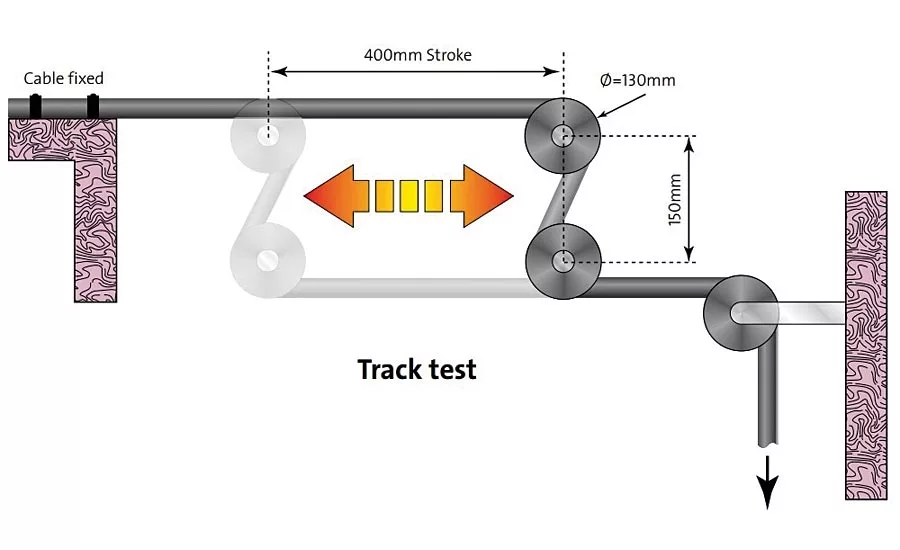
Figure 1. Track testing
Machine vision systems consist of a number of component parts and all of these must be optimized for the best possible performance. Choosing the right cables and connectors to link cameras to a vision system or PC is one important part of this and is driven by the particular application. Key factors include:
- Data transmission rate and distance
- Cable flexibility
- Connector integrity and material
- Cable routing
- Environment
In many cases, off the shelf cables may be adequate, but in others, application-specific cables may need to be manufactured.
Data transmission rate and distance
This is a fundamental consideration for any machine vision application, as it generally determines the data transmission standard that needs to be used. In general, Ethernet-based standards such as GigE Vision, 2.5GBASE-T, 5GBASE-T and 10GigE allow transmission over the longest distances (up to 100 meters) without the use of repeaters, while Camera Link HS and CoaXPress give the fastest data transfer rates but over shorter distances. Some applications require longer cable lengths than permitted by the preferred interface. Using optimized transmission material on a copper base, extended cable solutions are possible over medium range distances. Where significant cable lengths are required and a more appropriate interface cannot be used, repeaters are available which allow lengths to be extended typically between 2 and 4 times the standard length. For even longer distances, fiber optic cable solutions are available on USB, Camera Link, Camera Link HS, CoaXPress and Ethernet interfaces which can extend cable lengths up to a few hundred meters with multi-mode fiber and up to a few kilometers using single mode fibers.
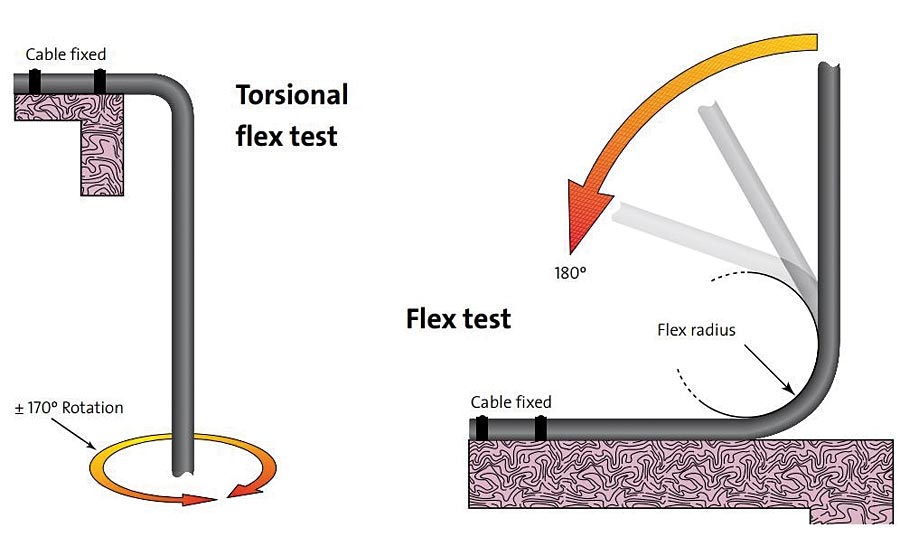
Figure 2. Torsional and flex testing
Cable flexibility
Most cables have a degree of flexibility allowing them to fit into a system chassis or machine. However, for applications where the camera will be moving, such as on a robot, cables designed to withstand continuous bending and flexing over time should be used. These robot or track-grade cables are tested with repeated movements to simulate use on a robotic system or drag chains. The cables are characterized by the minimum radius angle of the flex and the number of flexes in a given time period. Drag chains are a means to protect cables which are connected to a constantly moving mechanical part. The drag chain ensures that the cable’s minimum bend radius is not underrun. Track-grade cables are typically designed to survive more than 1 million flexes with a minimum radius. Robotic-grade cables go through an additional torsional flex test which specifies repeated twisting of the cable through up to 360° over a specified length. This simulates the stress on a cable used in connection with robot arms. Most interface cables are available in these higher flex formats.
Connector integrity
The use of lockable connectors is preferred so that the cable cannot be accidentally removed by pulling on it or as a result of shock or vibration. Many industrial and commercial interface solutions specify connectors that lock, and this type of connector is available for all of the machine vision transmission standards, such as BNC (bayonet lock) and Hirose (push-pull) for analogue systems, MDR26 for Camera Link (screwable) and CAT5e/CAT6 (screwable) for Ethernet.
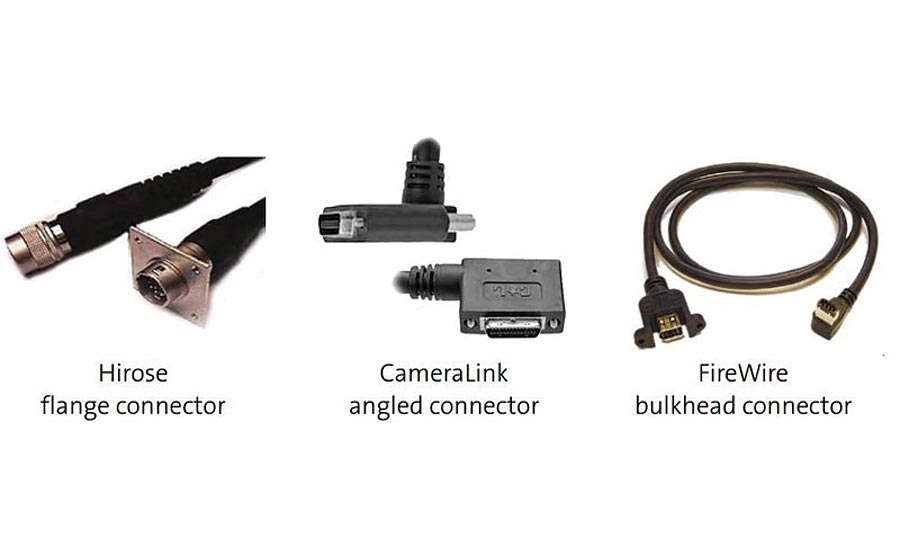
Figure 3. A selection of connector types
Cable routing
Normally cables are bought off-the-shelf and not wired in-situ. For most cables the connector is directly fixed in line with the cable, however for applications where space is limited, many different connector types are available with connectors rotated at specific angles. Problems often occur when cables need to pass through bulkheads or tight places where cable connectors do not fit. Limited space therefore often leads to complicated cabling solutions. With many of the digital interface standards, the ability to self-wire cables is a very complex task and if not manufactured correctly can cause data errors. To overcome these problems a range of angled and bulkhead connector solutions are available to enable easy implementation of difficult cable scenarios. In some cases the best solution is to have customer specific cable assemblies made through housings or core walls.
Environmental conditions
A number of environmental requirements can affect the choice of cables. These include temperature, flammability, gas emissions, UV resistance, solvents, liquids and water resistance and EMI and RFI interference, meaning a variety of different materials must be used in
their manufacture.
Low smoke cables
In the event of a fire, traditional PVC cables burn with a thick toxic black smoke containing hydrochloric acid. This smoke is dangerous when inhaled, reduces visibility considerably and is corrosive. Halogen-free cables are therefore frequently specified in industry standards or for industrial applications as they offer significant safety advantages and also reduce damage to the environment. The materials used are nominally free from chlorine, fluorine, bromine and iodine. This means common materials such as fluoroplastics, PVC (polyvinylchloride) and some flame retardants can’t be used. ‘Halogen-free’ cables are classified according to DIN VDE 0472 but this does permit the use of up 0.2 % chlorine and 0.1 % fluorine. In a fire, halogen-free cables only give off faint smoke which is less toxic and is not corrosive, significantly reducing the damage to computer storage media such as hard disk drives where data can be destroyed by thick smoke. Cables manufactured without the use of PVC and phthalate (softeners) also cause less harm to the environment and after the metallic cores have been removed, they can be recycled or disposed of safely.
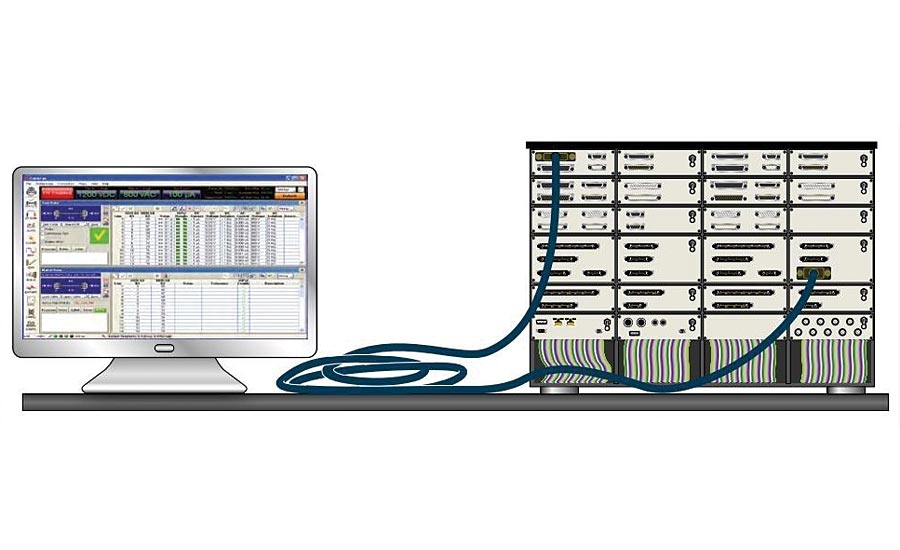
Figure 4. Cable test bench
Low smoke zero / halogen free
Halogen-free cables however should not be confused with the term “low smoke zero halogen” (LSZH) or “low smoke free of halogen” (LSOH). Halogen-free defines the behavior of the cable material in case of fire or the flammability. ‘Low smoke,’ however, requires that little smoke is produced. ‘Zero halogen’ requires that no halogen is released and no corrosive or etching acids are released. Low smoke zero halogen is increasing in popularity and is sometimes a requirement where people and equipment must be protected from toxic and corrosive gas, for example in the railway industry.
Oil-resistant cables
More and more lubricants, greases and hydraulic fluids used in industrial applications are biodegradable to meet environmental needs. However, these bio-oils are aggressive and can cause traditional cable insulation and jacket materials to swell and decompose. To overcome this, modified polymers are used in the manufacture of oil-resistant cables. These are subjected to extreme testing in order to ensure long life in applications where oil contamination is likely.
Silicon and fat-free cables
Silicon and fat-free cables are used in applications in automotive painting or coating plants. The cables used must not contain any material that can disrupt the paint wetting.
High temperature (Teflon) cables
Typically standard industrial cameras will operate up to a temperature range of 40 °C to 50 °C. Applications above 80 °C are an exception. Nevertheless, it is possible to supply cables in material that extends operation beyond these levels for some cables types such as CAT6 networking cables. For temperature ranges of -40° to +180 °C (and for brief periods up to +250 °C) Teflon cables with PTFE, FEP or PFA isolation can be used. As the raw material is also highly resistant to chemicals and detergents it is frequently used in medical or food applications.
Cables for clean room use
Cables used in clean room conditions must not create particulates. Materials that are vacuum baked to give a stable surface such as PUR (polyurethane) are used in connection with nickel plated full metal end caps. In addition these cables are produced using lead-free crimping technology without the use of flux material.
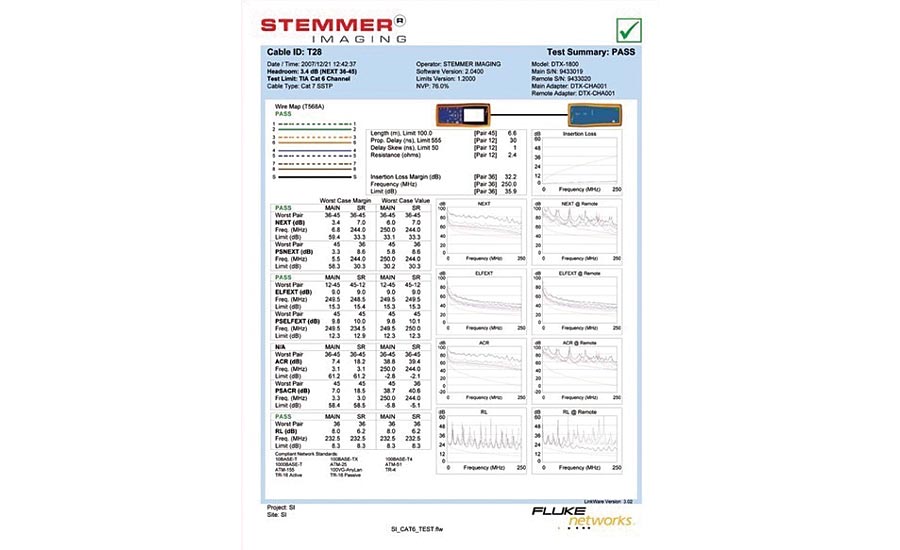
Figure 5. Cable test certificate
Cable testing and specialist cable manufacture
All cables, whether off the shelf or specially made should be fully tested to check they have the correct point-to-point connections. Specialist cable manufacture capabilities can go much further. Specialist testing equipment can be used for automatic transition resistance testing of the individual lines on a point-by-point basis. This allows the identification any irregularities in the cable beyond basic continuity testing. Specialist test equipment can be used to check the various connector combinations and if required, customer-specific cable sets can be connected to frame grabbers via specially made adapters, enabling data transmission validation to be performed. Complete short-circuit test procedures can also be carried out to check all possible contact combinations and enclosure screening. In this way, individual test certificates can be produced for each cable. V&S
Looking for a reprint of this article?
From high-res PDFs to custom plaques, order your copy today!