Quality Magazine logo
search
cart
facebook twitter linkedin youtube
  • Sign In
  • Create Account
  • Sign Out
  • My Account
Quality Magazine logo
  • NEWS
  • PRODUCTS
    • FEATURED PRODUCTS
    • SUBMIT YOUR PRODUCT
  • CHANNELS
    • AUTOMATION
    • MANAGEMENT
    • MEASUREMENT
    • NDT
    • QUALITY 101
    • SOFTWARE
    • TEST & INSPECTION
    • VISION & SENSORS
  • MARKETS
    • AEROSPACE
    • AUTOMOTIVE
    • ENERGY
    • GREEN MANUFACTURING
    • MEDICAL
  • MEDIA
    • A WORD ON QUALITY PUZZLE
    • EBOOK
    • PODCASTS
    • VIDEOS
    • WEBINARS
  • EVENTS
    • EVENT CALENDAR
    • IMTS
  • DIRECTORIES
    • BUYERS GUIDE >
      • Supplier Insights
    • NDT SOURCEBOOK
    • VISION & SENSORS
    • TAKE A TOUR
  • INFOCENTERS
    • Digital Quality Management Systems
    • NEXT GENERATION SPC & QUALITY ANALYTICS
  • AWARDS
    • ROOKIE OF THE YEAR
    • PLANT OF THE YEAR
    • PROFESSIONAL OF THE YEAR
  • MORE
    • Expert Columns
    • NEWSLETTERS
    • QUALITY STORE
    • INDUSTRY LINKS
    • SPONSOR INSIGHTS
  • EMAG
    • eMAGAZINE
    • ARCHIVES
    • CONTACT
    • ADVERTISE
  • SIGN UP!
Test & Inspection

Test & Inspection

Crushing it: a granular breakdown of testing what shouldn’t break down

While tensile testing garners significant attention, compression testing is equally crucial.
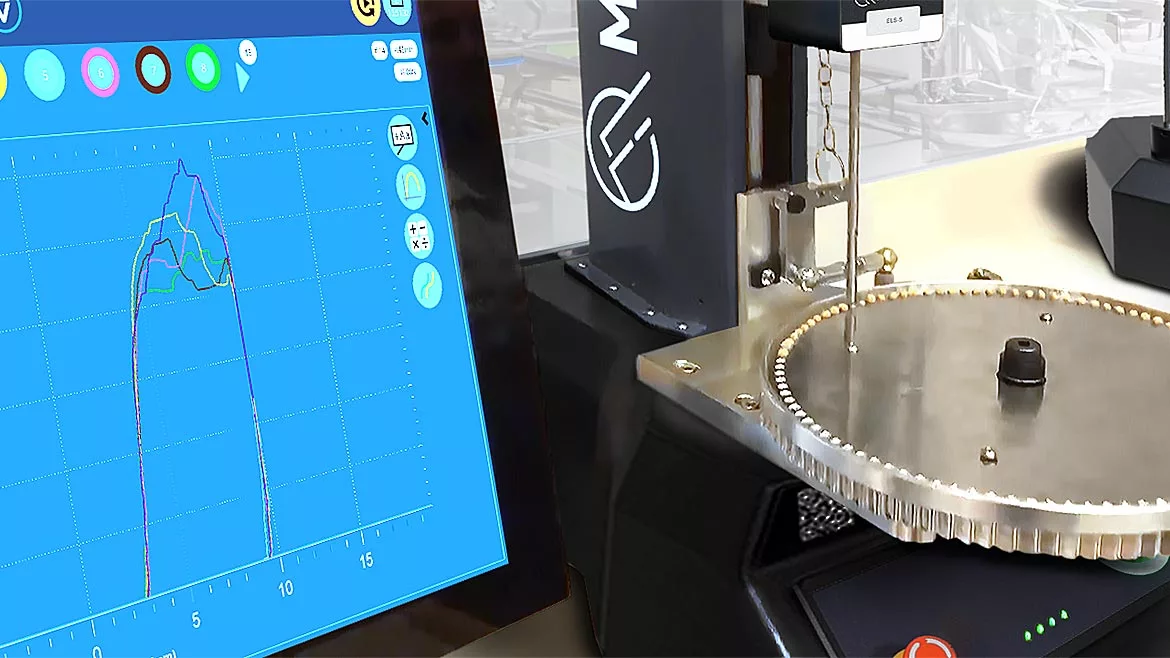
By Carl Bramley
PPT Group, Pellet auto tester single frame full view halo

All images source: Mecmesin, a PPT Group company

January 26, 2024
✕
Image in modal.

Materials testing is a fundamental aspect of engineering and manufacturing. It plays a pivotal role in ensuring the reliability and efficiency of a wide range of products and processes. Material property calculation is commonly associated with tensile testing, which assesses a material’s response to stretching forces, sometimes to high elongation. However, while tensile testing garners significant attention, compression testing is equally crucial. In this article, we narrow the focus to the specific domain of crush testing for granules, pellets, and similar test specimens.

Subject matter

The need to test granules and pellets for crush resistance arises in various industries where these small particles play a vital role in product performance, safety, and quality. Applications include chemical processing where catalysts, in the form of granules or pellets, are essential to the chemical reaction, and not to mention agriculture, food & beverage and pharmaceuticals sectors where similar types of products are used as additives.

Such test specimens contain no moving parts and have little physical function other than to stay intact when in use, so as not to contaminate. Brittle materials exhibit little or no plastic deformation before failure, and their fractures are typically sudden and catastrophic.

Bulk catalyst crush testing

As all industries strive for greater sustainability and efficiency, the performance of catalysts and pellets has never been more critical, particularly in the fields of gasoline, plastics, polyesters and artificial fertilizer (ammonia).

Bulk crush testing of packed-bed catalysts is a valuable tool in their development and evaluation. This testing method serves as a critical quality control measure to assess the mechanical strength and durability of catalyst particles. By subjecting catalysts to controlled compression, it enables researchers and engineers to determine the point at which the catalyst bed begins to deform or crush.
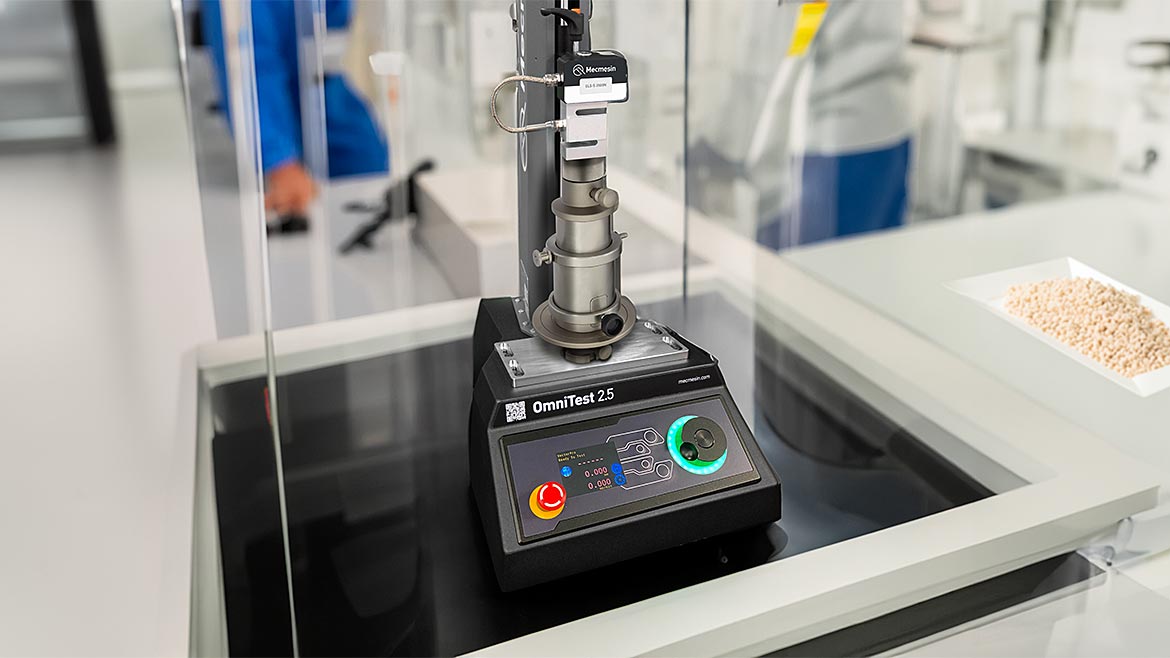
PPT Group ASTM D7084 fixture on OmniTest
The test standard ASTM D7084 covers catalyst particles of 0.8 – 4.8 mm diameter, such as granules. Particles are contained in a cylindrical sample holder and crushed with a piston. Pressure is applied at a uniform rate to the bed of particles, held for 30 seconds and slowly released. The pressure which causes 1% of fines (particles which pass through a sieve of half-size of the pellet) is recorded and typically lies between 0.1 – 0.35 MPa for granules and 1 – 3.5 MPa for larger formed materials.

This quality assurance testing strategy is crucial for designing and selecting catalysts for various industrial processes, such as refining, petrochemicals, and environmental applications. It ensures that catalysts can withstand the harsh conditions within reactors, minimizing the risk of particle breakage or attrition, which can lead to reduced catalyst performance and increased operational costs.

This bulk crush testing of packed bed catalysts is an indispensable tool in optimizing catalyst formulations, ensuring their long-term stability, and ultimately enhancing the efficiency and sustainability of chemical and petrochemical processes.

Variation on a theme

Potassium sorbate is widely used as a food preservative to inhibit the growth of molds and yeasts in various food and beverage products. It is typically produced from a solution which is cooled to induce crystallization. The resulting potassium sorbate crystals are separated from the liquid and dried to remove any remaining moisture.

Crush resistance testing is also a fundamental aspect of quality control for potassium sorbate production. The material properties of this compound must ensure that the particles are resistant to crushing or breakage during packaging, handling, storage, and transportation. This is crucial to guarantee the practical suitability of the product in the supply chain. This performance benchmark tests that when in real use in tablet form, the potassium sorbate maintains its structural integrity until it dissolves to deliver the active ingredient or remains intact to be evenly dispersed within its matrix, or base material.

Regulatory compliance with industry standards and regulations may require crush resistance testing to ensure the product meets specified quality and safety standards. This is particularly important in industries where the product comes into direct contact with food, drugs, or other consumer products. 

The crystals are crush tested in a similar manner to the catalyst test—again implemented by a universal tester and a plunger/cylinder fixture. The bulk test sample is levelled in the container, the compaction plunger is inserted, and the sorbate displaced to its maximum under 2400N pressure. The displacement distance is plotted against the pressure with the area under the curve being directly related to the hardness of the sorbate (the smaller the number the harder the sorbate). The assessment is repeated multiple times per batch source of sorbate, with data being statistically analyzed based on the normality of the particle size data.

Single pellet crush standards

Commercial catalysts are optimized for energy release in chemical reactions and come in diverse shapes, including pellets, granules, tablets, spheres, rings, and extrudates. This diversity poses challenges in testing, leading to the creation of various integrity test standards tailored to different catalyst geometries and types.

Individual results

When catalytic materials consist of regular-shaped particles, the implementation of single pellet strength testing methods is possible.
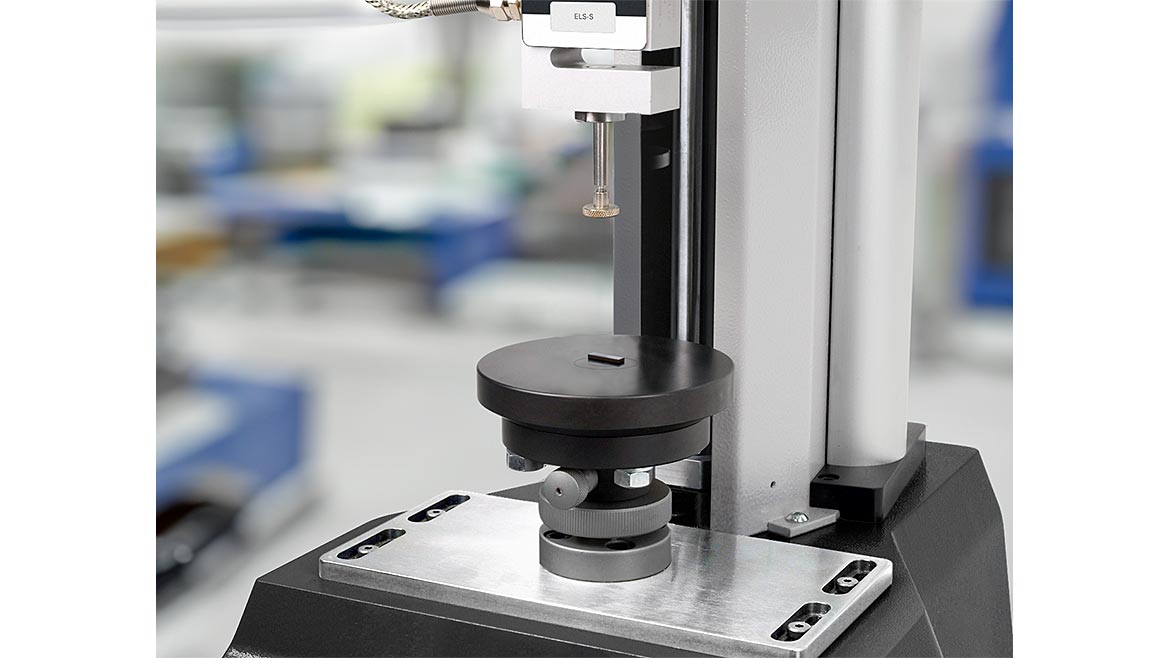
PPT Group, OmniTest compression test single catalyst pellet
ASTM D4179, titled "Single Pellet Crush Strength of Formed Catalysts and Catalyst Carriers," focuses on evaluating the compressive ‘side crush strength’ (SCS) of individual pellets in regular forms such as spheres, short cylinders, or tablets. Specifically, it allows for testing as a radial or axial crush. The test applies a uniform force to the pellet until it crushes or collapses, recording the maximum crush strength at the point of initial collapse.

In such a test, a small diameter compression plate or flat-faced probe descends to compress an individual sample of the product. The load at which the material’s structural integrity fails is measured—often requiring a high data sampling rate to detect any sudden collapse—and this break force value is reported.

ASTM D6175, “Radial Crush Strength of Extruded Catalyst and Catalyst Carrier Particles” also covers measuring the compressive ‘side crush strength’ (SCS). However, in this case, the relevance is only for radial crush.

Increasing efficiency

The single pellet crush test can be time-consuming when there is the essential need to calculate representative data for a whole batch. A software-controlled materials tester augmented with a degree of automation can vastly increase repeatability, throughput and confidence in the recorded hardness data.
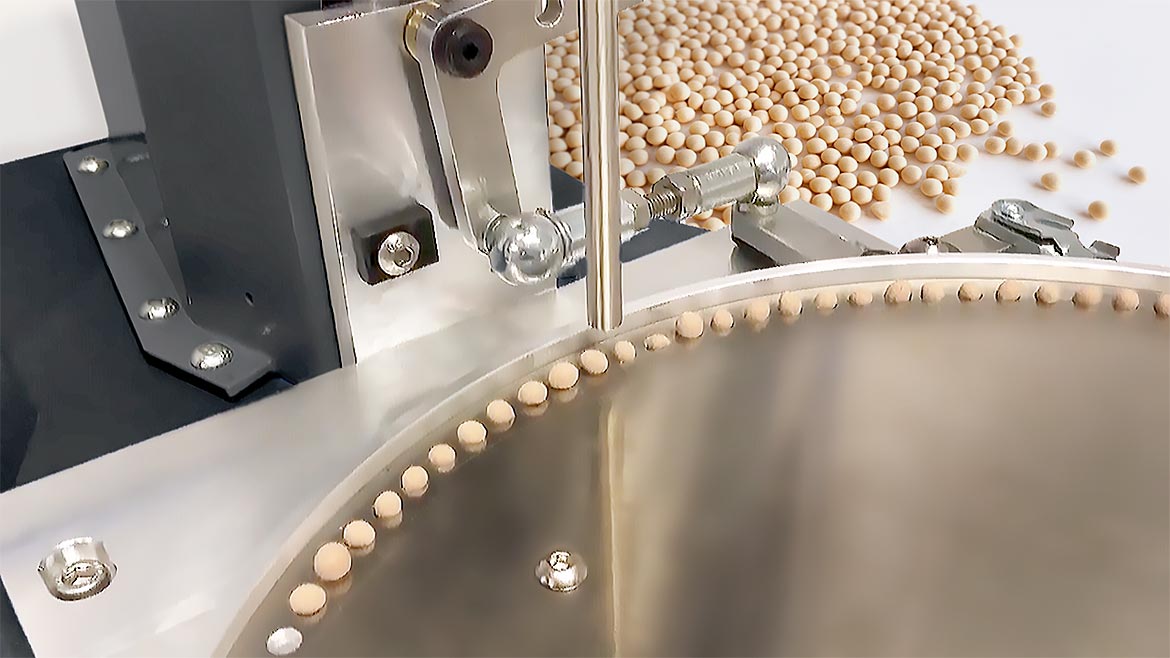
PPT Group. Pellet auto tester single frame closeup
An automated pellet crush testing system. Many individual pellets are loaded at one time onto a rotating platen, into which has been machined suitably dimensioned depressions to locate each single specimen. Operators are spared the repetitive error-susceptible (and tiresome) task of manually loading the sample to perform an individual material crush resistance test.

Software is an integral part of a modern materials testing system, controlling the mechanical movement of the fixtures to apply appropriate loading to the test piece in tension or compression. It also enables the repetition of tests from which a representative hardness (kg/granule) for the supply is easily and reliably obtained. The software performs extensive statistical analysis of results across sample batches and can present data in easily digestible report formats.

Conclusions

Crush testing of particles, pellets and granules is a vital aspect of ensuring the reliability and performance of a wide range of processes in many industries. Accurately, efficiently and repeatedly characterizing the materials against international standards provides confidence in various applications that rely on the physical integrity of these products in their dependent processes.

KEYWORDS: compression testing manufacturing metrology tensile testing

Share This Story

Looking for a reprint of this article?
From high-res PDFs to custom plaques, order your copy today!

Carl Bramley is the materials product manager, PPT UK Ltd. For more information, call (703) 433-9247, email [email protected] or visit www.mecmesin.com.

Recommended Content

JOIN TODAY
to unlock your recommendations.

Already have an account? Sign In

  • 2024 Quality Rookie of the Year Justin Wise 1440x750px banner with "Quality Rookie of the Year" logo inset

    Meet the 2024 Quality Rookie of the Year: Justin Wise

    Justin Wise is an exceptional individual who has been...
    Aerospace
    By: Michelle Bangert
  • Man with umbrella and coat stands outside while it rains at night looking at a building.

    Nondestructive Testing: Is there an ethics problem?

    I was a whistleblower who exposed fraudulent activities...
    NDT
    By: Dale Norwood
  • Unraveling Deflategate: Football stadium with closeup of football on field

    Unraveling the Tom Brady Deflategate

    The Deflategate scandal erupted following the 2014 AFC...
    Measurement
    By: Greg Cenker and Henry Zumbrun
Manage My Account
  • eMagazine Subscriptions
  • Newsletters
  • Online Registration
  • Subscription Customer Service
  • Manage My Preferences

More Videos

Sponsored Content

Sponsored Content is a special paid section where industry companies provide high quality, objective, non-commercial content around topics of interest to the Quality audience. All Sponsored Content is supplied by the advertising company and any opinions expressed in this article are those of the author and not necessarily reflect the views of Quality or its parent company, BNP Media. Interested in participating in our Sponsored Content section? Contact your local rep!

close
  • Key Takeaways for Quality Leaders
    Sponsored byComplianceQuest

    Key Takeaways for Quality Leaders from the 2026 Gartner Magic Quadrant™ for QMS

  • This image shows a person seated next to a Bobcat T66 compact track loader.
    Sponsored byPolyWorks by InnovMetric

    Supercharging Digital Gauging at Bobcat North America

  • Dorsey Calibration Lab photo by Tom LaBarbera Picture this Studios
    Sponsored byDorsey Metrology International

    Ensuring Product Quality in a Competitive Manufacturing Landscape

Popular Stories

This image shows a person seated next to a Bobcat T66 compact track loader.

Supercharging Digital Gauging at Bobcat North America

Dorsey Calibration Lab photo by Tom LaBarbera Picture this Studios

Ensuring Product Quality in a Competitive Manufacturing Landscape

a professional in the aviation field performing maintenance, repair, and overhaul (MRO) work

Manufacturing Retention: Strategies for Improving Company Culture, Engagement and Skill Development

2026 Quality Professional of the Year!

Events

June 22, 2026

Automate 2026

Automate is North America's largest robotics and automation event — and the best place to take your ideas from insight to impact.
 
Our show floor features the world’s leading automation solutions, from AI and robotics to motion control, vision systems, and more. Plus, our educational conference is second to none, led by the brightest minds in automation today.
 
Ready to transform the way you work? Take the next step at Automate.
July 14, 2026

Quality Leaders Forum: Better Communication, Better Quality Data

The Quality Leaders Forum is a quarterly, editor-moderated fireside chat series hosted by Quality Magazine, featuring candid conversations with senior manufacturing and operations executives shaping enterprise-level quality.

View All Submit An Event

Products

Lean Manufacturing and Service Fundamentals, Applications, and Case Studies

Lean Manufacturing and Service Fundamentals, Applications, and Case Studies

See More Products
Quality Podcast Channel Custom Content

Related Articles

  • various methods of Non-Destructive Testing (NDT)

    X-Ray Nondestructive Testing: What to Know and What to Ask

    See More
  • compression testing

    Nondestructive Compression Force Testing: What, Why, and How

    See More
  • Drowning hand underwater

    The Definition of a Fool is a Drowning Man Who Tries to Keep It a Secret

    See More

Related Products

See More Products
  • What Lean Means DVD

  • image.jpg

    Management Lessons from Taiichi Ohno: What Every Leader Can Learn from the Man who Invented the Toyota Production System

See More Products

Related Directories

  • American Institute of Nondestructive Testing

    The American Institute of Nondestructive Testing offers online and hands-on training in RT, UT, ET, MT, PT and VT nondestructive testing methods. Let us customize an NDT training program that fits your company's needs. We offer training online, at your facility or at our 22,000 Sq Ft facility.
×

Stay in the know with Quality’s comprehensive coverage of
the manufacturing and metrology industries.

Newsletters | Website | eMagazine

JOIN TODAY!
  • RESOURCES
    • Advertise
    • Contact Us
    • Directories
    • Manufacturing Division
    • Store
    • Want More
  • SIGN UP TODAY
    • Create Account
    • eMagazine
    • Newsletters
    • Customer Service
    • Manage Preferences
  • SERVICES
    • Marketing Services
    • Market Research
    • Reprints
    • List Rental
    • Survey/Respondent Access
  • STAY CONNECTED
    • LinkedIn
    • Facebook
    • YouTube
    • X (Twitter)
  • PRIVACY
    • PRIVACY POLICY
    • TERMS & CONDITIONS
    • DO NOT SELL MY PERSONAL INFORMATION
    • PRIVACY REQUEST
    • ACCESSIBILITY

Copyright ©2026. All Rights Reserved BNP Media, Inc. and BNP Media II, LLC.

Design, CMS, Hosting & Web Development :: ePublishing