Management
Quality Culture Is the Competitive Advantage Modern Manufacturing Can’t Automate
The most resilient manufacturers recognize that culture is what allows technology to perform at its best.
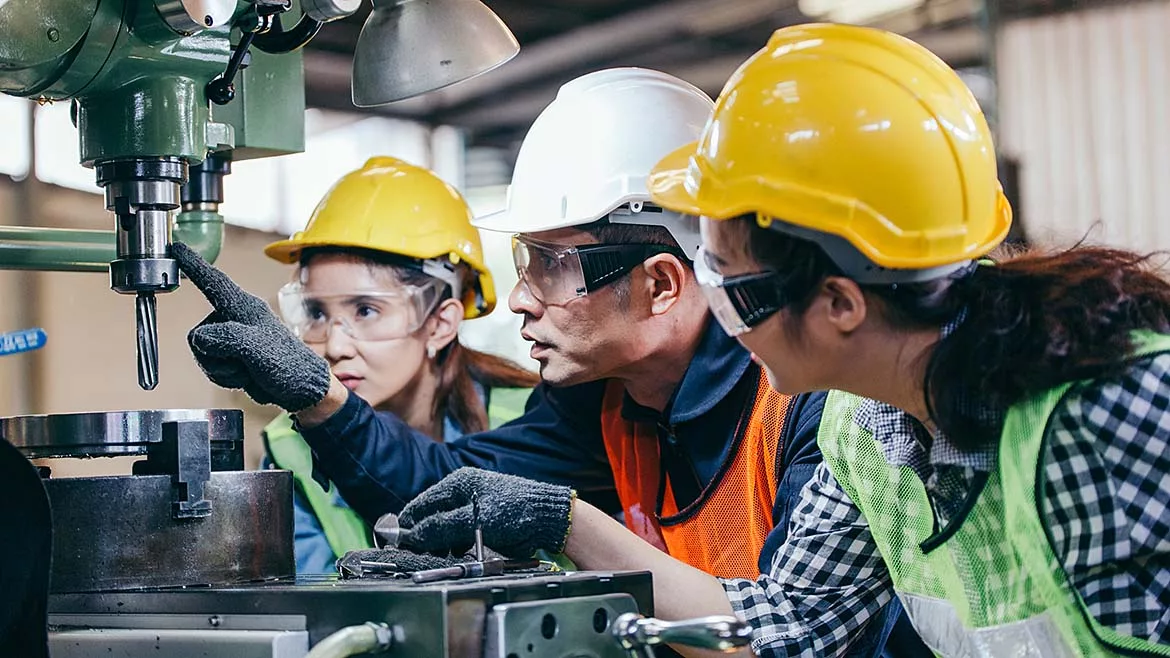
Modern manufacturing is undergoing a profound transformation. Automation, digitalization, and AI are reshaping how products are designed, produced, and delivered. Yet amid this rapid evolution, many organizations overlook the most critical determinant of quality performance: culture.
Machines execute processes. Systems enforce controls. But culture governs decisions when conditions change, data is incomplete, or pressure mounts. And in modern manufacturing where speed, customization, and complexity are accelerating, those moments are increasing.
Quality, therefore, is no longer just a technical discipline. It is a leadership and cultural imperative.
Why Culture Matters More as Manufacturing Advances
As factories become smarter and more connected, the margin for error often narrows. Automated processes can amplify both excellence and failure. A single flawed assumption, unchecked deviation, or misaligned incentive can cascade across global operations in hours.
In this environment, quality cannot rely solely on detection. It must be embedded in how people think, decide, and act. That requires a culture where individuals understand not only how to perform tasks, but why quality matters, and when to intervene.
The most resilient manufacturers recognize that culture is what allows technology to perform at its best. Without it, digital tools simply accelerate the wrong outcomes.
Empowerment Is the New Quality Control
One of the defining characteristics of a strong quality culture is the ability, and expectation, for employees to speak up. In traditional models, quality was something checked downstream. In modern manufacturing, quality is protected upstream by empowered people.
This requires more than open-door policies or slogans. It demands visible leadership behavior that signals dissent is valued, not penalized. When employees believe raising a concern will slow things down or create friction, silence becomes the default, and silence is expensive.
Organizations that outperform make it clear: identifying risk is not an interruption to the work, it is the work. Speaking up is reframed as professional responsibility, not personal risk.
Clarity Over Compliance
Modern manufacturing operates at the intersection of speed and precision. To navigate this tension, leaders must replace excessive rulemaking with clear principles.
Teams need to know where the boundaries are. What is always unacceptable. When quality takes precedence over output. Who has the authority to stop and reset a process. Clarity creates alignment, and alignment enables speed without sacrificing integrity.
When expectations are ambiguous, decisions fragment across the organization. When expectations are explicit, teams act consistently, even under pressure.
Importantly, this clarity must be reinforced through leadership action. Culture is shaped less by what is written and more by what is tolerated. Every exception quietly redefines the standard.
The Strategic Discipline to Slow Down
Speed is often celebrated as a competitive advantage in manufacturing. But in practice, the inability to slow down is a strategic weakness.
Modern manufacturers must develop the discipline to pause when signals suggest risk: whether that risk comes from process drift, supply chain disruption, or design changes driven by market urgency. Knowing when to stop is not resistance to progress; it is protection of long-term value.
Organizations with mature quality cultures understand that the cost of being wrong is almost always higher than the cost of being late. They choose credibility over convenience, and customers notice.
Culture as Leadership Infrastructure
Quality culture does not sit within a function. It is not owned by quality teams alone. It is part of the organization’s leadership infrastructure.
Leaders set culture through what they ask, what they reward, and what they are willing to challenge. When leaders consistently choose transparency over optics, rigor over shortcuts, and learning over blame, quality becomes self-reinforcing.
In a world where manufacturing technology is increasingly accessible, culture is what differentiates sustainable performers from fragile ones.
The factories of the future will be defined not just by smart machines, but by smart decisions made by people who are trusted, empowered, and aligned around what “right” truly means.
And that is something no system can automate.
Looking for a reprint of this article?
From high-res PDFs to custom plaques, order your copy today!