Articles Tagged with ''manufacturing''
NDT | Computed Tomography
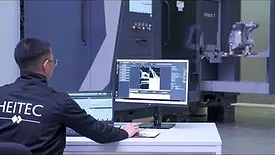
Real-time Quality Feedback Moves to the Active Production Line
Industrial CT-scanning systems and analysis software are providing faster insights into manufactured components.
Read More

Software
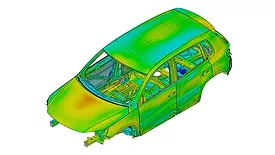
Data Diversity: A Connected Approach to Quality
It’s time to unlock the potential of metrology data.
Read More

Test & Inspection
Portable Hardness Test Methods and When to Use Them
The most important step is to familiarize yourself with the limitations of the test method to avoid inaccurate results.
Read More
Measurement
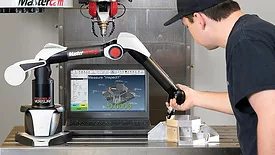
Automating Portable Manual CMMs
Closing the digital loop on arms, laser trackers, and scanners.
Read More

Plant of the Year Guest Column
Beyond Compliance: How Quality Packaging Drives Efficiency and Customer Satisfaction
While manufacturers invest heavily in product development, packaging is often viewed as secondary—until a failure occurs.
Read More



NCSLI
The Application of AI in Conformity Assessments: Pros, Cons, and the Human Touch
While AI offers numerous benefits in this field, it also presents challenges to consider.
Read More


Metrology Corner
Unusual Metrology: Revealing Less Common Measuring Instruments
Unusual Metrology
Read More
