Measurement
Automating Portable Manual CMMs
Closing the digital loop on arms, laser trackers, and scanners.
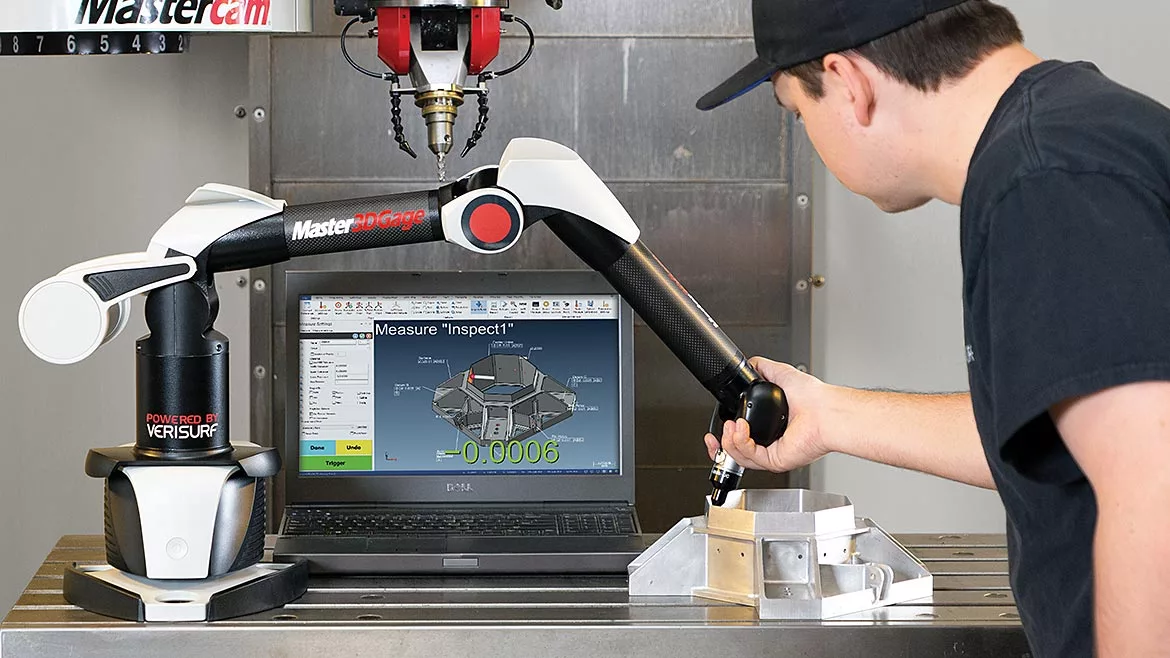
Portable devices also tend to be much less expensive both in acquisition and sustaining costs including long-term maintenance, calibration, and repairs. Most stationary, machine-driven CMMs require an environmentally-controlled room, isolated to manage temperature, humidity, and vibration. For initial capital investment, stationary CMMs come at a much higher cost. Image Source: Verisurf
The evolution of 3D measurement systems has transformed manufacturing quality control, addressing diverse requirements for parts, tools, and assemblies. Coordinate measuring machines (CMMs) were initially designed for high-precision inspections. Over time, motorized, programmable CMMs emerged as standard tools, offering accuracy and repeatability. However, the demand for portability and cost-effective solutions led to the adoption of non-motorized articulated arms, commonly referred to as portable CMM arms. These tools combine precision with ease of use and affordability. With automated, software-driven inspection plans, portable devices achieve levels of productivity and process control that rival their stationary counterparts.
Bridging the Gap Between Legacy Tools and Advanced Metrology
Quality control has traditionally relied on manual 2D gages like calipers and height gages or motorized CMMs for advanced measurements. Many manufacturers find it challenging to balance the use of these systems. A hybrid approach—combining portable CMM arms with user-guided, software-automated workflows—fills this gap. When using CAD-based metrology software, these automated systems elevate inspection accuracy and data continuity while reducing costs. Their acceptance across industries highlights their reliability and efficiency in meeting diverse quality control needs.
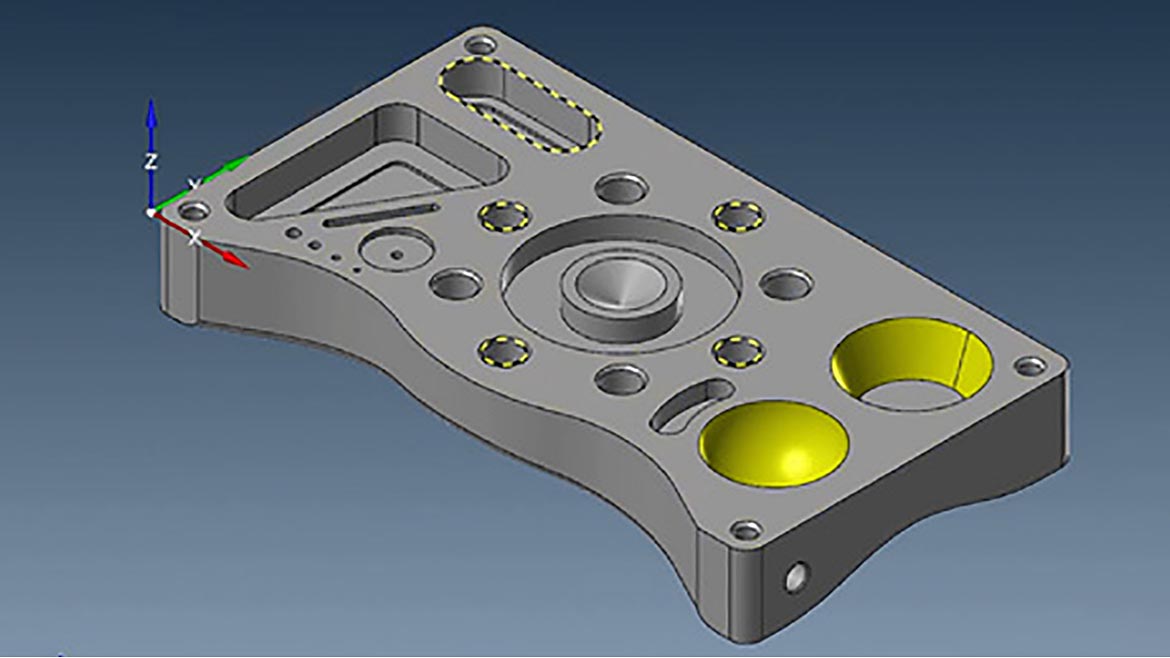
Hand-tool measurement gages, such as micrometers, calipers, gage pins, and height gages, are often used effectively for measuring primitive geometric shapes of a mathematical definition, such as planes, holes (cylinders), slots, cones, spheres, etc.
| Image Source: VerisurfWhen Do You Need Digital 3D Measuring Devices?
Manual gages are sufficient for simple measurements but fail to deliver accuracy for complex, non-geometric shapes like airfoils or molded plastics. Portable CMMs excel in such cases, measuring 3D coordinate points on part surfaces and comparing them to CAD models. Leveraging GD&T (Geometric Dimensioning and Tolerancing) principles, portable systems measure profiles and positions with precision. Their automated workflows reduce variability and errors, ensuring consistent, repeatable inspections across various part geometries.
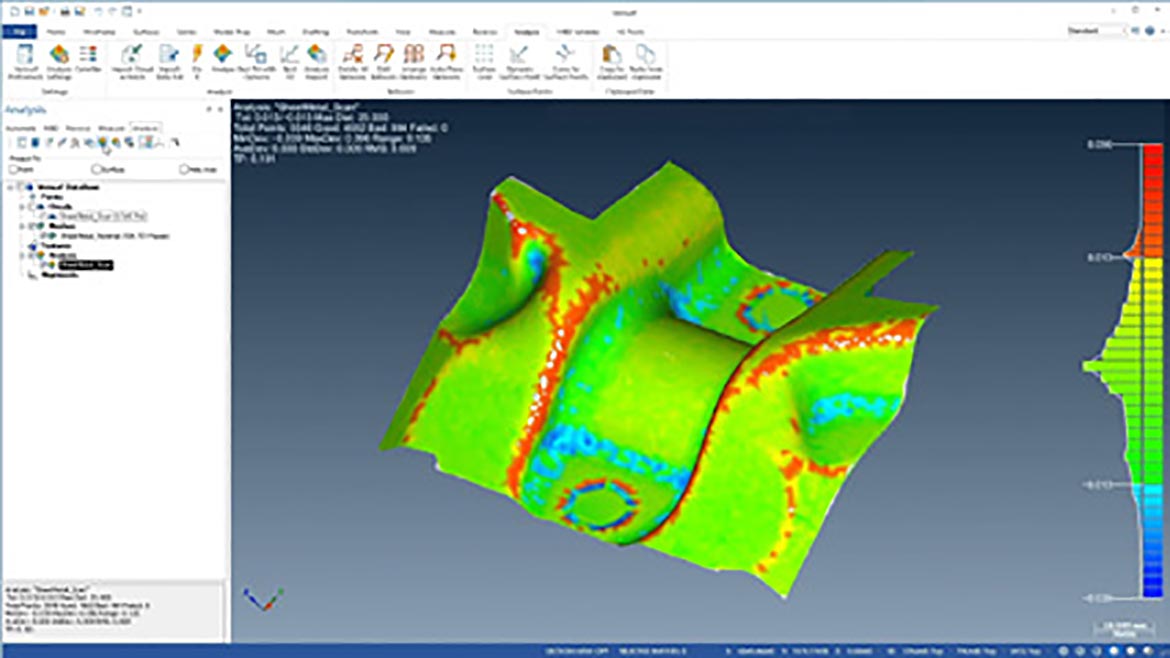
When it comes to inspecting contours that are not primitive, geometric shapes, 3D CMM-type devices are necessary. Examples are airfoil shapes on aircraft, automobile body panels, all sorts of molded plastics, or any “organic” shape with contours.
| Image Source: VerisurfAdvantages of Automating Manual Devices
While stationary, motorized CMMs offer unparalleled automation, portable devices benefit significantly from automated inspection plans. These plans transform manual inspections into systematic, repeatable processes:
Speed and Efficiency: Automated plans streamline workflows, reducing setup and measurement time.
Consistency: Predefined workflows minimize operator variability, ensuring consistent inspections.
Traceability: Digital records support quality control, forensic analysis, and regulatory compliance.
By integrating CAD models into the process, these systems eliminate interpretation errors, making them accessible to operators with varying skill levels.
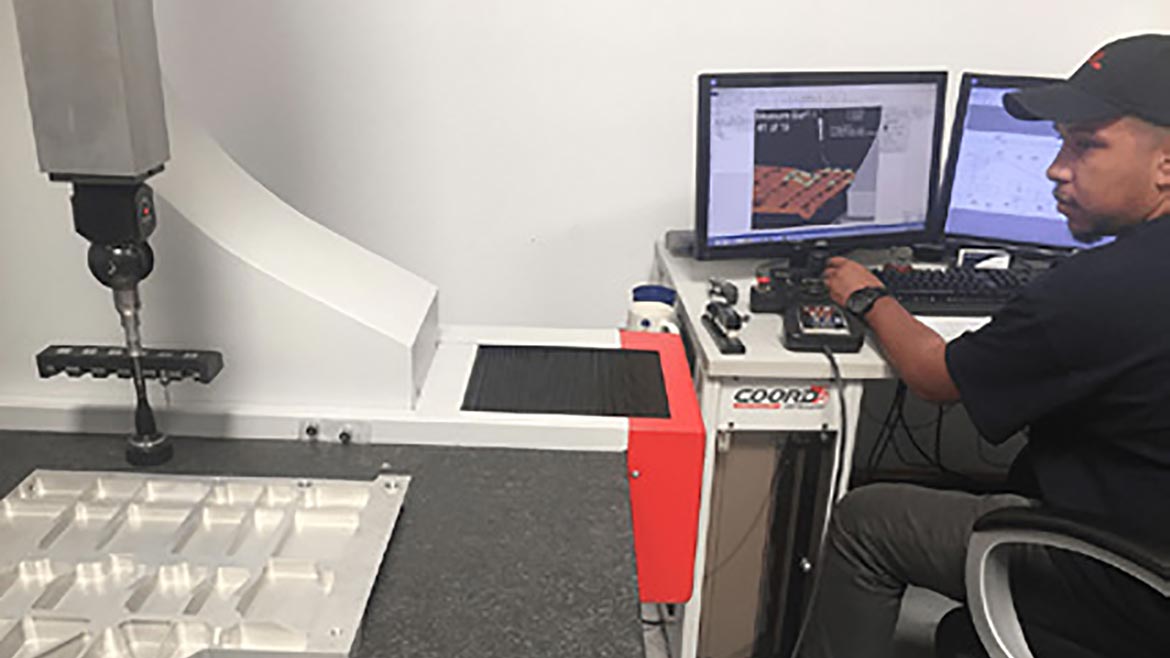
CMM-type devices come in many varieties, from motorized, computer-controlled, stationary CMMs designed to work in climate-controlled laboratories, to articulating, portable, manually-operated CMM “arms,” with five or six rotating joints and precision encoders. The portable CMM arm is designed to go anywhere in the shop or taken off-premises, where it can measure parts in place. It is also common to see them used in a manufacturing cell for maximized efficiency.
| Image Source: VerisurfThe Case for Portable CMM Arms
Portable CMM arms provide unique advantages over traditional stationary systems:
Portability: Designed for on-site use, these devices facilitate real-time measurements at manufacturing locations.
Cost Savings: Portable systems have lower acquisition and maintenance costs compared to motorized CMMs, which require climate-controlled environments.
Flexibility: With their articulated joints, portable arms reach complex part features without the need for specialized setups.
While stationary systems remain indispensable for high-volume production, portable CMMs complement them by offering adaptability for diverse inspection scenarios.
Applications Where Portability Excels
Portable CMMs are ideal for industries such as aerospace, automotive, and machinery. They allow inspections close to production lines, reducing the need for part relocation and minimizing potential inaccuracies. These devices also thrive in environments unsuitable for stationary CMMs, offering reliable, efficient solutions for complex and large-scale measurements.
Optimizing Large-Scale Inspections with Laser Trackers
Laser trackers extend portable metrology to large-scale projects, such as aircraft assembly or shipbuilding. With sub-millimeter accuracy over long distances, they are indispensable for measuring large parts or aligning assemblies. Automated plans enhance their efficiency, guiding operators through tasks while reducing manual inputs. Advanced features like six-degree-of-freedom (6DOF) probes further improve productivity, enabling seamless measurements even in challenging environments.
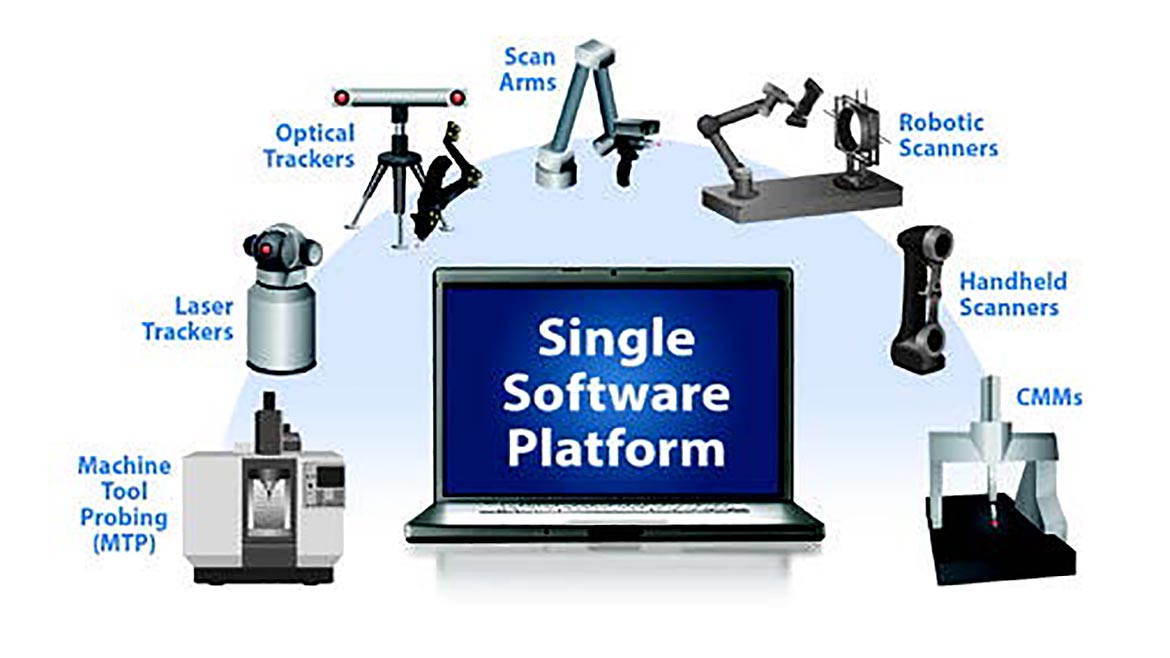
Software is the key driver of all measurement hardware. Using a common platform ensures compatibility across all devices, and repeatable process control across all measurement and inspection workflows.
| Image Source: VerisurfHarnessing Model-Based Definition (MBD)
Model-Based Definition (MBD) shifts the focus from traditional 2D drawings to CAD models as the single source of design specifications. By embedding GD&T directly into CAD models, MBD ensures consistency across manufacturing and inspection processes. Software utilizes MBD to streamline workflows, reducing errors and improving accuracy. This integration establishes a seamless digital thread that connects design, production, and quality control.
Meeting Stringent Industry Standards
Aerospace and automotive industries enforce rigorous standards such as First Article Inspection (FAI) and Production Part Approval Process (PPAP). Automated inspection plans simplify compliance, ensuring traceability and consistency. These plans integrate seamlessly into existing workflows, enabling manufacturers to meet regulatory requirements while maintaining efficiency and quality.
Non-Contact Scanning for Complex Parts
Scanning technologies complement traditional inspection methods, particularly for sensitive or intricately contoured parts. Portable scanners capture detailed data, which automated programs process into actionable insights. These systems reduce programming costs, making them ideal for low-to-medium production volumes. Scanning also minimizes physical contact with delicate components, preserving part integrity while ensuring comprehensive measurements.
Addressing the Manufacturing Skills Gap
Automation mitigates the effects of the skills shortage in manufacturing. Pre-programmed inspection plans simplify complex tasks, enabling less experienced operators to perform precise inspections. Tools can empower engineers to create intuitive plans, ensuring consistent quality across teams. These systems help maintain high standards, even with limited access to specialized expertise.
Aligning with Industry 4.0 Initiatives
Portable CMMs and automated workflows align with Industry 4.0 principles by:
Enhancing Connectivity: IoT-enabled devices facilitate data sharing and transparency.
Leveraging Big Data: Inspection data supports predictive maintenance and process optimization.
Enabling Automation: Feedback loops drive adaptive manufacturing systems.
Improving Visualization: Cyber-physical digital twins provide real-time insights into production workflows.
These advancements position manufacturers to lead in the Fourth Industrial Revolution, integrating cutting-edge technology with traditional processes.
Cost and Process Efficiency
The affordability of portable CMMs, combined with reduced maintenance and calibration requirements, makes them an economical choice for manufacturers. Automated plans further enhance cost efficiency by minimizing human errors and streamlining inspection tasks. This combination reduces overhead while maintaining high inspection standards.
The evolution of portable CMM technology, paired with automation, has redefined quality control in manufacturing. These tools bridge the gap between traditional and advanced metrology, offering precision, efficiency, and flexibility. By embracing automation and aligning with Industry 4.0 principles, manufacturers ensure readiness for the future while addressing current challenges. Portable CMM arms, laser trackers, and scanners are not just tools of measurement—they are cornerstones of a smarter, more connected manufacturing landscape.
READ MORE
Looking for a reprint of this article?
From high-res PDFs to custom plaques, order your copy today!