The manufacturing sector may be facing challenges, but the future is full of possibilities for those willing to innovate, adapt, and invest in their digital future.
The manufacturing sector is poised for transformation by 2025 through automation and AI to tackle labor shortages. There is also a crucial emphasis on cybersecurity and analytics to future-proof supply chains against ongoing challenges.
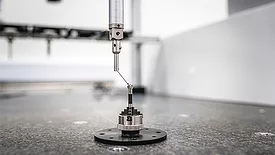
Probes and styli are vital for smart manufacturing, evolving into advanced sensors that enhance automation and quality control. These precise tools measure parts, guide machines, and enable real-time adjustments, improving efficiency and reducing defects in CNC and robotic applications.
After reviewing the purpose and benefits of standard work, I am reminded that working smarter should always be a priority to preserve safety, time, quality, and costs.
Standard work is vital for improving safety, efficiency, and quality by establishing the best way to perform tasks consistently. By documenting and implementing these processes, organizations foster a culture of continuous improvement, empowering employees and driving cost savings.
Effective AI deployment requires addressing challenges related to continuous learning, adaptation, and the robust management of vast, real-time data streams—areas where DMAIC falls short.
This article explores the evolution of manufacturing data, the limitations of DMAIC in the Fourth Industrial Revolution, and introduces Binary Classification of Quality (BCoQ) and Learning Quality Control (LQC) systems as part of Quality 4.0.
Shipments of cutting tools, measured by the Cutting Tool Market Report compiled in a collaboration between AMT – The Association For Manufacturing Technology and the U.S. Cutting Tool Institute (USCTI), totaled $188.7 million in September 2024.
Advancements in Contact Image Sensor (CIS) technology are transforming machine vision. They offer high speed, resolution, and a compact design ideal for tight inspection tasks in battery and PCB production lines. With features like high dynamic range and accurate metrology, CIS enhances quality control and efficiency in modern manufacturing.
Dustin Smith, metrology and software training lead at Assurance Technologies Inc., addresses common questions from his GD&T course. He emphasizes the need for everyone—from sales to engineering, production, and quality—to have a basic understanding of GD&T.
Modern vision systems need high-performance wide-angle lenses for applications like autonomous robots and agricultural monitoring. Rectilinear lenses offer straight lines and high resolution without the barrel distortion of fisheye lenses, enabling accurate object detection and real-time performance without the need for post-processing corrections.