Quality Magazine logo
search
cart
facebook twitter linkedin youtube
  • Sign In
  • Create Account
  • Sign Out
  • My Account
Quality Magazine logo
  • NEWS
  • PRODUCTS
    • FEATURED PRODUCTS
    • SUBMIT YOUR PRODUCT
  • CHANNELS
    • AUTOMATION
    • MANAGEMENT
    • MEASUREMENT
    • NDT
    • QUALITY 101
    • SOFTWARE
    • TEST & INSPECTION
    • VISION & SENSORS
  • MARKETS
    • AEROSPACE
    • AUTOMOTIVE
    • ENERGY
    • GREEN MANUFACTURING
    • MEDICAL
  • MEDIA
    • A WORD ON QUALITY PUZZLE
    • EBOOK
    • PODCASTS
    • VIDEOS
    • WEBINARS
  • EVENTS
    • EVENT CALENDAR
    • IMTS
  • DIRECTORIES
    • BUYERS GUIDE >
      • Supplier Insights
    • NDT SOURCEBOOK
    • VISION & SENSORS
    • TAKE A TOUR
  • INFOCENTERS
    • Digital Quality Management Systems
    • NEXT GENERATION SPC & QUALITY ANALYTICS
  • AWARDS
    • ROOKIE OF THE YEAR
    • PLANT OF THE YEAR
    • PROFESSIONAL OF THE YEAR
  • MORE
    • Expert Columns
    • NEWSLETTERS
    • QUALITY STORE
    • INDUSTRY LINKS
    • SPONSOR INSIGHTS
  • EMAG
    • eMAGAZINE
    • ARCHIVES
    • CONTACT
    • ADVERTISE
  • SIGN UP!
Vision & Sensors

Vision & Sensors | Trends

Innovations Shaping the Future of Contact Image Sensor Technology

High speed, resolution, and dynamic range imaging with true metrology in a compact design
By Xing-Fei He
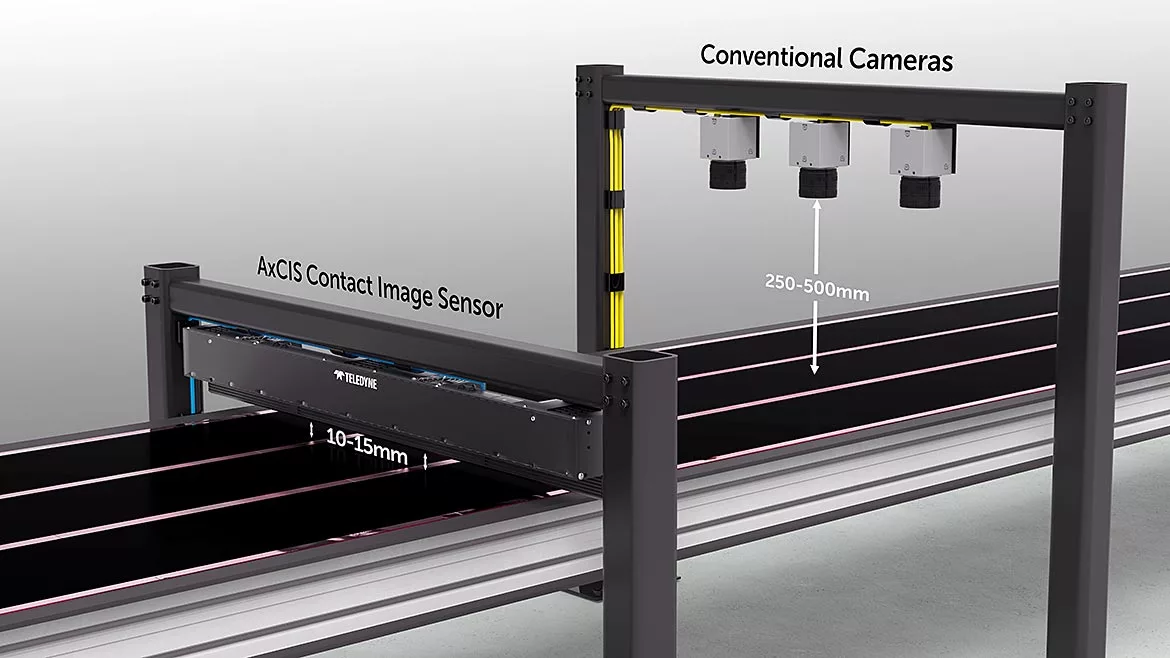
Figure 1. AxCIS and conventional cameras

Figure 1. Contact Image Sensor versus conventional line scan. Image courtesy of Teledyne Vision Solutions

November 26, 2024
✕
Image in modal.

Recent advancements in Contact Image Sensor (CIS) technology are transforming machine vision systems. With high speed, high resolution, high dynamic range, and true metrology, CIS is ideal for inspection tasks in spatially restricted environments, including battery, print, and PCB production lines.

One of the CIS advantages is its small form factor compared with conventional line scan cameras. The working distance for a CIS is typically 10~20mm from the object being inspected, as compared with 250~500mm using a conventional line scan camera-based inspection system. Inline automatic optical inspection (AOI) is now becoming an important part of a modern production line to enable real-time, high-throughput quality control. For production equipment with compact designs, only CIS can fit. CIS also offers a higher degree of integration that combines camera, lens, and lighting components and makes system designs much quicker and easier. Because of these advantages, more and more machine vision applications are adopting CIS technology.

High speed and resolution: boost system throughput

Speeds and resolutions are key technical specifications in vision systems and are currently the limitations of many CIS products. That is why the next generation of CIS technology needs to overcome these limitations and boost imaging performance. For example, AOI requires high speeds and high resolutions to meet the throughput requirements of battery production lines, which play a key role in today’s clean energy strategy of transitioning to electric vehicles (EVs). The combination of smaller pixel sizes with higher line rates ensures that the required detectability is met while the system throughput is not compromised.

High resolution not only improves detectability but also increases measurement accuracy. Figure 2 shows the difference in the measured Modular Transfer Function (MTF), mean value, and standard deviation of black and white line pair targets with 45 µm/line and 500 µm/line using 900dpi and 600dpi. The latter is the common resolution most CIS modules offer today in the marketplace. However, accuracy is significantly improved—by about 50%—by using 900dpi.


28µm (900dpi)

42 µm (600dpi)

MTF (target 45 µm/line)

40.9%

27.6%

Measurement (target 500 µm/line)

Mean value

501.2 µm

504.8 µm

standard deviation

5.928 µm

13.33 µm

Figure 2. Measured MTF, means, and standard deviation of black and white line pair targets
Figure 2. Measured MTF, means, and standard deviation of black and white line pair targets. Source: Courtesy of Envision

High-speed data transmission from an AxCIS module to the frame grabber is supported using Camera Link HS (CLHS) interface with fiber optic cables. Each fiber optic cable can handle 2.4Gigapixel per second of data with a long cable length of 300 meters. A frame grabber can connect to multiple CIS modules, depending on speed requirements, to reduce the system-level cost. In addition, fiber optic cable has complete immunity to electromagnetic radiation, and this significantly improves data integrity in high-speed transmission in a harsh industrial environment.

High dynamic range: detect dark and reflective materials

In monochrome mode, advanced CIS technology uses a dual-line sensor with independent exposure control. This unique sensor architecture enables high dynamic range imaging with different exposures for each line to capture bright and dark scenes respectively, in a single scan. The two images captured by each line can be output and processed separately or be fused into one high dynamic range image before processing. The technology has been proven to be effective, for example with imaging relatively dark electrodes coated on highly reflective metal rolls, significantly improving the detectability under various lighting conditions.

Figure 3. High dynamic range (HDR) imaging with a dual line sensor using different exposure times.
Figure 3. High dynamic range (HDR) imaging with a dual line sensor using different exposure times Image courtesy of Teledyne Vision Solutions
Figure 4: Battery coating process
Figure 4: Battery coating process Image courtesy of Teledyne Vision Solutions

Metrology: high accuracy with no missing pixels

Another reason to use CIS is the telecentric characteristics of a self-focus lens that results in undistorted images with 1:1 optical magnification for metrology, in addition to detecting defects. Currently, most CIS modules in the marketplace use a butting process to butt the silicon dies together within a CIS. This results in uncontrollable gaps in between the individual die with missing pixels. Data interpolation is therefore needed for those missing pixels. This approach not only misses true data but also results in uncontrollable sensor width when using a poor manufacturing process.

We’ve used a different design—by staggering CMOS sensor architecture—that eliminates any gaps in between the silicon. All dies are staggered to cover the entire field of view (FOV) without any missing pixels. The module’s image processing aligns the images from each die and removes the overlapped pixels. The unique design enables true metrology applications and provides accurate measurement in the horizontal direction. After calibration, about 50um accuracy can be achieved at 20°C ambient temperature over 800mm field of view.

Unlike conventional line scan camera applications, a CIS is placed very close to the samples being inspected. Therefore, it needs to be protected from dust. Therefore, when selecting a CIS, it is important to ensure there is an IP60 rating on its optical path, so it won’t be contaminated by a dusty environment.

Trends in Contact Image Sensors

Originally developed for consumer electronics such as printers and scanners, Contact Image Sensor technology has found important applications in machine vision. Markets will continue to drive the technology to higher speeds and resolution to meet the increasing demands. A larger working distance and depth of field are also required to accommodate multifield lighting configurations. For certain materials, multispectral capability is also needed. The integration of all these advanced features will help the industry move forward to increasingly higher-value solutions to accomplish complicated tasks.

Conclusion

The continued development of Contact Image Sensor technology is opening new possibilities for machine vision systems in industries where precision and space efficiency are critical. The ability to deliver high speed, resolution, and dynamic range, coupled with true metrology in a compact form, makes CIS a key component in industries like battery production, printing, and PCB inspection. By addressing challenges such as pixel gaps, high-speed data transmission, and dynamic range, CIS technology is well-positioned to meet the increasing demands of modern production lines. Companies that leverage these advancements will be well-positioned to meet the growing demands of modern production environments.

READ MORE

  • Machine Vision Inspection
  • Automated Inspection 101: Benefits for Industry
  • The Perfect Pair: Combining AI And Computer Vision
KEYWORDS: automatic measurement and inspection systems imaging imaging and vision technologies machine vision manufacturing metrology sensors

Share This Story

Looking for a reprint of this article?
From high-res PDFs to custom plaques, order your copy today!

Xing-Fei He, PhD, is a senior product manager at Teledyne DALSA, a part of the Teledyne Vision Solutions portfolio. He has managed multiple CCD and CMOS product lines and is responsible for the industry leader’s product planning, development, rollout, and marketing & sales of these products. He helps to define product strategies, champion technical marketing and sales, and build channel and OEM relationships.

Learn more about Teledyne DALSA’s AxCIS™ Contact Image Sensor

Recommended Content

JOIN TODAY
to unlock your recommendations.

Already have an account? Sign In

  • 2024 Quality Rookie of the Year Justin Wise 1440x750px banner with "Quality Rookie of the Year" logo inset

    Meet the 2024 Quality Rookie of the Year: Justin Wise

    Justin Wise is an exceptional individual who has been...
    Aerospace
    By: Michelle Bangert
  • Man with umbrella and coat stands outside while it rains at night looking at a building.

    Nondestructive Testing: Is there an ethics problem?

    I was a whistleblower who exposed fraudulent activities...
    NDT
    By: Dale Norwood
  • Unraveling Deflategate: Football stadium with closeup of football on field

    Unraveling the Tom Brady Deflategate

    The Deflategate scandal erupted following the 2014 AFC...
    Measurement
    By: Greg Cenker and Henry Zumbrun
Manage My Account
  • eMagazine Subscriptions
  • Newsletters
  • Online Registration
  • Subscription Customer Service
  • Manage My Preferences

More Videos

Sponsored Content

Sponsored Content is a special paid section where industry companies provide high quality, objective, non-commercial content around topics of interest to the Quality audience. All Sponsored Content is supplied by the advertising company and any opinions expressed in this article are those of the author and not necessarily reflect the views of Quality or its parent company, BNP Media. Interested in participating in our Sponsored Content section? Contact your local rep!

close
  • Key Takeaways for Quality Leaders
    Sponsored byComplianceQuest

    Key Takeaways for Quality Leaders from the 2026 Gartner Magic Quadrant™ for QMS

  • This image shows a person seated next to a Bobcat T66 compact track loader.
    Sponsored byPolyWorks by InnovMetric

    Supercharging Digital Gauging at Bobcat North America

  • Dorsey Calibration Lab photo by Tom LaBarbera Picture this Studios
    Sponsored byDorsey Metrology International

    Ensuring Product Quality in a Competitive Manufacturing Landscape

Popular Stories

This image shows a person seated next to a Bobcat T66 compact track loader.

Supercharging Digital Gauging at Bobcat North America

a professional in the aviation field performing maintenance, repair, and overhaul (MRO) work

Manufacturing Retention: Strategies for Improving Company Culture, Engagement and Skill Development

Dorsey Calibration Lab photo by Tom LaBarbera Picture this Studios

Ensuring Product Quality in a Competitive Manufacturing Landscape

2026 Quality Professional of the Year!

Events

June 22, 2026

Automate 2026

Automate is North America's largest robotics and automation event — and the best place to take your ideas from insight to impact.
 
Our show floor features the world’s leading automation solutions, from AI and robotics to motion control, vision systems, and more. Plus, our educational conference is second to none, led by the brightest minds in automation today.
 
Ready to transform the way you work? Take the next step at Automate.
July 14, 2026

Quality Leaders Forum: Better Communication, Better Quality Data

The Quality Leaders Forum is a quarterly, editor-moderated fireside chat series hosted by Quality Magazine, featuring candid conversations with senior manufacturing and operations executives shaping enterprise-level quality.

View All Submit An Event

Products

Lean Manufacturing and Service Fundamentals, Applications, and Case Studies

Lean Manufacturing and Service Fundamentals, Applications, and Case Studies

See More Products
Quality Podcast Channel Custom Content

Related Articles

  • Hexagon Machine Trainer

    Training & Upskilling at Scale: How Technology is Shaping the Future Manufacturing Workforce

    See More
  • Innovations: The Future of Industrial 3-D X-Ray?

    See More
  • The Dexory robot is truly autonomous.

    The Future of Robotics: From Science Fiction to Industry Redefining Technology

    See More

Related Products

See More Products
  • ZEuCDwAAQBAJ.jpg

    Lean Six Sigma In The Age Of Artificial Intelligence: Harnessing The Power Of The Fourth Industrial Revolution

  • Building Lean Supply Chains with the Theory of Constraints

  • certified.jpg

    The Certified Manager of Quality / Organizational Excellence Handbook, 4th Edition

See More Products
×

Stay in the know with Quality’s comprehensive coverage of
the manufacturing and metrology industries.

Newsletters | Website | eMagazine

JOIN TODAY!
  • RESOURCES
    • Advertise
    • Contact Us
    • Directories
    • Manufacturing Division
    • Store
    • Want More
  • SIGN UP TODAY
    • Create Account
    • eMagazine
    • Newsletters
    • Customer Service
    • Manage Preferences
  • SERVICES
    • Marketing Services
    • Market Research
    • Reprints
    • List Rental
    • Survey/Respondent Access
  • STAY CONNECTED
    • LinkedIn
    • Facebook
    • YouTube
    • X (Twitter)
  • PRIVACY
    • PRIVACY POLICY
    • TERMS & CONDITIONS
    • DO NOT SELL MY PERSONAL INFORMATION
    • PRIVACY REQUEST
    • ACCESSIBILITY

Copyright ©2026. All Rights Reserved BNP Media, Inc. and BNP Media II, LLC.

Design, CMS, Hosting & Web Development :: ePublishing