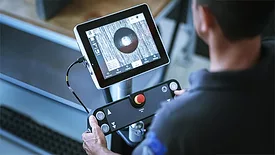
An exciting addition to hardness testing is the integration of AI-based indentation evaluation, which enhances the precision and efficiency of hardness mapping.
Hardness testing is essential in material sciences, particularly through hardness mapping, which generates detailed heat maps from thousands of indentations. Enhanced by AI-based evaluation, this method improves accuracy and is widely used in industries like automotive and aerospace. The article discusses the methods and future of AI-driven hardness testing.
EOSYS upgraded a PLC-based control system for a major natural gas transporter, where an operator's suggestion to run two units independently prompted a significant design change. This idea led EOSYS to propose a standalone control system for the utility function, transforming the project.
Last month we introduced you to the newest member of the Quality staff. This month, we bid a fond farewell to a long-standing member of Quality and the quality industry.
My career in employee involvement initiatives has shown me that while top management commitment is essential for successful quality programs, gaining middle management buy-in is equally important for translating that commitment into action.
Manufacturing companies must document greenhouse gas emissions, energy usage, and hazardous materials handling due to new sustainability regulations. The SEC Climate Disclosure Rules require public companies to report emissions, and private manufacturers may also face pressure to disclose similar information, according to Marcel Minutola of Peritia LLC.
Quality Infrastructure (QI) is vital for ensuring quality and safety through metrology, standardization, and accreditation. However, concerns arise about whether the QI has kept pace with these changes.
Heather Wade previews her workshop “The 3 Rs of Calibration; Reading, Writing, and Reviewing Accreditation Scopes, Service Requests and Calibration Certificates.” With over 100 presentations worldwide, she provides practical insights on metrology.