The integration of 3D scanning and additive manufacturing has opened new possibilities in metrology. Analyzing the technical intricacies of 3D laser scanning hardware and software reveals their pivotal role in shaping engineering's future.
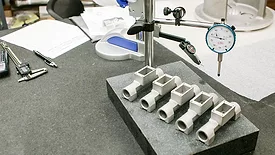
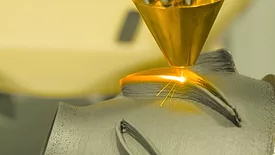
3D printing, or additive manufacturing (AM), revolutionizes part production by building them layer by layer from base materials, unlike traditional subtractive methods. In this article, we'll delve into the complexities of additive manufacturing inspection, highlighting the unique nuances of AM-produced parts.
The National Center for Defense Manufacturing and Machining (NCDMM) and America Makes, the National Additive Manufacturing Innovation Institute, announced the winners of the $5.75M Proliferation of Additively Manufactured (AM) Material Datasets, funded by the Office of the Under Secretary of Defense, Research and Engineering Manufacturing Technology Office (OSD(R&E)) and the Air Force Research Laboratory (AFRL).
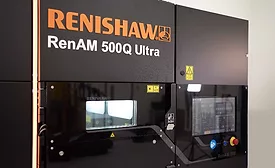
Renishaw has expanded its RenAM 500 series with the launch of the RenAM 500 Ultra AM system, cutting build times by up to 50 percent without compromising on quality, and giving metal additive manufacturing (AM) users the tools to produce parts faster.
6K Additive to double capacity and expand domestic upcycling capability to create, maintain, protect, and restore U.S. industrial base capabilities that are critical to the Department and the American Warfighter.
The National Center for Defense Manufacturing and Machining (NCDMM) and America Makes are proud to announce the winners of the Demonstration of Novel Methods for Effective AM Process Qualification/Re-Qualification – Delta Qualification directed project call worth $3.2M. The effort is funded by the Air Force Research Laboratory (AFRL).
Additive manufacturing (AM) technologies present an array of benefits including lightweight structures (lattices, triply periodic minimal surfaces, and other organic shapes), consolidation of parts, limiting necessity for tooling, and lead time reduction.