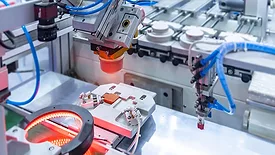
While AI is often touted as cutting-edge, its practical application is helping manufacturers reduce time spent on repetitive tasks and automate decision-making.
Discover how AI-powered machine vision is revolutionizing manufacturing by streamlining defect detection and enhancing vision-guided robotics, driving efficiency and quality to new heights!
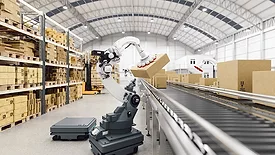
Despite advancements in intelligent automation, human oversight remains crucial in navigating complex warehouse environments. This article highlights the enduring role of humans in the future of robotics, emphasizing a human-centered approach to automation.
In addition to designing and engineering an entirely new class of vehicle, manufacturers have had to figure out a way of building them, and to do so in a way that achieves optimum quality levels.
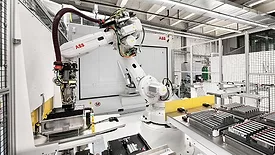
Robotic automation is key for automakers adapting to the evolving EV market, allowing for flexible production and efficient operations amidst uncertainty in regulations and demand.
Unlock the potential of pre-engineered cobot systems to enhance automation in manufacturing. With their adaptability and ease of use, these solutions address labor shortages and drive impressive ROI, making now the perfect time to invest in customized automation for your business.
Many manufacturers miss out on automation’s potential for improving quality. To achieve these gains, quality must be prioritized from the business case to sourcing and implementation.
Manufacturers can significantly enhance product quality through automation, potentially reducing quality issues by 50-75%. However, to achieve these improvements, companies must integrate quality control systems, understand the costs of quality issues, and clearly define quality goals when sourcing automation solutions.
Autonomous systems, collaborative robots, AI-driven robotics applications and sustainable robotics are shaping a new era of automation and human-robot interaction.
Robotics is rapidly advancing from science fiction to practical uses across industries like manufacturing, logistics, and healthcare. Key trends include autonomous systems operating independently, robots collaborating with humans for improved productivity and safety, and AI integration that allows robots to learn and adapt. This technology enables both large enterprises and SMEs to optimize processes and meet growing demands.
Automated processes are vital in industrial production, with robots handling finished products and sorting parts for quality assurance. Equipped with 3D cameras and machine vision, they accurately identify and grasp items from disordered bins.
As robotics use grows throughout processing, packaging, and logistics environments, it’s important to understand your options — and how to keep up with safety guidelines.
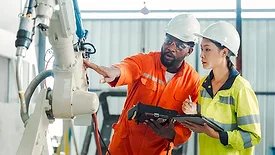
As robots gain prevalence in manufacturing, emphasizing their safe use is vital. This includes understanding safety features, challenges, and best practices across all robot types, such as industrial, collaborative (cobots), autonomous mobile (AMRs), and humanoid robots, to navigate their complexities effectively.