Vision & Sensors | Robotics
Exploring the Persistent Dominance of Human-Centered Automation in Robotics
Are we hurtling toward a truly human-free automation system?
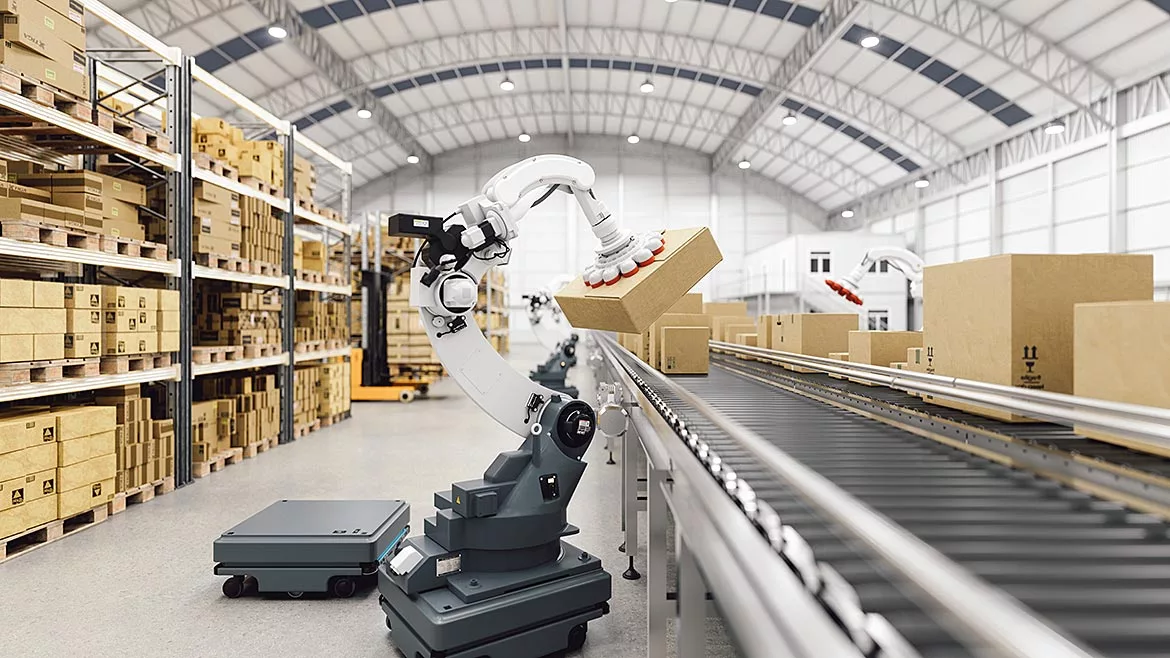
Image Source: imaginima / E+ / Getty Images
Thanks to intelligent automation, today’s warehouses operate at unparalleled speeds and capacities. Advanced AI and machine learning (ML) systems streamline operations, meeting consumer demands for rapid order fulfillment and adapting to skyrocketing e-commerce volumes. Yet, despite all this progress, the human element remains perhaps the most critical factor in automation success.
Many of the world’s most renowned AI and automation companies continue to emphasize the importance of human oversight in supervising intelligent automation systems. That’s because a human-first approach to AI acknowledges and solves for modern automation’s inherent limitations.
But what about the automation of 2025, 2026 and beyond? Are we hurtling toward a truly human-free automation system? My short answer is no. In this article, I’ll discuss the state of intelligent automation today and explain why humans will always remain central to even the most intelligent AI systems.
Where We Stand With Intelligent Automation Today
READ MORE
As of September 2024, over 4.2 million robots are deployed in factories and on warehouse floors worldwide — an all-time record. And, intelligent automation is still picking up speed. By 2032, experts predict the robotics-as-a-service (RaaS) market will reach $169.8 billion, up from $46 billion in 2023. Many industries are driving these increases, but the automotive, electrical and electronic sectors, particularly, are currently redoubling their investments in automation.
Why such significant interest in automation? AI vision software and intelligence are no longer novel concepts. Thousands of warehouses have successfully installed AI-powered robots. Other leaders are noticing these results and becoming more aware of the efficiency gains such systems could offer their teams.
Furthermore, the productivity gains offered by intelligent automation are more necessary than ever. Retail customers increasingly demand fast delivery (most define “fast delivery” as two days or fewer). Many also expect cost-free returns. These expectations burden the supply chain, necessitating quick and more cost-efficient operations. Warehouse robots are a great solution because they can operate 24/7 to meet expedited shipping and return timelines.
However, increasing implementation of warehouse automation doesn’t imply that we’re headed toward a fully automated future — far from it. Industrial robots operate with singular precision but often lack the adaptability necessary to handle unexpected variables, which are inevitable and even frequent on the warehouse floor.
Humans excel in this nebulous decision-making space. Warehouse workers have the common sense and industry knowledge to make on-the-fly decisions about unexpected challenges, from irregularly shaped parcels to shifts in inventory flow. As such, the future of warehouse automation relies on a practical, ethical and human-first approach to deployment.
Understanding the Human Element With The Three Laws of AI
Rodney Brooks is a renowned roboticist who is quite skeptical about the potential of fully autonomous AI. To understand Rodney’s point of view, let’s review his three laws of AI, which highlight the realities of AI deployment and its relationship with human operators. Each law underscores the importance of partnership in warehouse automation:
- Humans usually overinflate or overestimate an AI system’s capabilities: When humans observe a robot performing a task, they extrapolate that the robot can do other similar or related tasks. This usually leads to the misguided notion that all robots are widely skilled, just like humans. But think: While a robot might excel at picking and placing parcels, this doesn’t mean it can autonomously handle related tasks that require agility, context or reasoning.
- Robots are use-case-specific, so human oversight remains necessary: Even the most advanced robots require occasional human intervention. In the warehouse, human oversight ensures that AI systems navigate complex, unstructured environments efficiently. This “human-in-the-loop” approach maintains the integrity of AI’s performance and adaptability.
- Achieving generalized AI intelligence — or even its semblance — requires a long tail of real-world scenarios: The number of unique, unpredictable situations that warehouse AI must handle is vast. Theoretically, we can train AI to register and respond to odd situations more productively, but doing so requires years of training on specialized warehouse problems. So, while we may ultimately reach ~99.9% accuracy in how robotic systems respond to stimuli, it’ll take a very long time. For this reason, human oversight remains essential for the foreseeable future (and, I’d argue, forever).
Implementing Automation in a Human-Centric Way
Given that humans will play a critical role in aiding warehouse automation for years to come, it’s essential to implement AI systems in a sustainable and human-centric way. That is, leaders should consider the impact of automation on their human laborers before they plunge headfirst into adoption. Moreover, they should create a system wherein humans are fully prepared to assist robots on the warehouse floor.
Key principles for a human-centric approach to automation include:
Transparency and communication: Open dialogue is foundational to ethical AI deployment. Communicating the role, purpose and capabilities of AI systems helps workers understand how these tools will benefit them, both in the short term (improved workplace safety) and long term (upskilling opportunities). By clearly explaining how AI and robotics will impact workers’ day-to-day tasks, leaders can reduce ambiguity, alleviate concerns about job security and build trust.
Empowerment through reskilling: AI shouldn’t limit opportunities for human employees but instead create new, more impactful ones. Organizations should commit to reskilling or upskilling their existing employees to equip them with the skills needed to operate alongside automated systems. This approach allows team members to grow professionally and confidently transition into roles that require more judgment, creativity and technical oversight (skills at which humans excel).
Furthermore, worker upskilling is a mutually beneficial choice. Hiring additional or new talent to monitor AI performance is costly and, in almost all cases, unnecessary. Current warehouse employees can provide keen insights and make quick judgment calls on the line. They’re intimately familiar with current warehouse processes and more inclined to make decisions that benefit their operation’s unique workflow.
Commitment to worker safety and well-being: Industrial robots should be designed to reduce repetitive or physically strenuous tasks, freeing workers to focus on safer, more strategic responsibilities. By integrating automation with a focus on safety, leaders can enhance worker conditions and reduce the likelihood of workplace injuries — ultimately improving morale and productivity.
A human-centric approach to automation is more ethical, yes. But it’s also more effective and, frankly, essential to deployment success. Thus, warehouse leaders should heed these principles as they research potential automation and AI-based solutions.
Additionally, leaders should ensure that their third-party automation providers understand the importance of human-robot collaboration. Otherwise, they may end up with an unsustainable system that misjudges the importance of human oversight, leading to high failure rates and frequent, costly site visits.
The Road Ahead
Intelligent automation elevates operational efficiency, but humans’ nuanced, adaptive decision-making power truly rounds out these systems. So, as the robotics market grows and new technologies emerge, I’m confident leaders prioritizing a human-centered approach will remain the most resilient and effective.
Does that mean we’ll never witness the power of truly human-free automated systems? Well, probably not. Flashy demonstrations about individual use cases will almost certainly continue to make headlines, perpetually invoking rule #1 of Rodney Brooks’ three laws of AI (overinflated expectations). However, these one-off demonstrations are unlikely to impact productivity on the warehouse floor for at least another decade.
Until then, I’m bullish about the power of human and robot collaboration to continue powering our modern supply chain.
Looking for a reprint of this article?
From high-res PDFs to custom plaques, order your copy today!