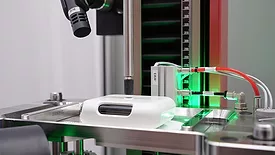
As the industry continues to trend toward a more patient-centric approach, we see an increasing buzz around the development and utilization of wearable injectors, also known as on-body delivery systems (OBDS)—the next evolution in needle-based drug delivery products.
Additive manufacturing (AM) technologies present an array of benefits including lightweight structures (lattices, triply periodic minimal surfaces, and other organic shapes), consolidation of parts, limiting necessity for tooling, and lead time reduction.
We review essential software specifications and cover how those attributes can be leveraged when considering computer-controlled physical product testing equipment in the lab or on the shop floor.
Monte Carlo simulations specialize in computing reliable probabilities from simulated data.
February 14, 2022
In situations where resources are limited to gathering real data would be too expensive or impractical, Monte Carlo simulations can help forecast results and probabilities.
The single most important thing manufacturing leaders can do to engage their employees is to share the ‘why’ behind their daily work, says Kathleen Skarvan, CEO at New Prague, MN-based Electromed—Quality’s 2021 Plant of the Year.
Vaccines are being rolled out across the globe. The process is occurring faster in some areas than others, sure, but the fact that a vaccine is being distributed at all means that the worst is behind us and that everything will go back to normal. Right?
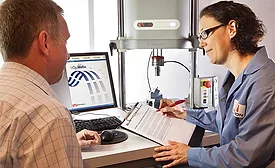
Anyone involved in medical device manufacturing knows that their industry is highly regulated. Almost every medical device manufacturer or pharmaceutical supplier uses materials testing systems in their quality control and research laboratories or outsources their testing to approved third-party laboratories.
Medical devices can present unique challenges for manufacturers. Consequences for malfunctioning equipment can be dire. Because of this, medical device manufacturers must work hard to ensure that their products never fail.