Before we address today’s testing trends, let’s look at the impact of the pandemic. The pandemic also created conditions that stressed manufacturers and caused major shifts in the way consumers purchase products, experts say.
There is no question that the COVID-19 pandemic dramatically impacted business practices across industry segments worldwide. Manufacturing was no exception and 2021 will be the year of reinvention through an emphasis on transforming business models.
A Growing Number of Manufacturers are Using Deep Learning Tools, a Subset of Artificial Intelligence, to Reduce Waste and Improve production. But, Experts Say, Some of it is Just Hype.
An increasing number of manufacturers are turning to deep learning, a subset of artificial intelligence (AI), to assist in image analysis processing, experts say.
Artificial intelligence, machine learning, and deep learning are interrelated concepts involved with computer-based learning from vast amounts of data – and then making predictions based on that information. This article will show how these technologies can provide good alternatives to traditional image processing, and how software works to make this happen.
“There is no reason and no way that a human mind can keep up with an artificial intelligence machine by 2035,” predicted the techno-futurist philosopher Gray Scott. But the truth is more nuanced: automation will create as many opportunities for humans as it reduces. Here’s how manufacturers can greatly enhance their processes—and address the U.S.’s skills shortage.
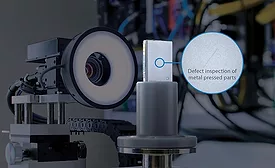
From accommodating flexibility to minimizing overdetection, the latest AI algorithms have the necessary capabilities to match the sensibility and expertise of professional human inspectors.
Due to rising labor costs and a shortage of skilled inspectors, today’s manufacturers are facing intense pressure to automate processes that rely on the senses of experienced human workers.
An object hanging from a string, moving back and forth, is more than something used to entertain cats or hypnotize patients in old horror movies. It’s called a pendulum.
A study by McKinsey & Company found that AI-driven quality testing can increase productivity by up to 50% and defect detection rates by up to 90% compared to human inspection.