Rather than changing one factor at a time and looking for patterns, DOE allows us to test several factors together and observe both their individual effects and their interactions.
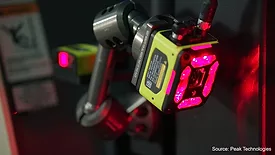
Peak Technologies, a global provider of smart technologies, automated supply chain and mobile workforce solutions, announced the launch of Peak Automation Intelligence, an integrated AI-powered platform designed to help manufacturers and operators of warehouses and distribution centers modernize their operations with real-time visibility, automated data capture and high-speed material flow intelligence.
The landscape of quality management systems (QMS) in manufacturing is undergoing a profound transformation, driven by the imperatives of Industry 4.0, rising product complexity, and the need for greater operational resilience.
Autonomous agents can process and interpret common questions about a manufacturer’s products, services, or policies across different channels, including live chat and email.
As professors Hirotaka Takeuchi and John Quelch stated in their famous Harvard Business Review article, “Quality is more than making a good product,” emphasizing that in manufacturing, excellent customer service and support are just as crucial as the product itself.
You see it a lot with e-commerce. Online shopping is said to offer an advantage. An array of “reviews” posted by other shoppers of the product you are considering. Amazon and others have converted these comments on the worthiness of a product into tools that help browsers decide if they want to become purchasers.
No two eggs are identical, yet all are edible. This principle applies equally to industrial manufacturing: the diversity of produced parts and potential defects is virtually limitless. The added challenge for quality assurance and identification tasks?
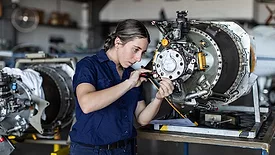
Across manufacturing, aerospace, medical devices, and software-driven production environments, one challenge consistently rises to the top of executive discussions: the widening skills gap in quality engineering.
Quality teams now rely on a dense stack of tools: automated test frameworks, AI assisted test generation, self healing locators, visual testing, static analysis, and observability platforms.