In the quest for quality excellence, we have seen a significant increase in the adoption of advanced digital technologies by the quality function. Three use cases stand out for their high traction.
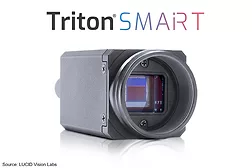
LUCID Vision Labs, Inc., announced the launch of the Triton Smart, a compact machine vision camera featuring Sony’s IMX501 intelligent vision sensor with on-sensor AI processing.
The future of quality is going to be AI-enabled — and the sooner you become fluent, the sooner you will lead the conversation instead of playing catch up.
A few months ago, I gave a talk at the ASQ New Jersey Spring Quality Conference on AI Literacy in Quality. There were lots of folks, lots of engagement, and lots of questions.Why were quality professionals engaged?
While computed tomography (CT) has garnered attention for its volumetric imaging capabilities, 2D DR remains a faster and more cost-effective option for many production environments. As component complexity and production volumes grow, DR systems with automated image processing provide an effective and efficient solution for quality assurance workflows.
Michelle Bangert talks with Marcel Minutolo, professor of strategic management at Robert Morris University. He's also taught and conducted research in Chile, Tajikistan, Taiwan, China, Israel, Slovakia, and Spain. He's a former military intelligence company commander with multiple deployments and has written several popular articles for Quality.
The manufacturing industry is overwhelmed with claims of "AI-powered" solutions that promise to transform quality management. However, there's little clarity on what this truly means. Learn how to move past the buzzwords and focus on what matters: how AI can transform quality management from a compliance-driven necessity to a strategic driver of manufacturing excellence.
Richard Asiedu-Ofori, metrologist and quality management systems professional with Richedna Consultancy, sits down with Quality to talk measurement uncertainty.
Precision is crucial in medical manufacturing, yet the industry faces labor shortages and increasing complexity. AI developments offer a solution by enhancing human expertise, enabling manufacturers to operate efficiently with limited labor and time while also improving patient safety and production resilience.
Visual SLAM (Simultaneous Localization and Mapping) is an AI-driven, 3D vision-based method that marks a departure from conventional navigation systems.
In addition to significantly boosting productivity in factories and warehouses by autonomously moving raw materials, parts, or finished goods between workstations or storage areas, Autonomous Mobile Robots (AMRs) handle tedious, non-value-added tasks like cart pushing, allowing human employees to focus on higher-skill activities.







--Mover-(right).webp?height=168&t=1754956392&width=275 "AMR-Tug (left) and Mover (right)")