Management
AI Driven Shop Floor Excellence: The Next Frontier in Quality 4.0
What does it take to succeed in the quality excellence journey? Frontrunners focus on these three elements.
Digitization has transformed quality management. When implemented effectively, digital solutions can elevate quality excellence—unlocking up to 18% improvements in first pass yield, 20% reductions in warranty claims, and up to 15% reductions in manpower requirements.
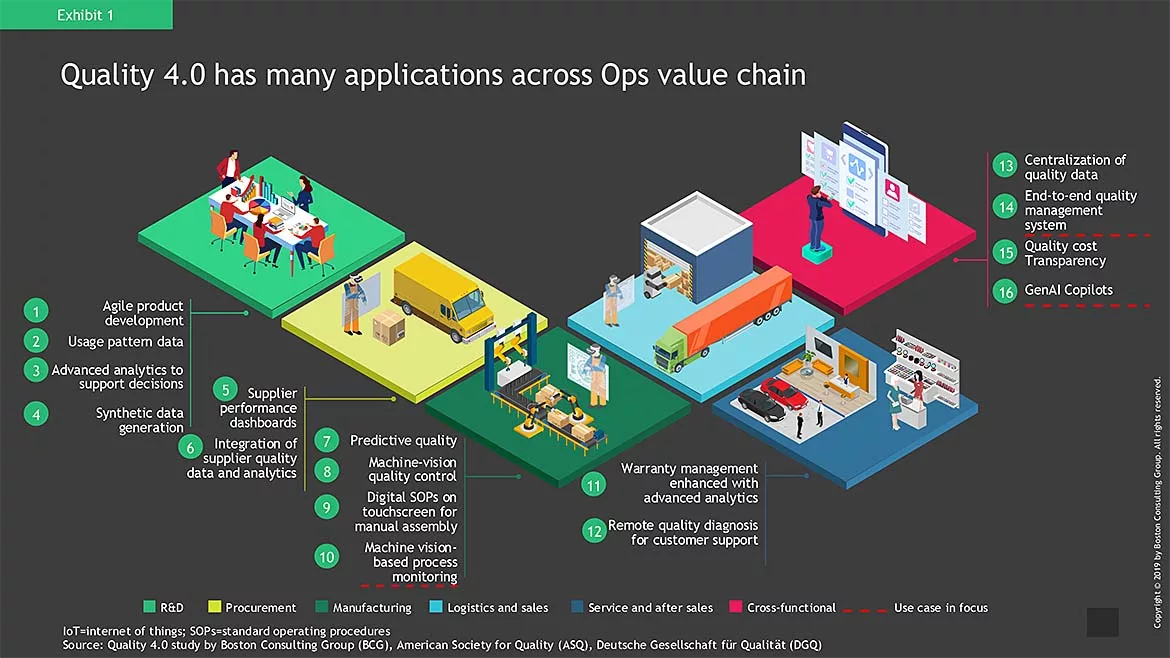
Since the release of our global study “Quality 4.0 Takes More Than Technology” in 2019, use cases have continued to evolve. These solutions are enhancing visibility and connectivity across internal functions, suppliers and customers.
Our original study identified more than a dozen digital quality use cases across the value chain where front-runners are generating the most impact. Those applications remain relevant today, but technology, the digital maturity of organizations, and the wider business environment have all evolved significantly over the past half-decade.
Today’s organizations have access to digital technologies that did not exist outside development labs in 2020, with advanced artificial intelligence and generative AI (GenAI) systems among the most notable examples. The digital transformation of broader business processes has accelerated, catalyzed by the pandemic and by improvements in digital infrastructure and tools. Meanwhile, a volatile and uncertain economic environment is driving a renewed focus on cost-efficiency across all business functions.
Against this background, we have seen a significant increase in the adoption of advanced digital technologies by the quality function. Three use cases stand out for their high traction:
- End-to-end quality data management systems
- GenAI copilots
- Machine vision-based process monitoring
Exhibit: Quality 4.0 use cases across the value chain
1. End-to-end quality data management systems
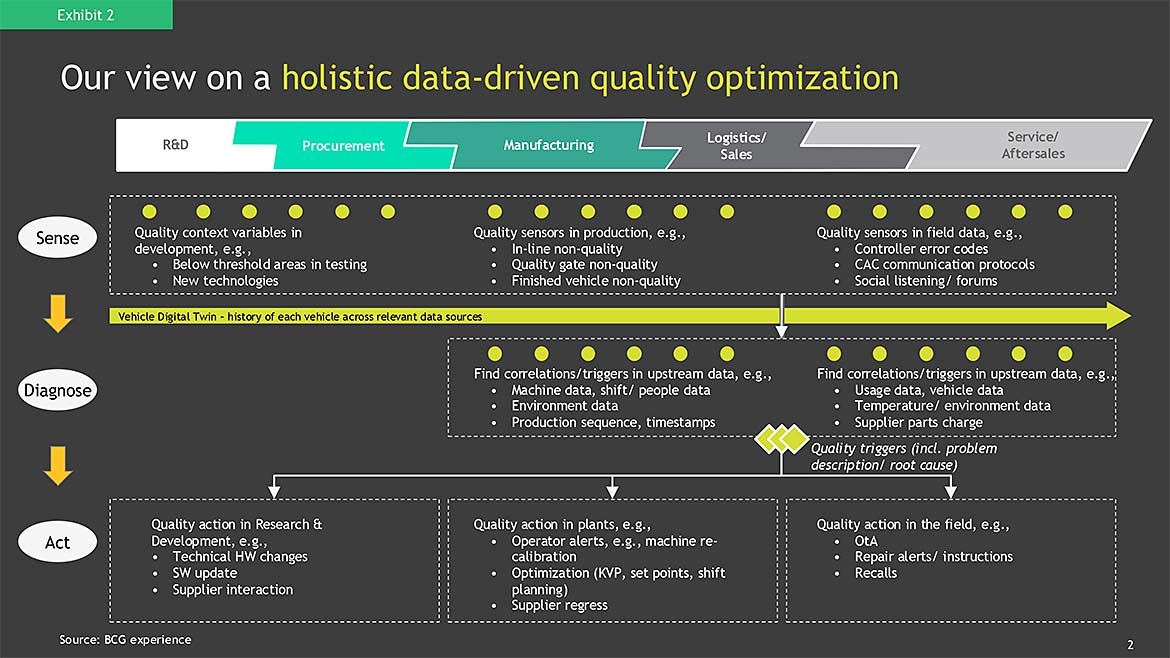
In our original research, poor data availability was perceived as the top barrier to digital use case adoption by the quality function. Today, leaders are finding innovative ways to generate insights from the integration of multiple data sources from inside and outside the organization. An end-to-end quality data management system helps them to uncover dependencies and systemic improvement opportunities by combining data from across the value chain. Applications of this “quality digital thread” include improvements to:
- Supplier risk identification: Integration of supplier part and process data with set-point applications for multi-stage process monitoring
- Set-point optimization: Use of historical process parameters and defect data to recommend real-time parameter adjustments to maximize yield
- Predictive quality: Forecasting risk for all upcoming production schedules based on product features, production sequence, and operator input—enabling targeted inspections and interventions
To benefit from these opportunities, organizations need a comprehensive data model that harmonizes data across domains. The quality function should lead this effort, by establishing a data domain map, but data collection and use should be a cross-functional endeavor. Embracing a “data as a product” paradigm is a pivotal shift—facilitating access to rich quality data through a self-service, modular data tech stack.
This decentralized approach empowers all functions—from product engineering to manufacturing and marketing—to contribute to a shared data marketplace. Leaders are using this data to support an AI-powered approach to quality optimization that breaks down silos and drives end-to-end performance gains.
Connected worker enablement: Operationalizing data at the frontline
Connected worker platforms are a critical enabler of the quality digital thread. These platforms provide real-time visibility, standardized escalation mechanisms, and guided workflows, making quality data part of daily operational decisions. Key capabilities of such platforms include:
- Real-time defect logging to structure and accelerate issue detection and resolution
- Centerline monitoring for optimal machine settings and process stability
- Shift handoff tools and custom reports to ensure continuity and feedback loops
- Bulk data upload and maintenance scheduling to reduce downtime, streamline operations and improve equipment reliability/product quality
Built on integrated tech stacks and cloud infrastructure, these platforms connect shop floor systems with enterprise level insights, enabling true cross-functional collaboration. By embedding structured quality workflows into everyday operations, they translate data insights into measurable actions, leading to improvements in quality compliance, performance, and productivity.
2. GenAI copilots
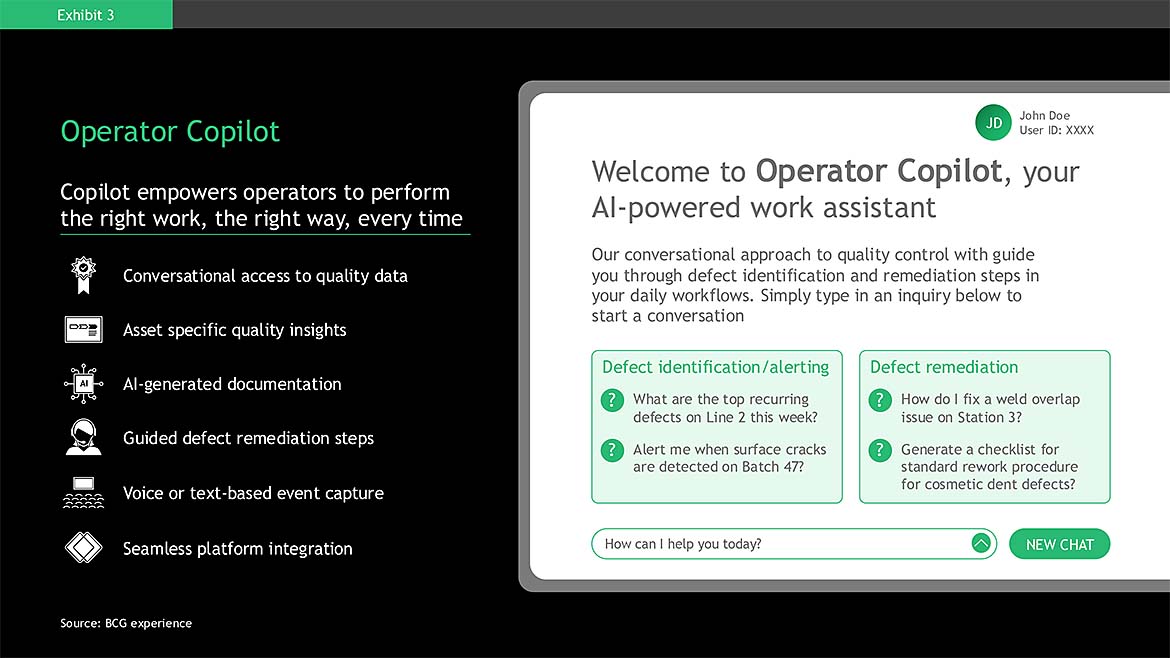
GenAI is transforming processes across industries, and its impact on quality is tremendous. Shop floor data is often unstructured, lacking context and transparency—leading to time-consuming searches and inconsistent decisions. GenAI copilots are emerging as powerful tools to address these challenges, streamlining access to information, root-cause analysis, and documentation. The key capabilities of these systems include:
- Natural language access to quality data: Conversational interfaces that simplify and accelerate access to historical defect logs, inspection data and SOPs by frontline workers and quality managers
- Tailored insight delivery: Context aware insights, process checks, and escalation paths based on user role, machine data, or product configuration
- Automated SOP revisions and content generation: On-demand creation of inspection lists, process documents and training content
- Guided troubleshooting: Actionable, asset-specific action steps, based on successful historical resolutions of similar quality deviations to quickly return processes to a controlled state
Integrated into connected worker platforms, these copilots bring cognitive capabilities to frontline tools. For example, operators on the shop floor can use mobile interfaces or chatbots to:
- Ask questions such as “What is the most frequent defect on Line 4 this week?” and receive immediate summaries
- Capture deviations using voice or typed prompts, with GenAI systems tagging and classifying events
- Request troubleshooting for known issues and receive precise, machine-specific guidance
Seamless integration with enterprise platforms enables copilot systems to link with quality databases, tasks, and digital logs. Translation tools and role-based views improve usability across diverse teams. This increases adoption and builds trust.
Critically, GenAI copilots are producing fast results. While building an end-to-end quality data management system can take months, GenAI tools built onto the organization’s existing data infrastructure can start delivering actionable insights in days or weeks.
Implementation and Impact
Deployment typically starts by integrating structured and unstructured data from quality assurance stations, quality management systems, enterprise resource planning and manufacturing execution systems. Successful rollouts often layer GenAI copilots onto existing digital worker apps, embedding intelligence where users perform their tasks.
These systems can reduce the effort required to create quality documentation by 90%, cut rework in half through timely and accurate interventions, and boost worker productivity by 15 to 20% with smart guidance and faster issue resolution.
Beyond digital infrastructure, successful adoption requires scenario-based training and trust-building with frontline users. Success depends on embedding copilots into workflows, supporting change through digital champions, and clearly communicating benefits to users.
In the context of Quality 4.0, GenAI copilots are not merely tools—they are strategic enablers. In tandem with connected worker platforms, they create adaptive, intelligent quality operations that continuously learn and evolve.
3. Machine vision-based process monitoring
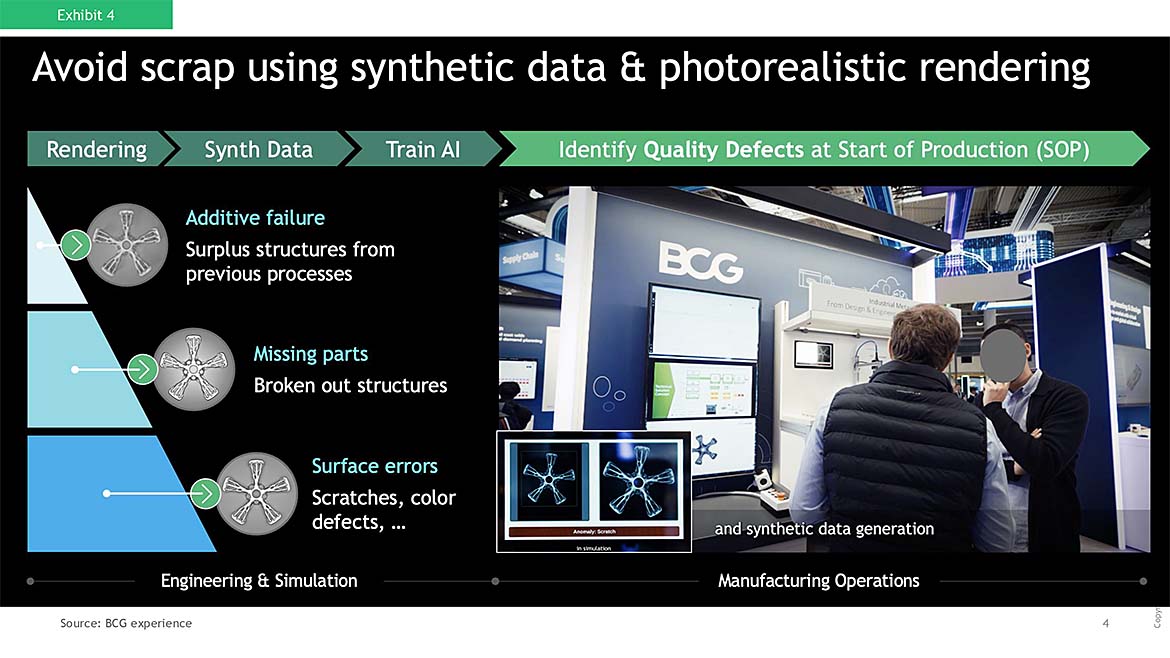
Machine vision-based process monitoring leverages advances in cloud-edge computing and image processing. While machine vision is not new, innovations such as synthetic defect image generation make the technology both more powerful and easier to implement. This approach uses software that converts 3D CAD models into photorealistic renderings that are used to train AI image recognition systems. This breakthrough extends the applicability of machine vision to high-quality-maturity environments where defect frequency is low. Additionally, AI training can now occur before production begins, supporting quality assurance from day one.
One automotive supplier, for instance, used machine vision to transform an existing factory into a lighthouse facility. Manual quality checks were replaced with vision systems—improving quality and reducing manual effort. These systems were integrated seamlessly into existing production lines.
The path towards quality excellence
What does it take to succeed in the quality excellence journey? Successful digital transformations focus on three critical elements:
- The right technology infrastructure
- Prioritization of use cases based on the value they create
- People, including effective governance, the development of skills, and change management
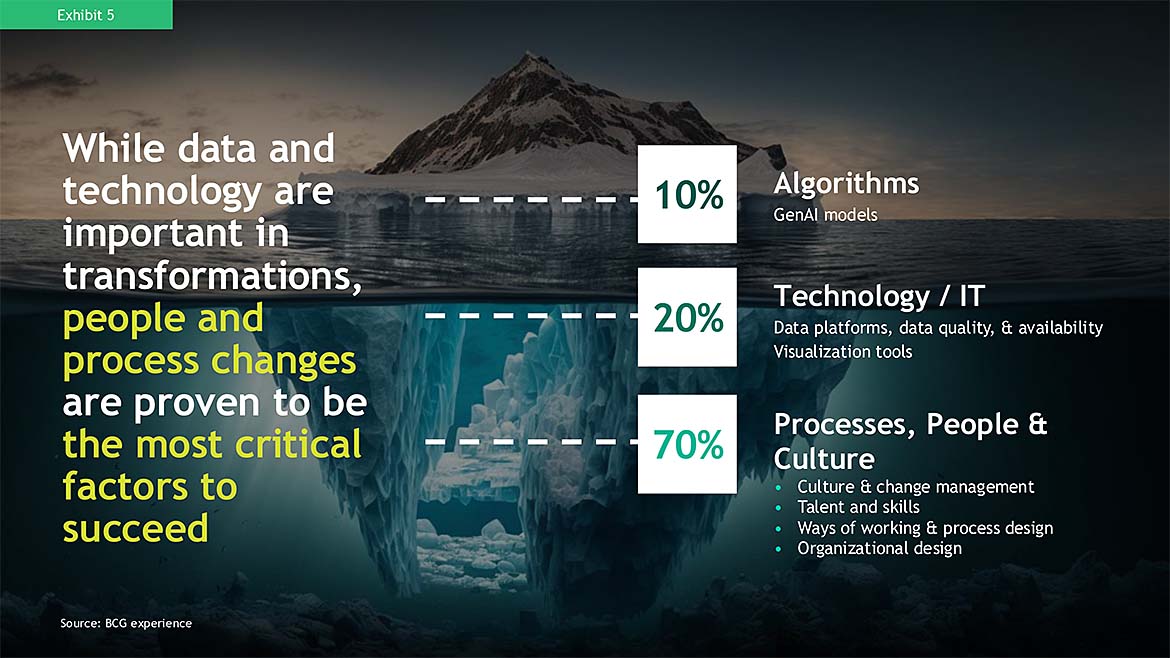
Leading organizations place the most emphasis on the last of these. To scale AI effectively, we apply a 10-20-70 approach—focusing around 10% of the effort on algorithms, 20% on technology and data, and 70% on people and processes.
Experience also shows that a stepwise approach is required to succeed in quality excellence. Companies should:
- Assess current digital maturity, pain points, and business needs
- Prioritize use cases based on impact potential and implementation feasibility
- Define a target vision—including capability and technology requirements
Our work with clients confirms a key finding from our Quality 4.0 study: true front-runners succeed by addressing both the hard and soft aspects of transformation. Leadership commitment, workforce enablement, and active change management are what consistently separate leaders from laggards.
Looking for a reprint of this article?
From high-res PDFs to custom plaques, order your copy today!