Artificial intelligence has had an enormous effect on all aspects of the world economy—and after the initial excitement, the focus has shifted to the technology’s impressive capacity for real-world impact.
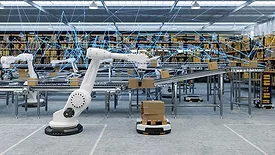
The momentum behind robotics is stronger than ever, but so too are the expectations. After years of aggressive growth projections and a wave of new entrants promising smarter, faster, and more flexible automation, 2026 will demand demonstrable, validated, production-grade reliability.
Precision has long been the backbone of manufacturing. But today, precision alone no longer guarantees performance. As automation, artificial intelligence, and digital transformation redefine production systems, the science of measurement—metrology—is evolving at an unprecedented pace.
As inspection systems capture more visual and dimensional data than ever before, aerospace manufacturers are using artificial intelligence to find variation earlier, connect processes in real time and redefine what it means to manage quality.
Quality engineers on aircraft and defense programs must verify that every part meets design requirements and keep records that can be audited for years.
Michael Byrnes is the executive director of certification operations at ASQ and talks with Quality about certifications, and in particular, how certifications enhance people's careers, benefit the collective community, and really add value to society as a whole.
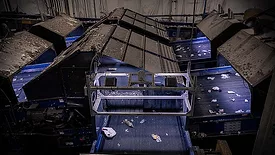
Computer vision algorithms and robotic sortation equipment are capable of seeing better than humans while sorting orders of magnitude more material at far lower costs than existing equipment.
Artificial intelligence (AI) has evolved far beyond a passing buzzword, powering diverse industries with applications ranging from predictive analytics to robotic automation.