Robotics
Why 2026 Will Bring a Reckoning for Warehouse Robotics
Raising the bar on reliability, validation and quality performance will determine which automation vendors survive.
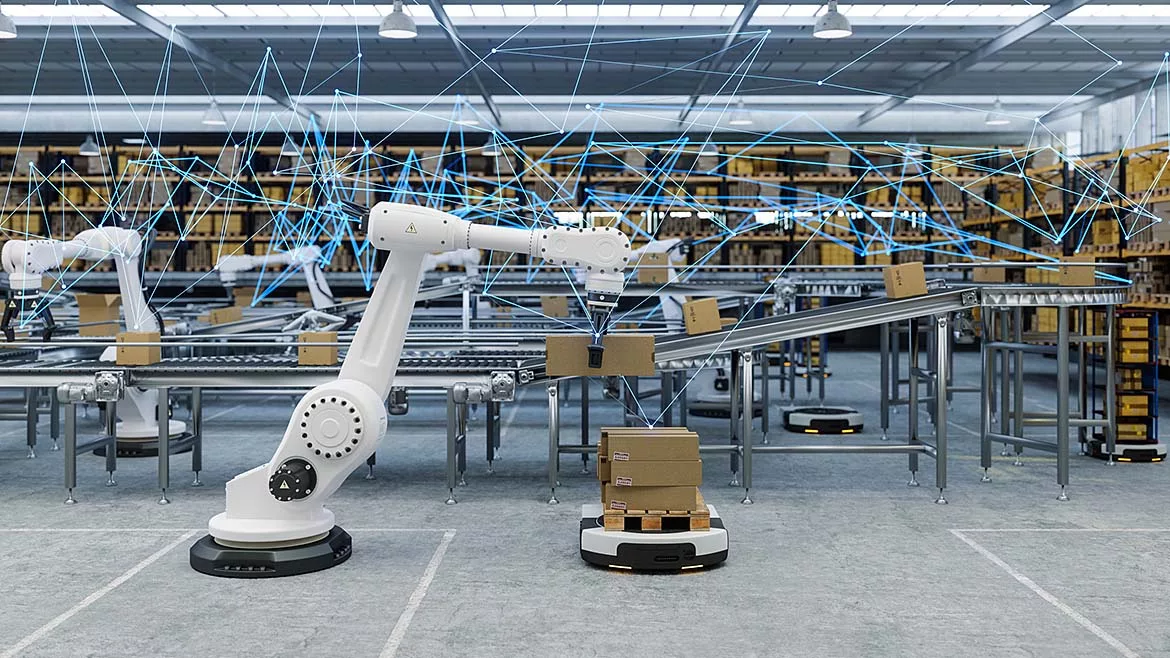
The momentum behind robotics is stronger than ever, but so too are the expectations. After years of aggressive growth projections and a wave of new entrants promising smarter, faster and more flexible automation, 2026 will demand demonstrable, validated, production-grade reliability.
Only a few robotics companies have proven they can operate across multiple workflows and sites with the consistency that operations leaders expect from any integral piece of industrial equipment. With the warehouse robotics market projected to expand from $9.33 billion in 2025 to more than $21 billion by 2030, the demand is clearly there. Demand alone won’t keep vendors alive, though, and in 2026 the industry must show it can deliver on its promises.
To understand how 2026 will redefine warehouse automation, we need to examine the pressures that are raising the bar on reliability, testing and process integrity. The predictions that follow outline the shifts in technology, standards and market dynamics that will shape which robotics solutions will deliver and which ones will fall behind.
Prediction #1: Consolidation will become a quality imperative
The current robotics landscape reflects a decade of specialization. One company builds a solution for induction, another for case picking, another for depalletizing and yet another for mobile transport. Each system has its own operating logic, software interface, maintenance routine and set of failure modes.
From a quality management perspective, this fragmentation introduces many variables to track and address. Even if the systems are interoperable (most are not), every new vendor means a new process, calibration method, data model and a unique set of inspection and maintenance challenges. Warehouses are pushing back and demanding fewer vendors delivering broader, more cohesive capabilities instead of a patchwork of single-task robots stitched together with custom integrations.
In 2026, consolidation will be a requirement for consistent, controlled and auditable quality performance. Companies that unify capabilities, either through acquisitions or organic expansion, will be able to establish more standardized maintenance programs, more predictable uptime and clearer, unified quality documentation. Those that remain specialized on a single application will struggle to compete against platforms that can deliver a full, validated workflow.
Prediction #2: A shakeout will begin long before humanoids mature
Humanoid robots have captured a lot of attention, even though their real-world reliability and effectiveness remain unproven. Most deployments are still small-scale pilots in controlled settings. Large, production-level warehouse deployments are still years away.
The risk lies in the fact that humanoids have already reshaped investor expectations. If humanoid systems fail to meet the timelines their hype suggests, the resulting investor disappointment could dampen enthusiasm for all robotics sectors, including warehouse automation.
This dynamic puts pressure on warehouse robotics providers to demonstrate repeatable performance now. Investors will expect validated uptime, strong economics and proficiency across workflows. Vendors who can’t prove they can function as stable, dependable process equipment instead of experimental automation will be the first casualties of the coming reset.
Prediction #3: AI-assisted operations will strengthen quality
While variability has long been the norm, it has been exacerbated as warehouses today operate against a backdrop of constant disruption from tariff changes to shipping delays and port bottlenecks to geopolitical tensions. Many U.S. businesses have had to adjust with little notice, while the volatility has become a permanent challenge for global supply chains.
In 2026, AI-assisted robotics will progressively become a stabilizer for quality performance. Rather than exposing operations to new risks, AI can help address variability by adapting to SKU changes, adjusting to unpredictable order surges and managing packaging differences without extensive reprogramming.
It’s important to remember that AI in warehouses is changing the roles humans play, but it isn’t replacing them. While robots handle the repetitive tasks, humans will still need to handle exceptions, conduct higher-order inspections and maintain process oversight. This model supports greater consistency and quality control during turbulent operating conditions, making hybrid automation a practical tool for maintaining throughput without sacrificing process fidelity.
Prediction #4: Validation, testing, and reliability standards will tighten
Quality professionals are already demanding more from robotics vendors, and this trend will grow in 2026. Gone are the days when edited videos and controlled demos were enough to satisfy procurement teams. Warehouses now want validated proof that a robot can handle damaged packaging, inconsistent lighting, irregular materials and other real-world variables.
Robotic Foundation Model (RFM) testing, digital twins and simulation environments will evolve from optional tools to baseline requirements. Vendors will be expected to show steady state performance, as well as performance across edge cases. In order to win new business, they’ll be required to prove they can clearly document how systems fail, service intervals, calibration needs and predictive maintenance triggers.
The determining factor in whether robotics vendors grow or fade out will be reliability that is measured, documented and repeatable.
Prediction #5: Robotics and STEM investment become key to U.S. industrial competitiveness
Even beyond warehouses, robotics is becoming a foundational component for U.S. manufacturing and supply chain strategy. Facilities can’t maintain product quality, throughput or inspection accuracy without deeper investment in engineering talent and practical automations. Robotics is progressively being viewed as core industrial infrastructure and not simply optional equipment.
Warehouse automation sits at a critical junction between manufacturing, transportation and retail. It will influence the next wave of automation across light manufacturing, assembly, inspection and quality control. As robotics spreads deeper into production environments, QA professionals will become even more essential to evaluate robotic systems, verify outputs, interpret data and ensure continued process integrity. It will make quality expertise even more important.
2026 Will Reveal Which Robotics Vendors Can Deliver True Quality Performance
By the end of 2026, we will see the first major mergers, the first failures and the first clear signals of which automation providers are built for long-term industrial use. The winners will be those who treat robotics as production equipment that is governed by the same expectations for reliability, ease of maintenance and process capability as any other tool on the factory floor.
Looking for a reprint of this article?
From high-res PDFs to custom plaques, order your copy today!