Quality teams now rely on a dense stack of tools: automated test frameworks, AI assisted test generation, self healing locators, visual testing, static analysis, and observability platforms.
My career started with the early days of the semiconductor industry, and a few years later techies started dreaming of large-scale semiconductor memory.
Artificial intelligence, automation, digital transformation, and new forms of data governance are reshaping how organizations operate and how quality is defined.
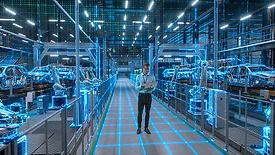
The idea of the ‘dark factory’ has gained new attention as advances in robotics and AI accelerate. Stories range from fully automated automotive plants that operate around the clock and lights-out facilities in China, to experiments with humanoid robots on production lines, often framed as early signs of factories that no longer require people on the shop floor.
AI is considered critical whenever it affects any part of the selection, determination, review, decision, attestation, surveillance, or acceptance of results.
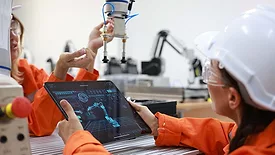
Companies are under increasing pressure to deploy AI as a substitute for human labor. It’s critical, therefore, for managers at all levels to understand AI’s strengths and limitations.
AI pioneer Geoffrey Hinton said the quiet part out loud in a December interview with Fortune Magazine – that “companies investing trillions in artificial intelligence can only make their money back by eliminating human jobs.”