Quality Magazine logo
search
cart
facebook twitter linkedin youtube
  • Sign In
  • Create Account
  • Sign Out
  • My Account
Quality Magazine logo
  • NEWS
  • PRODUCTS
    • FEATURED PRODUCTS
    • SUBMIT YOUR PRODUCT
  • CHANNELS
    • AUTOMATION
    • MANAGEMENT
    • MEASUREMENT
    • NDT
    • QUALITY 101
    • SOFTWARE
    • TEST & INSPECTION
    • VISION & SENSORS
  • MARKETS
    • AEROSPACE
    • AUTOMOTIVE
    • ENERGY
    • GREEN MANUFACTURING
    • MEDICAL
  • MEDIA
    • A WORD ON QUALITY PUZZLE
    • EBOOK
    • PODCASTS
    • VIDEOS
    • WEBINARS
  • EVENTS
    • EVENT CALENDAR
    • IMTS
  • DIRECTORIES
    • BUYERS GUIDE >
      • Supplier Insights
    • NDT SOURCEBOOK
    • VISION & SENSORS
    • TAKE A TOUR
  • INFOCENTERS
    • Digital Quality Management Systems
    • NEXT GENERATION SPC & QUALITY ANALYTICS
  • AWARDS
    • ROOKIE OF THE YEAR
    • PLANT OF THE YEAR
    • PROFESSIONAL OF THE YEAR
  • MORE
    • Expert Columns
    • NEWSLETTERS
    • QUALITY STORE
    • INDUSTRY LINKS
    • SPONSOR INSIGHTS
  • EMAG
    • eMAGAZINE
    • ARCHIVES
    • CONTACT
    • ADVERTISE
  • SIGN UP!
Management

Management

Bridging the Skills Gap: How Modern QA Leaders Are Redefining Workforce Readiness

Bridging the skills gap does not require abandoning foundational quality principles.
By Bohdan Savchuk
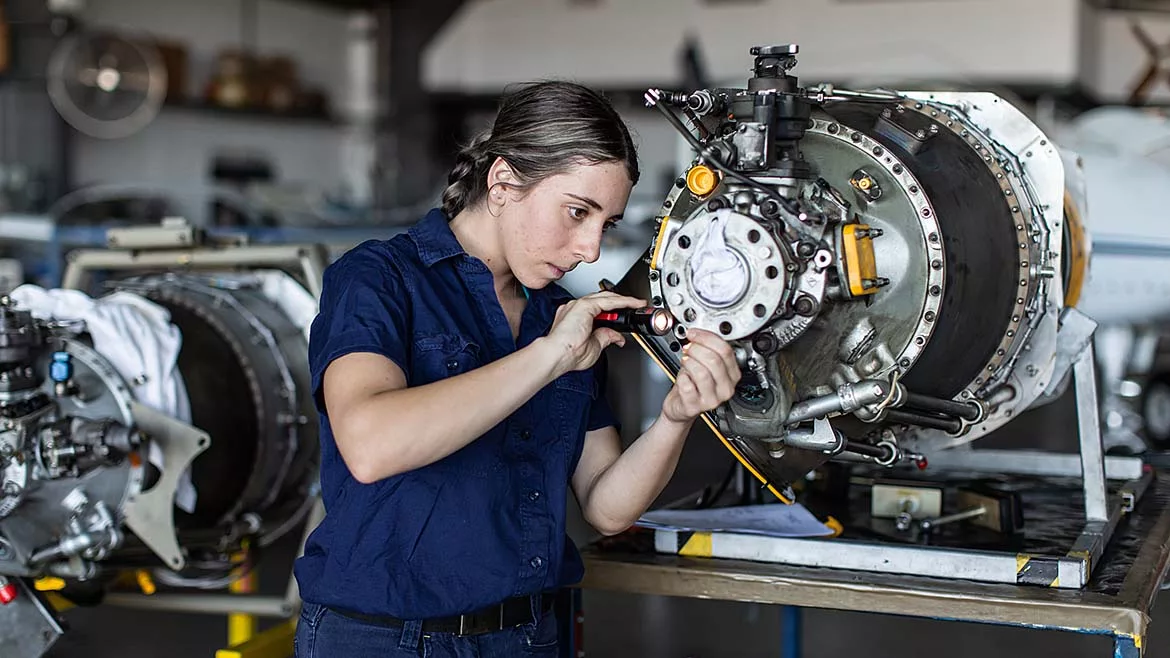
This image depicts a female aircraft engineer performing maintenance on a complex jet engine component in a hangar setting.
Image Credit: Louise Beaumont (ID: 1422090283), Royalty-free (E+), Australia, Sept 9, 2022. Model & property released.
March 25, 2026

Across manufacturing, aerospace, medical devices, and software-driven production environments, one challenge consistently rises to the top of executive discussions: the widening skills gap in quality engineering. As automation, artificial intelligence, robotics, and data-driven systems become standard components of modern operations, traditional quality roles are evolving faster than workforce development models can keep pace.

The issue is not simply a shortage of talent. It is a structural mismatch between emerging technical demands and legacy training pathways. Modern QA leaders are increasingly recognizing that closing this gap requires more than recruitment - it requires redefining what workforce readiness truly means.

The Expanding Scope of Quality

Historically, quality assurance focused on inspection, compliance, and defect detection. Professionals were trained in standards interpretation, auditing procedures, statistical process control, and documentation. While these competencies remain essential, today’s quality landscape demands significantly more.

Automation frameworks manage inspection workflows. Machine vision systems evaluate product tolerances in milliseconds. Predictive analytics flag risk patterns before defects materialize. Software now drives physical systems. As a result, quality engineers must understand not only measurement and standards, but also data pipelines, system integrations, cybersecurity considerations, and algorithmic decision-making.

The modern quality professional operates at the intersection of engineering, software, data science, and risk management. Yet most formal training programs still segment these

disciplines. This gap between multidisciplinary expectations and siloed preparation is where workforce readiness begins to fracture.

From Static Roles to Adaptive Competencies

Forward-thinking QA leaders are responding by redefining roles around competencies rather than job titles. Instead of separating “manual testing,” “automation,” and “inspection” into rigid categories, organizations are developing hybrid skill profiles.

Key emerging competencies include:

  • Automation literacy (understanding automated workflows and validation logic)
  • Data interpretation and statistical reasoning
  • Risk-based decision modeling
  • Basic cybersecurity awareness in connected environments
  • Cross-functional communication with engineering, IT, and operations teams

This shift does not mean every quality professional must become a data scientist. Rather, it reflects a move toward adaptive capability - where professionals understand how their work integrates into increasingly digital systems.

Organizations that frame workforce development around evolving competencies rather than fixed roles are better positioned to adapt to technological change.

The Limits of Traditional Training

Traditional workforce development often relies on classroom instruction, certification programs, or isolated technical courses. While these provide theoretical grounding, they frequently lack exposure to real-world system complexity.

For example, learning statistical process control in isolation does not prepare an engineer to interpret live production data streams integrated with automation platforms. Similarly, studying auditing standards without exposure to digital traceability systems leaves gaps in practical application.

Modern QA leaders are increasingly supplementing formal education with experiential learning models:

  • Cross-functional project assignments
  • Simulation-based training environments
  • Mentorship programs tied to real deliverables
  • Rotational exposure across manufacturing, engineering, and data teams

These approaches accelerate contextual understanding and reduce the lag between knowledge acquisition and operational competence.

Industry–Education Collaboration

Another promising development is deeper collaboration between industry and educational institutions. Instead of relying solely on traditional curricula, some organizations partner with technical academies, universities, and workforce programs to align coursework with practical industry needs.

Such collaborations may include:

  • Co-developed training modules focused on automation in quality
  • Internship programs integrated with live production systems
  • Guest lectures from industry practitioners
  • Capstone projects addressing real operational challenges

These partnerships create feedback loops between academic instruction and industrial reality, helping ensure that graduates enter the workforce with relevant, applied skills.

Importantly, this approach benefits both sides. Educational institutions gain insight into evolving technology landscapes, while industry gains access to talent already familiar with contemporary quality environments.

Rethinking Certification and Competence

Certifications remain valuable signals of foundational knowledge. However, in rapidly evolving technological contexts, certification alone is no longer a reliable proxy for readiness.

Modern QA leadership increasingly distinguishes between qualification and capability. While certifications demonstrate understanding of standards and methodologies, true workforce readiness also requires:

  • Systems thinking
  • Adaptability to new technologies
  • Comfort working with data-driven tools
  • Collaborative problem-solving in cross-functional settings

As a result, some organizations are implementing internal competency frameworks that evaluate practical skills alongside formal credentials. This balanced approach recognizes that knowledge must be demonstrated through application, not only examination.

Mentorship as a Strategic Asset

One of the most effective - but often underutilized - tools in closing the skills gap is structured mentorship. In fast-changing environments, institutional knowledge and contextual experience become critical accelerators.

Modern QA leaders are formalizing mentorship programs where experienced engineers guide emerging professionals through:

  • Risk assessment methodologies
  • Failure mode analysis
  • Automation design reviews
  • Audit preparation strategies
  • Post-incident root cause investigations

Unlike passive training, mentorship enables real-time knowledge transfer during active problem-solving. It also fosters cultural continuity and leadership development within quality teams.

In industries where regulatory scrutiny is high and product risk is significant, mentorship strengthens not only individual performance but organizational resilience.

Building Resilient Quality Teams

Workforce readiness today must also account for volatility. Supply chain disruptions, regulatory changes, and technological advancements can rapidly shift operational requirements.

Resilient quality teams exhibit several common characteristics:

  1. Cross-training across functional boundaries
  2. Comfort working with both physical inspection systems and digital platforms
  3. Data-informed decision-making practices
  4. Clear communication channels between quality, engineering, and operations

By developing teams capable of adapting to new technologies and shifting demands,

organizations reduce dependency on narrow expertise and improve long-term stability.

Leadership in the Age of Technological Acceleration

Ultimately, bridging the skills gap is a leadership challenge as much as a technical one. It requires quality leaders to anticipate capability needs before they become critical bottlenecks.

This proactive mindset includes:

  • Investing in continuous learning pathways
  • Encouraging experimentation with emerging technologies
  • Integrating quality strategy with digital transformation initiatives
  • Measuring workforce readiness as a strategic KPI

Organizations that treat workforce development as a reactive hiring function will continue to struggle. Those that embed capability-building into strategic planning are better equipped to sustain operational excellence.

Conclusion: Redefining Readiness

The quality profession is not shrinking - it is expanding. As systems become more connected, automated, and intelligent, the expectations placed on QA professionals will continue to evolve.

Bridging the skills gap does not require abandoning foundational quality principles. Rather, it demands integrating those principles with modern technical fluency, cross-disciplinary awareness, and adaptive learning models.

Modern QA leaders who redefine workforce readiness around competencies, collaboration, and continuous development are not merely solving a hiring problem. They are strengthening the long-term integrity, safety, and performance of the systems their organizations depend upon.

In an era of accelerating technological change, workforce readiness is no longer about keeping up. It is about building the capability to evolve.

READ MORE

  • Manufacturing at a Crossroads: Navigating Uncertainty with Strategy, Technology, and Workforce Renewal 
  • Reframing Quality Roles for a New Generation 
  • Five Trends Driving U.S. Manufacturing in an Era of Uncertainty 
KEYWORDS: Artificial Intelligence (AI) manufacturing metrology next generation workforce quality skilled workers gap training

Share This Story

Looking for a reprint of this article?
From high-res PDFs to custom plaques, order your copy today!

Bohdan Savchuk, Co-Founder & CTO, Anbosoft LLC. Savchuk is a Quality Engineering leader specializing in automation strategy, risk-based testing, and AI-driven quality systems across manufacturing, IoT, and software environments. With experience bridging traditional quality frameworks and modern automation architectures, he focuses on building resilient, data-informed quality organizations. For more information, email  [email protected] or visit https://www.anbosoft.net. LinkedIn: https://www.linkedin.com/in/bsavchuk

Recommended Content

JOIN TODAY
to unlock your recommendations.

Already have an account? Sign In

  • 2024 Quality Rookie of the Year Justin Wise 1440x750px banner with "Quality Rookie of the Year" logo inset

    Meet the 2024 Quality Rookie of the Year: Justin Wise

    Justin Wise is an exceptional individual who has been...
    Aerospace
    By: Michelle Bangert
  • Man with umbrella and coat stands outside while it rains at night looking at a building.

    Nondestructive Testing: Is there an ethics problem?

    I was a whistleblower who exposed fraudulent activities...
    NDT
    By: Dale Norwood
  • Unraveling Deflategate: Football stadium with closeup of football on field

    Unraveling the Tom Brady Deflategate

    The Deflategate scandal erupted following the 2014 AFC...
    Measurement
    By: Greg Cenker and Henry Zumbrun
Manage My Account
  • eMagazine Subscriptions
  • Newsletters
  • Online Registration
  • Subscription Customer Service
  • Manage My Preferences

More Videos

Sponsored Content

Sponsored Content is a special paid section where industry companies provide high quality, objective, non-commercial content around topics of interest to the Quality audience. All Sponsored Content is supplied by the advertising company and any opinions expressed in this article are those of the author and not necessarily reflect the views of Quality or its parent company, BNP Media. Interested in participating in our Sponsored Content section? Contact your local rep!

close
  • Key Takeaways for Quality Leaders
    Sponsored byComplianceQuest

    Key Takeaways for Quality Leaders from the 2026 Gartner Magic Quadrant™ for QMS

  • This image shows a person seated next to a Bobcat T66 compact track loader.
    Sponsored byPolyWorks by InnovMetric

    Supercharging Digital Gauging at Bobcat North America

  • Dorsey Calibration Lab photo by Tom LaBarbera Picture this Studios
    Sponsored byDorsey Metrology International

    Ensuring Product Quality in a Competitive Manufacturing Landscape

Popular Stories

This image shows a person seated next to a Bobcat T66 compact track loader.

Supercharging Digital Gauging at Bobcat North America

a professional in the aviation field performing maintenance, repair, and overhaul (MRO) work

Manufacturing Retention: Strategies for Improving Company Culture, Engagement and Skill Development

Dorsey Calibration Lab photo by Tom LaBarbera Picture this Studios

Ensuring Product Quality in a Competitive Manufacturing Landscape

2026 Quality Professional of the Year!

Events

June 22, 2026

Automate 2026

Automate is North America's largest robotics and automation event — and the best place to take your ideas from insight to impact.
 
Our show floor features the world’s leading automation solutions, from AI and robotics to motion control, vision systems, and more. Plus, our educational conference is second to none, led by the brightest minds in automation today.
 
Ready to transform the way you work? Take the next step at Automate.
July 14, 2026

Quality Leaders Forum: Better Communication, Better Quality Data

The Quality Leaders Forum is a quarterly, editor-moderated fireside chat series hosted by Quality Magazine, featuring candid conversations with senior manufacturing and operations executives shaping enterprise-level quality.

View All Submit An Event

Products

Lean Manufacturing and Service Fundamentals, Applications, and Case Studies

Lean Manufacturing and Service Fundamentals, Applications, and Case Studies

See More Products
Quality Podcast Channel Custom Content

Related Articles

  • Bridging the Skills Gap to Hire Qualified Workers

    See More
  • A blonde-haired boy in a striped shirt is looking up, smiling, with his right hand on his chin, with a black background.

    Bridging the Manufacturing Skills Gap: Inspiring Careers in Quality and Metrology

    See More
  • Bridging the Quality Inspector Skills Gap

    See More

Related Products

See More Products
  • Factory Physics for Managers: How Leaders Improve Performance in a Post-Lean Six Sigma World

  • Quality Brain Teasers: Real World Challenges to Build Your Manufacturing Skills (ebook)

See More Products

Events

View AllSubmit An Event
  • February 17, 2026

    Quality Leaders Forum: How Automotive Leaders Are Redefining Quality

    On Demand The Quality Leaders Forum is a quarterly, editor-moderated fireside chat series hosted by Quality Magazine, featuring candid conversations with senior manufacturing and operations executives shaping enterprise-level quality.
  • June 24, 2025

    From Compliance Chaos to Certification Confidence: How QA Teams Can Win Audits With the Right Systems & Partners

    On Demand Audits don’t have to be stressful. In this session, you'll learn how to confidently prepare for ISO and regulatory audits by understanding the distinct roles of certification bodies and implementation partners.
View AllSubmit An Event

Related Directories

  • Q-Skills3D

    Q-Skills3D, Interactive E-Learning in Quality and Lean. Dozens of games, simulations and interactive exercises. Suits every employee, in any department, in any industry. 500,000 users across hundreds of companies such as: Microsoft, Toyota, GE, Delta Airlines, Nestle, KU Medicine, HP. FREE Deming Funnel in AR app.
  • QA Technology Co. Inc.

    QA Technology is globally recognized for exceptional product performance, competitive prices, fast delivery and outstanding service. Our spring-loaded test probes and hyperboloid contacts are trusted and specified by the world's most recognized technology companies and PCB test fixture manufacturers. Our customers know they will produce a higher quality product, meet delivery demands, and achieve higher production yields.
×

Stay in the know with Quality’s comprehensive coverage of
the manufacturing and metrology industries.

Newsletters | Website | eMagazine

JOIN TODAY!
  • RESOURCES
    • Advertise
    • Contact Us
    • Directories
    • Manufacturing Division
    • Store
    • Want More
  • SIGN UP TODAY
    • Create Account
    • eMagazine
    • Newsletters
    • Customer Service
    • Manage Preferences
  • SERVICES
    • Marketing Services
    • Market Research
    • Reprints
    • List Rental
    • Survey/Respondent Access
  • STAY CONNECTED
    • LinkedIn
    • Facebook
    • YouTube
    • X (Twitter)
  • PRIVACY
    • PRIVACY POLICY
    • TERMS & CONDITIONS
    • DO NOT SELL MY PERSONAL INFORMATION
    • PRIVACY REQUEST
    • ACCESSIBILITY

Copyright ©2026. All Rights Reserved BNP Media, Inc. and BNP Media II, LLC.

Design, CMS, Hosting & Web Development :: ePublishing