Software
From Pen and Paper to AI: Transforming Manufacturing
As more supply chain risks like tariffs ripple through operations, outdated systems can no longer adapt to the pace of change required.

Far from being a futuristic concept, artificial intelligence (AI) is already reshaping the manufacturing industry. Major manufacturers like General Motors and PepsiCo are deploying AI to increase quality by detecting defects and helping to generate new product varieties. Now, smaller manufacturers are embracing steppingstones to AI with business intelligence (BI). It’s paying dividends already. Composiflex Inc., an advanced composites manufacturer, used BI to forecast revenue and plan schedules for their equipment and labor, which helped reduce inventory by over $1.2 million and raise on-time delivery rates above 95%.
For manufacturers with complex supply chains and significant streams of production data to coordinate, AI offers compelling value. Across the industry, reports show that that 72% of manufacturers deploying AI have reduced costs and improved operational efficiency. With 66% of people using AI tools globally every day, its impact is undeniable and growing.
As more supply chain risks like tariffs ripple through operations, outdated systems can no longer adapt to the pace of change required. AI-powered tools can empower manufacturers to accelerate growth while protecting profitability. To grasp their transformative power and understand where your organization stands in its AI journey, let’s explore what today’s manufacturing solutions can deliver, and the opportunities AI can unlock.
ERP as a business enabler
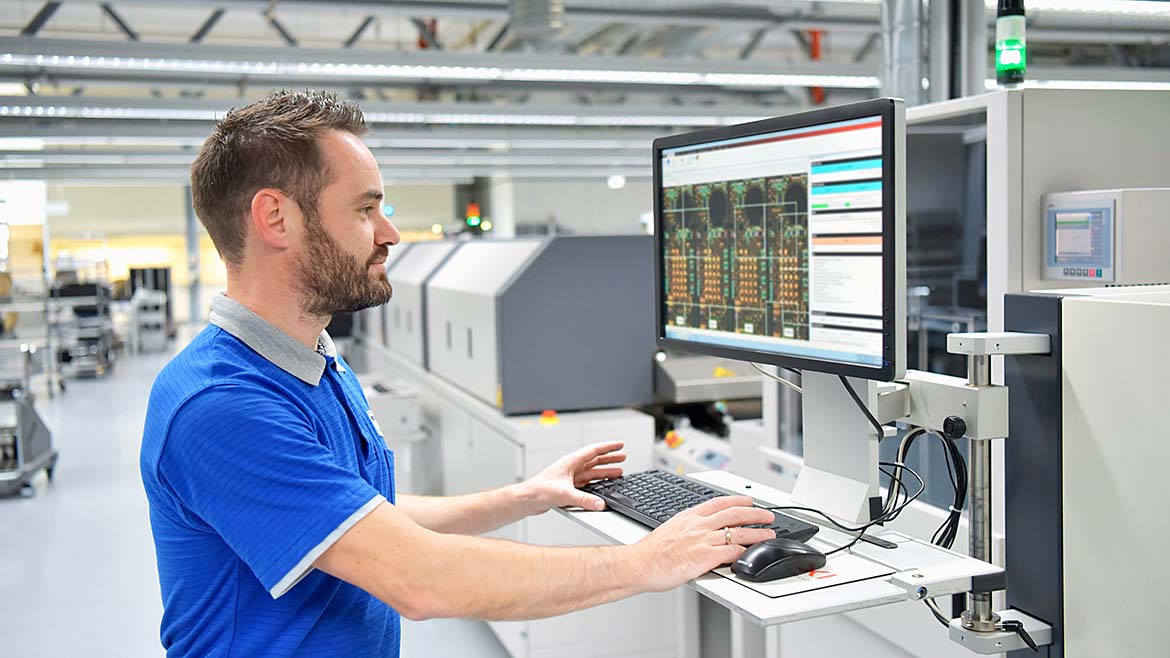
The journey to AI starts with organizing and digitizing your data. Adopting an Enterprise Resource Planning (ERP) solution is a core step in the process. ERPs help manufacturers move beyond manual solutions and create a central repository for all their production information. By ensuring all orders and quotes are meticulously tracked, this increased visibility can set the stage for deeper business analytics powered by AI. What’s produced by AI is only as good as the data that goes in. More information can translate to better insights, helping improve each unique operation.
The value of an ERP extends throughout the shop floor and supply chain. These systems can track inventory and component lead times, helping manufacturers order materials at the right moment to prevent costly stockouts or excess. ERPs can also help manufacturers fine tune their workflows to fit them and shift routine tasks to AI tools. This allows businesses to get more from what they already own, whether that’s assets, materials, talent, or customer relationships, by optimizing resources and eliminating wasted effort.
The journey from BI to AI
ERPs are not just tools for operational efficiency; they can also enable smarter decision-making. For years, BI tools within ERP systems have helped manufacturers analyze their outcomes with reports and determine root causes through historical data. For many manufacturers, this was their first step into data-driven decision-making. BI tools have provided descriptive insights about what happened and diagnostic insights that explain why it happened.
While valuable, BI is mostly retrospective, keeping manufacturers on the back foot by reacting to performance like sales and gross profit to help guide the next move. With the rise of AI, they can shift to the front foot, anticipating what’s ahead with predictive capabilities. AI can forecast sales outcomes based on patterns hidden in large, complex order history datasets. It can go a step further by recommending which changes, like purchasing new equipment, are most likely to produce the best results. This transforms data from a reference point into a real driver of operational decisions. The evolution from BI to AI marks a major leap in how manufacturers can unlock insight, reduce risk, and act faster than ever before.
Operationalizing AI
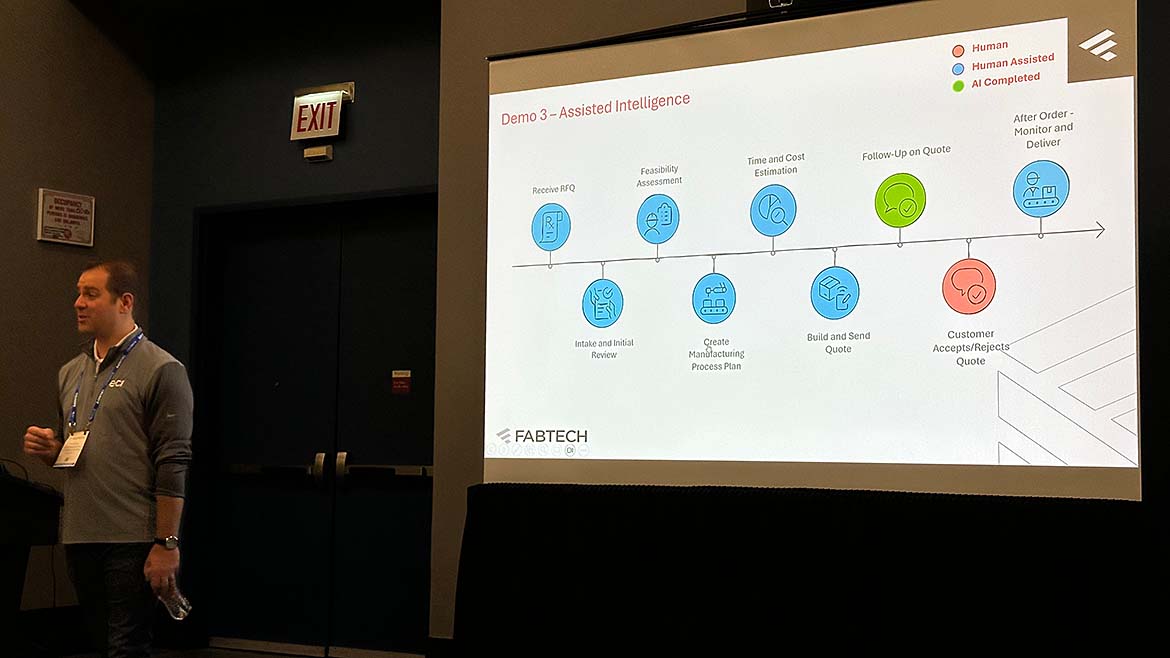
Manufacturing AI products currently use AI to extract data, map processes, and suggest recommendations, while humans remain in control of final decisions. It is best utilized when handling cumbersome but essential tasks like developing Bills of Materials (BOMs) or Request for Quotations (RFQs).
Since BOMs act as the blueprint for building products, accuracy is critical to avoid rework, inventory issues, or production delays. Instead of relying on employees to enter every detail, AI can scan drawings, images, or charts to identify components, numbers, and descriptions, then generate a digital BOM that’s stored for future use. Employees can still review and adjust the AI-generated results, ensuring the data is accurate and tailored to the specific needs of the business. These files can integrate directly into ERP workflows, linking with estimating to keep projects moving faster.
AI can also assist with quote processing by reviewing RFQs to ensure all requirements like addresses and delivery dates were received. If more information is needed, it can help draft responses to customers and even develop final contracts. These approaches can remove guesswork and reduce errors while giving teams more time to focus on higher-value work.
AI steps beyond simply improving transaction efficiency and execution by automating these routine tasks, unlocking actionable insights from unstructured data that traditional ERP, MRP, scheduling, or CAD systems struggled to fully use. By bringing intelligence to this information, AI empowers manufacturers to make quicker, more confident decisions that keep their operations resilient and competitive.

Key considerations for making the transition to AI
AI is still evolving, which makes it critical to approach adoption with thorough research and a clear strategy. Manufacturers should first define the specific business goals they want AI to address, whether that’s reducing fulfillment times, improving resource allocation, or minimizing customer complaints. Having a clear end goal helps shape how AI is implemented and ensures it delivers measurable value.
One of the most common mistakes organizations make is jumping into pilots before the groundwork is ready. It is essential to have clean, connected data, or even the most advanced AI will underdeliver. To succeed, manufacturers must pair their business strategy with a strong data strategy, which can be built with an ERP.
Equally important to implementation is making sure that employees fully understand the technology, and how it can best serve them, so they do not feel alienated. Organizations should frame AI as a trusted teammate, rather than a replacement, to foster greater adoption and confidence across the workforce. Utilizing AI tools with a layer of human oversight can ensure that outputs are accurate and keep employees in the loop.
Strong AI governance must not be overlooked. Organizations should have principles in place for where and how AI can be used to ensure data privacy, and not to risk customer trust.
Once an organization identifies where they are in their AI journey, if they begin to take these practical steps, they will be poised for successful AI implementation. The opportunity is clear: the time has never been better to start using AI.
Looking for a reprint of this article?
From high-res PDFs to custom plaques, order your copy today!