Management
How Digital Twins & AI Are Transforming Training, Quality & Recruiting in Manufacturing
These techniques demonstrate that digital twin and AI-driven training environments are more than just workforce tools; they are recruiting assets.
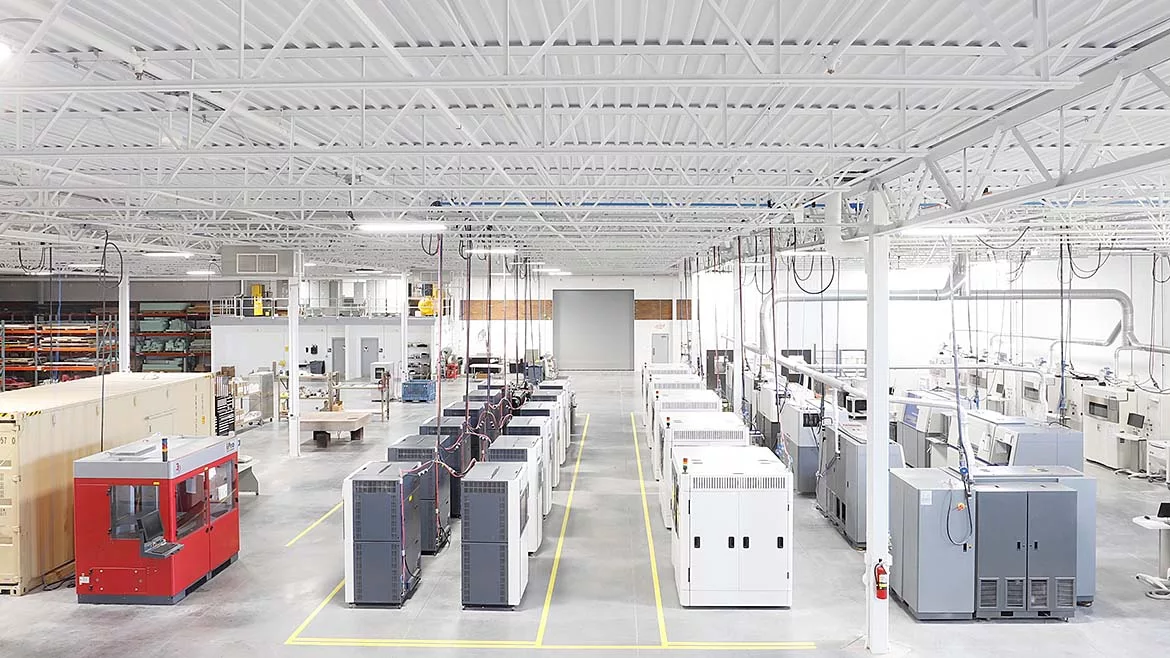
For many years, the manufacturing sector has been fighting an image battle with an outdated reputation that it is repetitive, low-tech, dirty and even dangerous. Manufacturers have had trouble finding new workers who are willing to consider a career in manufacturing.
One solution that’s starting to have an impact is digital twin and AI-driven tools, which provide training in realistic, high-tech environments. These technologies help upskill and train existing workers, but they’re also helping to attract today’s digital natives who are comfortable with interactive technologies and are seeking a workplace that feels just as modern.
Digital Twins, AI & Quality
Digital twins have been a mainstay in manufacturing and engineering for years to optimize operations. A digital twin is a characterization of a site and its equipment that can be used to improve its operations. Companies build digital models of equipment and processes, then feed live data into them from sensors on the shop floor. This allows them to simulate, test and optimize manufacturing processes in software before implementing changes on the production line.
A digital twin of an entire production line lets engineers tinker with parameters like line speed, workflow routing or tool settings. That enables them to see how changes would impact output or quality in a software simulation, without affecting real production. Manufacturers embed IoT sensors in their machines and run the live sensor data through production simulations to dynamically optimize efficiency and reduce cost.
Quality writes that “mirroring actual systems in a dynamic, data-driven model enables companies to predict outcomes and detect errors with far more accuracy than trial-and-error approaches.” Instead of merely reacting to defects or downtime, teams can use the simulations to anticipate breakdowns, wear and quality drift and take preventive actions in advance.
AI technologies that run these simulations and analyses further extend the benefits of digital twins. AI can rapidly sort through large volumes of data (such as machine data and camera images) to spot trends and patterns too complex for humans to see.
Manufacturers are already using AI to improve everything from maintenance to quality control. For example, a machine learning model can be trained to recognize the subtle variations in sensor data that could signal a machine failure before it happens.
AI/ML-Driven Simulations: A Potential Cure for Manufacturing’s Workforce Crisis
All of this is especially important because the manufacturing industry is in the middle of a major skills gap and workforce crisis. Automation and Industry 4.0 technologies require a high level of technical skills. But a growing number of experienced workers are retiring and fewer young people are willing to replace them. According to a 2021 study by The Manufacturing Institute, unless something changes, the U.S. manufacturing sector will be short about 2.1 million workers by 2030.
Manufacturing executives are starting to recognize they must shift perceptions about manufacturing to close the talent gap. As a Deloitte study observed, “To attract a new generation of workers, the industry should work together to change the perception of work in manufacturing and expand and diversify its talent pipeline.” Digital twins and AI are proving to be effective tools to change those perceptions and entice young people to re-evaluate careers in manufacturing.
How Digital Twins and AI Simulation Transform Training
Many manufacturers are already using digital twin models and AI-driven simulations as a training platform for new and existing employees. The concept is straightforward: If employees can practice and master a task or skill in a simulated environment, they can be more prepared for real-world implementation.
Digital twins provide a virtual “practice” environment where workers can learn how to operate machines and interfaces and respond to a variety of scenarios – including those that may only happen rarely on the production line.
Ford, Boeing and other leading manufacturers are already using digital twins in their training. Ford uses digital twins and VR to train new production line workers. It uses a digital twin to virtually simulate real-world assembly line scenarios. New workers can practice assembly and quality control inspections in a VR model of the workstation before they execute the real thing on the production line. Trainees make fewer mistakes after transitioning to the actual line, and they become fully productive more quickly, resulting in a better-quality outcome.
Boeing has seen comparable results with VR and digital twins for technicians, providing new hires with a powerful virtual workstation to master tasks before installing complex wiring assemblies on an actual aircraft. The aerospace giant uses augmented reality to provide technicians with digital 3D wiring diagrams overlaid onto the actual aircraft, instead of the bulky 20-foot paper schematics they used before. The result is more accurate and faster wiring installations, with a 33% improvement in speed and accuracy.
These tools are not just for training new employees; experienced workers can use them for continuous upskilling and cross-training, too. For example, a veteran technician can use a detailed process twin to learn how to use a new machine on the line or prepare for a product design change, without having to pull a machine offline for training. Employees can quickly gain proficiency in the digital world and then apply that new knowledge in the physical production environment with greater confidence.
How Digital Twins & AI Are Shifting Manufacturing Perceptions
One of the less obvious but increasingly important impacts of digital twins and AI simulations is how they are helping to shift perceptions about manufacturing careers in the eyes of younger workers. Training in high-tech, digital environments is appealing to digital natives who grew up with video games and interactive media.
Gamified Learning is Appealing to Gen Z
Gamified digital work instructions and training simulations are especially effective with younger workers, who respond well to challenges and feedback. A study found that AR/VR-based instructions can make manual assembly or inspection feel more like an interactive game than repetitive manual labor. The report also noted that this type of digital instruction is appealing to job seekers because it framed manufacturing work as a skill-building activity inside a modern and technology-driven workplace.
Siemens Is Attracting Nontraditional Employees with Digital Twin Training
Siemens has been able to attract individuals from non-traditional backgrounds by highlighting the intuitive nature of its digital twin-based training. At its training facility in Fort Worth, Texas, the company has used digital twin replicas of production lines to retrain restaurant workers and delivery drivers to become skilled manufacturing technicians and associates.
The combination of virtual training and AI-driven performance feedback has proved so intuitive and engaging that it has allowed Siemens to expand its talent pool to non-traditional sources. Some trainees have advanced so rapidly that they have become trainers in the program.
Companies are also using their investments in digital twin and simulation technology to build their brand and recruitment stories with Gen Z. Pfizer, for example, has not only reduced onboarding time with its VR vaccine manufacturing training but has also enhanced its brand as a modern and high-tech employer.
Ford has been showing off its AR headset-based training tools and digital twins during factory media tours and recruitment campaigns. They’re demonstrating that a production job at Ford now includes high-tech and cutting-edge technology.
AI & Digital Twins for Workforce Recruitment: What’s Working
Metrics on the recruitment impact of these programs are still in the initial stages, but several tactics appear to be effective:
- Immersive technology demonstrations: Allowing candidates to try AR/VR training tools during recruitment events has been effective to engage new talent.
- Storytelling around digital tools: Companies that use their high-tech training programs as part of their recruiting campaigns and media outreach report increased pipeline and interest.
- Accessible upskilling paths: Siemens’ example shows that digital twins can not only appeal to young people but also attract career-changers and others who don’t have a traditional manufacturing background.
- Cultural reframing: A cultural shift away toward modern facilities and a new way of working can help rebrand manufacturing as innovative and safe.
Taken together, these techniques demonstrate that digital twin and AI-driven training environments are more than just workforce tools; they are recruiting assets. By offering a high-tech and interactive learning environment, clear growth pathways and an employee culture that is focused on technology and innovation, manufacturers are better able to compete for the best and brightest young talent.
Sources
- Quality Magazine – Allen Cius, “Digital Twins: Elevating Manufacturing Standards and Reducing Errors,” May 30, 2025 - qualitymag.com
- Deloitte Insights – Digital twin use in manufacturing (sensor-driven simulation) - deloitte.com
- NumberAnalytics – “Optimizing Manufacturing with AI Simulation” (AI benefits) - numberanalytics.comnumberanalytics.com
- The Manufacturing Institute / Deloitte – 2021 Skills Gap Study (2.1 million jobs unfilled by 2030) - themanufacturinginstitute.org
- Deloitte / NA - M Manufacturing Outlook 2024 – (1.9 million jobs unfilled by 2033) - manufacturingskillsinstitute.org
- InfiVR (Medium) – Boeing AR/VR Training Case (33% wiring accuracy gain, 75% training time reduction) - infivr.medium.cominfivr.medium.com
- Toobler Blog – Digital Twin for Worker Training (Automotive) (immersive, risk-free learning; Ford, Siemens examples) - toobler.comtoobler.com
- Toobler Blog – (Siemens, GE, BMW using digital twins for training results) - toobler.comtoobler.com
- Deloitte Insights – 2025 Industry Survey (XR adoption rates) - deloitte.com
- Deloitte Insights – Synthetic data for simulation - deloitte.com
- Toobler Blog – AI and personalized training feedback - toobler.com
- NAM / Deloitte – Attracting new generation to manufacturing (change perception, highlight tech) - themanufacturinginstitute.org
Looking for a reprint of this article?
From high-res PDFs to custom plaques, order your copy today!


.webp?height=200&t=1782830367&width=200 "Automotive Manufacturing and Vehicle Assembly Production Line")