I’m fond of the phrase “These words say this. These words don’t.” I first encountered it in the marketing of the company Pig Newton, the production company of comedian Louis C. K.
Aegis Software, a global provider of manufacturing execution and operations software for diverse manufacturing industries, announced that it has completed the acquisition of Simio, a leading provider of Digital Twin Simulation software and Advanced Planning and Scheduling (“APS”) to an attractive and resilient set of end-markets.
X-Rite Incorporated, a global leader in color science and technology, announced a new collaboration with Rhopoint Instruments, a leading manufacturer of test equipment for appearance quality, to advance digital appearance innovation and support the growing use of digital twins in product development and marketing.
If you’re new to digital twins, you don’t need a moonshot program. You need a clear question, a modest scope, and a disciplined way to keep your model useful.
A digital twin is a high-fidelity model of something in the real world – a product, machine, production line, or entire factory – that you can safely test and optimize on a computer instead of the shop floor.
Checklists play an important role in maintaining consistency, compliance, and traceability. They offer structure and ensure activities are carried out with discipline.
The phrase “digital twin” is everywhere these days, but it’s also widely misunderstood. Ask ten people what it means and you’ll likely hear ten different answers. Many assume it’s simply a CAD model or a 3D scan. Those are important tools, but they’re not the whole story.
The phrase “digital twin” is everywhere these days, but it’s also widely misunderstood. Ask ten people what it means, and you’ll likely hear ten different answers. Many assume it’s simply a CAD model or a 3D scan. Those are important tools, but they’re not the whole story.
The relentless pursuit of quality and reliability is at the core of all manufacturing operations. As control systems become more complex and interconnected, new challenges and opportunities emerge for quality professionals.
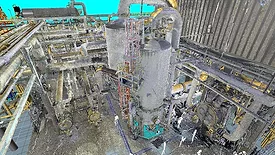
On Demand This session will walk you through practical steps to launch your own digital twin strategy, from selecting the right data acquisition technologies to leveraging advanced metrology software for simulation, collaboration, and lifecycle traceability.
On Demand This session will walk you through practical steps to launch your own digital twin strategy, from selecting the right data acquisition technologies to leveraging advanced metrology software for simulation, collaboration, and lifecycle traceability.
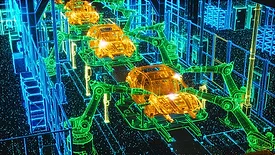
.webp?height=168&t=1782830367&width=275 "Automotive Manufacturing and Vehicle Assembly Production Line")