Management
What a Quality Signature Really Means
Quality becomes most powerful when viewed as a discipline of prevention and assurance rather than a sequence of tasks.

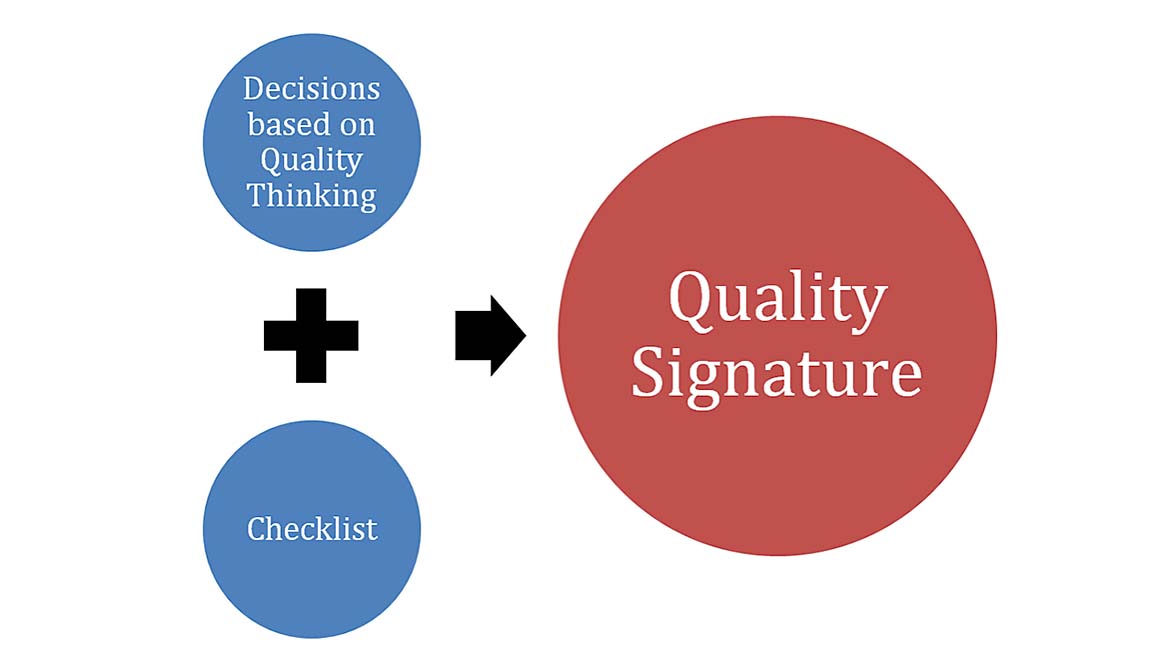
Checklists play an important role in maintaining consistency, compliance, and traceability. They offer structure and ensure activities are carried out with discipline. Yet even with thorough documentation, many professionals recognize that the true essence of quality lies not in the checklist itself, but in the thinking behind it. A quality signature is not simply the last step of a form—it is the final reflection of the judgment, insight, and careful analysis that came before it. By exploring the deeper layers of work that lead to a signature, we begin to see quality not as procedural completion, but as a meaningful source of confidence and assurance.
In fast-moving and highly regulated environments, it is natural for attention to drift toward visible milestones—forms completed, boxes checked, approvals obtained. These tools help maintain order and clarity, especially when numerous requirements intersect. But over time, this can unintentionally create the impression that documentation is the goal, rather than the outcome of thoughtful decision-making. Recognizing this dynamic is not about assigning criticism; it is about acknowledging the subtle pressures that shape how work is perceived. The checklist may show what was done, but the signature reflects why it is trustworthy.
A helpful way to understand this distinction is to look at aviation. Every flight begins with a pre-flight checklist—hundreds of items reviewed to ensure the aircraft is ready. The checklist is essential, but no one believes it is the checklist that flies the airplane. The pilot’s training, judgment, and awareness guide the flight when conditions change, when wind shifts, or when unexpected turbulence appears. In the same way, a quality checklist ensures that required steps have been completed, but the quality signature reflects the deeper evaluation: whether the system is truly ready, whether the data makes sense, and whether risks are understood. The checklist provides structure; the signature provides assurance.
Behind every quality signature sits an entire architecture of thought, analysis, and cross-functional understanding. Quality professionals rely on a wide spectrum of practices to bring clarity to complex decisions.
- This work includes root-cause exploration, trend analysis, and the development of corrective and preventive actions.
- It spans verification and validation planning, execution, and interpretation; process capability studies; measurement system analysis; and structured experimentation such as design of experiments.
- It involves assessing risk through tools like FMEA and fault-tree analysis, evaluating supplier capability, and supporting material and process qualification.
- Reliability assessments, documentation reviews, change-impact analyses, and internal audits help strengthen understanding across the product lifecycle.
These activities make up the hidden architecture beneath the visible surface of a signature. They uncover potential failure modes, reveal how a system behaves under variation, and allow decisions to be grounded in evidence rather than assumption. When attention shifts back to the depth behind the checklist, quality becomes an enabler of prevention, clarity, and resilience.
The focus of quality work is supported by several core thinking disciplines that transform a checklist from a task into a thoughtful decision.
- Critical Thinking ensures assumptions are examined and decisions withstand scrutiny.
- Systems Thinking connects how components, processes, suppliers, and lifecycle stages influence one another.
- Data-Based Thinking anchors decisions in trends, variation, and quantifiable evidence.
- Risk-Based Thinking anticipates how and where failures may occur, guiding mitigation.
- Customer-Centric Thinking aligns every decision with safety, usability, and long-term reliability.
- Preventive Thinking shifts focus from detection to designing out issues early.
Modern analytical tools further expand this capability. Real-time dashboards, digital twins, and predictive models provide new ways to understand systems, reveal patterns, and anticipate variation. These technologies help teams experiment virtually, identify weak signals early, and explore multiple outcomes before physical changes occur. They do not replace engineering judgment; they enhance it. When used effectively, they transform data into insight, and insight into more informed decisions well before a signature is added.
Quality also strengthens through the environment in which it is practiced. A culture that encourages curiosity, thoughtful questioning, and open dialogue allows quality processes to reach their full potential. When people feel comfortable raising uncertainties or sharing alternative viewpoints, reviews become more reflective, and checklists shift from task reminders to structured conversations. In such settings, a signature represents alignment, understanding, and shared confidence, not simply the completion of a procedural step.
Ultimately, the value of a quality signature goes far beyond marking the end of a checklist. Checklists remain vital for consistency and compliance, but they gain significance when supported by rigorous analysis, data-driven thinking, and a culture that prioritizes learning and clarity. Quality becomes most powerful when viewed as a discipline of prevention and assurance rather than a sequence of tasks. The opportunity lies not in replacing checklists, but in enriching them—using them as structure while striving for excellence through quality thinking principles. Through this lens, a signature becomes more than approval; it becomes the affirmation of thoughtful work, sound judgment, and confidence in what has been created.
Looking for a reprint of this article?
From high-res PDFs to custom plaques, order your copy today!