
Articles Tagged with ''QMS''

Test & Inspection
Operator Variation Is Not a Training Problem. It Is a System Problem.
Would your test results be consistent if a new operator ran them tomorrow?
Read More

Medical
Beyond the Checklist: Mastering the FDA’s New QMSR Framework
The new program emphasizes data driven decision making, integrated processes, and enterprise wide risk management.
Read More




Management
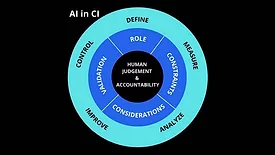
AI as an Enabler of Continuous Improvement: Applying Quality Thinking to AI Prompt Engineering
Used appropriately, AI supports better questions and faster insight. Used poorly, it scales uncertainty. And therein lay the risks.
Read More



Management
Building Quality Systems for Complex, Regulated Environments
Mukesh Kumar discusses how high-stakes regulatory environments have shaped his approach to building resilient quality systems, and how AI and automation are now extending those capabilities across modern enterprise operations.
Read More