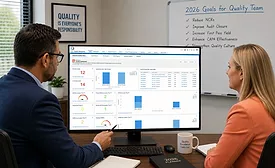
Quality leaders are rethinking QMS priorities in 2026. Here are the key takeaways from the Gartner® Magic Quadrant™, and what “Ability to Execute” means for real-world quality performance.
It’s called the principle of two weaknesses. It is a strategy in chess. It was developed by Grandmaster Aron Nimzowitsch and detailed in the book, “My System,” back in 1925 and still considered a core strategy in chess to this day.
Nearly 90% of material resources across the European Union are lost after their first use, highlighting how linear today’s manufacturing economy remains.
Let’s look at several steps in a typical seamless production process and how they ultimately ensure that quality products are produced and delivered on time.
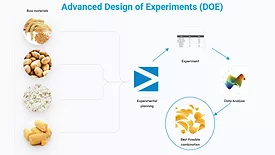
Rather than changing one factor at a time and looking for patterns, DOE allows us to test several factors together and observe both their individual effects and their interactions.
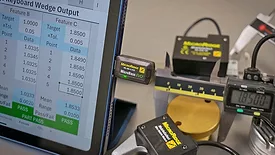
Up until the early 2000s, metrology was mostly a pen-and-paper-based profession. Inspection reports, machine data, and charts were all hand-recorded, often scattered across departments. Data existed, but analyzing trends over time was slow, error-prone, and sometimes just impossible, making it fully disconnected from decision-making.
As tolerances tighten, production speeds increase, and supply chains grow more complex, manufacturers recognize that measurement data is a critical operational asset.
 RSS
RSS