Software
Quality’s Dirty Secret
Your QMS is a compliance filing cabinet. It’s time to make it the nervous system of your factory.
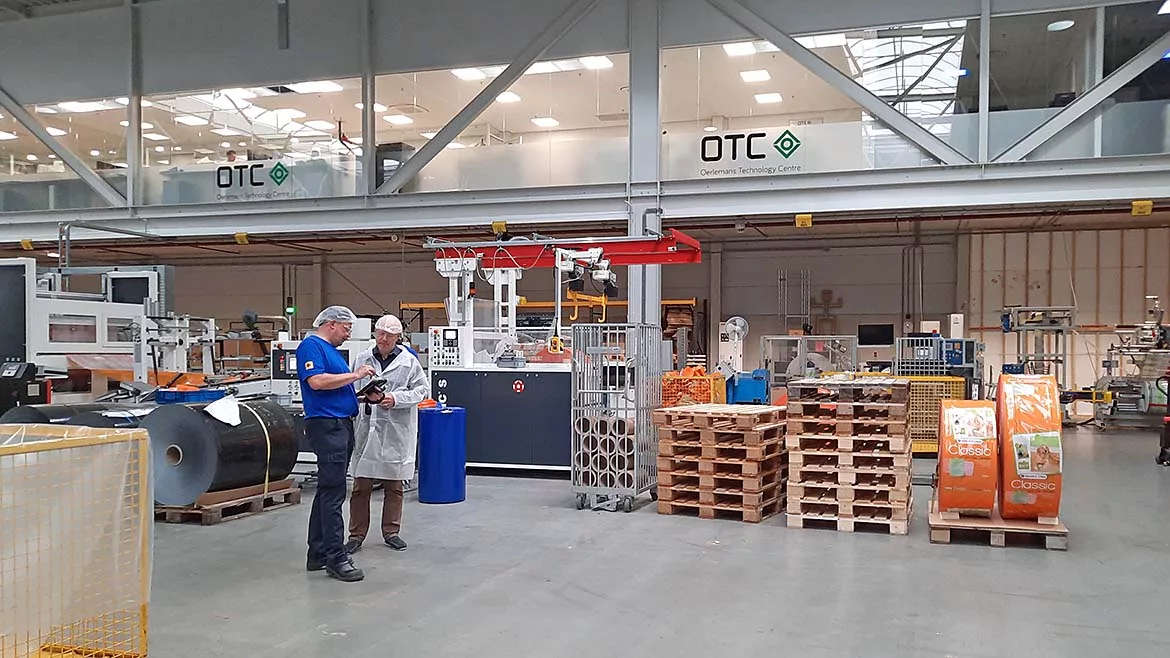
Quality management has an identity crisis.
For decades, it has defined itself around two things: compliance and customer satisfaction. Meet regulatory requirements. Meet customer specs. Document everything. Audit everything. Rinse and repeat.
Nobody questions this. It is the water quality managers swim in.
But compliance-driven quality management has become detached from the actual work happening on the factory floor. Quality managers describe ideal worlds in policies and procedures, push those documents into the organization, and then spend enormous energy trying to get people to follow them.
That gap—between the document and reality—is where quality dies. And it is built into the system.
The Three Problems Nobody Wants to Talk About
Policies and procedures are the backbone of traditional quality management. And they have three fundamental problems.
First, they are hard to write. Capturing an ideal process in language clear enough for operators requires expertise, time, and constant updates. Most quality teams are stretched thin. Documentation inevitably lags reality—sometimes by months, sometimes by years.
Second, they are hard to use. Nobody reads SOPs unless they have to. Operators scan them, nod along, and return to what they already know. Not out of carelessness, but because long documents are a poor way to deliver knowledge in the moment of need.
Third, and most critically, they go out of tune with reality almost immediately. A factory is not static. Processes, regulations, equipment, and people all change. Every change creates a gap between the documented world and the real one. That gap is where non-conformances live. Where complaints are born. Where auditors find findings.
This is not a new observation. Every quality manager has felt it. So why has it not been fixed?
The Software Industry Made It Worse
Before talking about solutions, it is worth acknowledging that the software industry—supposed to help—often made things worse.
Many QMS implementations follow the same pattern: large contracts, long rollouts, uncertain outcomes. Manufacturers spend years and millions, only to abandon projects with little to show for it. The result is not just wasted resources, but lasting hesitation toward future initiatives.
We call this FOMU: fear of messing up. And it is widespread.
Here is the irony: the same vendors who sell these large, rigid systems build their own software using Scrum—short cycles, continuous delivery, constant iteration. These principles come from manufacturing itself: Toyota, Kaizen, continuous improvement.
Manufacturing’s own philosophy has been replaced by its opposite.
A Different Vision of Quality Management
What if we reframed the whole thing?
Traditional QMS runs in one direction: describe the ideal, document it, enforce compliance. Documentation flows down into operations.
But quality management could instead act as the nervous system of the factory.
It tells you when something is wrong. It would continuously compare how things should work with how they actually work. It would surface gaps, flag inconsistencies, and highlight decisions: is the issue in the process, or in execution?
On one side: the intended process. On the other: reality. In between: continuous intelligence connecting the two worlds.
This idea is not new. But until recently, the tools to make it practical were missing.
How AI Changes the Equation
Generative AI does not solve the philosophy of quality management. But it does address the practical barriers.
On writing: AI can analyze policies, procedures, CAPAs, and complaints to improve consistency and completeness. It can also capture operator knowledge, the informal knowledge that lives inside their heads—through transcription and synthesis—and turn it into structured content. The effort required to maintain documentation drops significantly.
On access: instead of searching through documents, operators can ask questions. What should I do in this situation? What does the procedure say? What worked last time? AI can retrieve and synthesize answers regardless of where the information lives. Now you understand what this means for the factory floor.
On alignment: once documentation and process data exist in the same system, AI can compare them. The prescribed process and the actual execution can be matched continuously. Matching those data points is not a complex challenge for AI. Deviations surface immediately, and organizations can decide whether to change the process or the practice.
The loop between intention and reality begins to close.
The Part Nobody Wants to Hear
This is where we have to be honest as this depends on data.
Quality data. Complaints. CAPAs. Supplier information. Production records. If this data is incomplete or inconsistent, AI cannot deliver meaningful results. In other words Garbage in, garbage out.
Many organizations still rely on fragmented spreadsheets and disconnected systems. Building intelligence on top of unreliable inputs will not work.
Industry data reflects this reality: most AI initiatives (approximately 80% according to Gartner) fail to deliver results. Data quality is not the only reason, but it is one of the fastest ways to fail.
This is not an argument against AI. It is an argument for strong foundations.
The Path Forward
The vision is achievable: a QMS that connects documentation and operations, detects deviations automatically, and makes knowledge accessible in real time.
But it requires a different approach.
Start small. Solve a real operational problem. Build from there. Not a multi-year transformation. Not a single high-risk rollout. Incremental progress, compounded over time.
Kaizen, essentially.
The industry that invented continuous improvement deserves a quality system that actually practices it.
Looking for a reprint of this article?
From high-res PDFs to custom plaques, order your copy today!