Data Collection
The Strategic Importance of Data Collection in Modern Metrology
As tolerances tighten, production speeds increase, and supply chains grow more complex, manufacturers recognize that measurement data is a critical operational asset.
Manufacturing has entered a new phase in which measurement alone is no longer sufficient. Precision measurement has long been essential for quality assurance, ensuring that manufactured components meet functional requirements. Verifying whether a dimension meets tolerance, however, is ultimately a pass/fail check. The true value of metrology now extends to collecting and using measurement data to understand, control, and improve the process that produced the part.
For decades, the majority of inspection routines operated on a simple principle: measure the part, confirm it is within tolerance, and move on. Unless a part failed, records were rarely kept, providing little insight into process behavior or long-term performance. Today, however, as tolerances tighten, production speeds increase, and supply chains grow more complex, manufacturers recognize that measurement data is a critical operational asset.
By automatically capturing measurements in structured digital formats, such as spreadsheets, text files, or quality data formats used by statistical analysis software like Q-DAS qs-STAT, organizations can move beyond isolated pass/fail checks. This allows engineers to identify variation trends, quality teams to validate compliance, and managers to make decisions based on objective evidence instead of assumptions. This shift from measurement as verification to measurement as intelligence represents one of the most significant evolutions in modern metrology.
From Individual Readings to Process Intelligence
Historically, dimensional checks using indicators, calipers, micrometers, air gages, and other precision instruments verified conformance at a specific point in time. These tools remain fundamental to shop floor quality control because they provide fast, reliable, and highly accurate measurements. However, when their readings are not recorded or analyzed, their value is limited to pass/fail verification.
Data collection and analysis transform individual readings into a continuous stream of useful information. It reveals patterns and relationships invisible in isolated measurements. Whether measuring an outside diameter with a micrometer, checking flatness with a digital indicator, verifying slot width with a caliper, or validating bore size with an air gaging system, each measurement contributes to a larger dataset. This dataset reflects process behavior and helps answer critical questions, including:
- Is the process stable over time?
- Is variation increasing or decreasing?
- Are environmental factors influencing results?
- Is tool wear affecting dimensional accuracy?
- Are process adjustments improving performance?
Statistical tools convert raw measurements into actionable knowledge. For example, subtle trends, such as a gradual drift toward a tolerance limit, can indicate tool wear, temperature effects, or fixture movement. Early detection enables corrective action long before parts fall out of specification without interrupting production or generating scrap.
Over time, measurement data provides a factual foundation for continuous improvement. Process changes, tooling updates, or fixture modifications can be evaluated quantitatively, allowing organizations to validate improvements with evidence instead of intuition.
Traceability and Accountability in Quality Systems
In industries where quality and compliance are non-negotiable, linking measurement results to specific instruments, operators, and timestamps is essential. Structured data collection supports traceability by documenting measurement values as well as the context in which they were obtained.
One increasingly valuable capability is automatic recording of instrument serial numbers alongside the result. When measurement results link to a specific instrument serial number, organizations create a digital path. This connection ties the part, the process, and the measuring system together. If a calibration issue is discovered, organizations can quickly identify which measurements were affected and respond appropriately. This level of accountability supports quality standards, audit readiness, and risk mitigation.
Beyond compliance, traceable measurement data strengthens confidence in quality decisions. Customers and regulatory bodies alike expect documented proof that measurements are reliable and repeatable. Digital records provide that assurance.
Connecting Measurement to the Digital Factory
Industry 4.0 encompasses the ongoing transformation of manufacturing through digital connectivity, automation, and real-time data exchange. Unlike earlier industrial revolutions driven solely by mechanization, electrification, or automation, Industry 4.0 focuses on intelligent systems that communicate and adapt based on data.
In practice, Industry 4.0 is not intended to replace people with automation. Its focus is to enable faster, better decisions through connected information. In a smart factory, machines, sensors, software platforms, and quality systems continuously share information. Production equipment can monitor its own performance, processes can be adjusted automatically, and decision-makers obtain real-time visibility into operations.
Measurement data plays a vital role in this digital ecosystem. Without accurate dimensional verification, automation lacks feedback, and process optimization becomes guesswork. Connected measuring instruments provide the quality intelligence needed to support data-driven manufacturing.
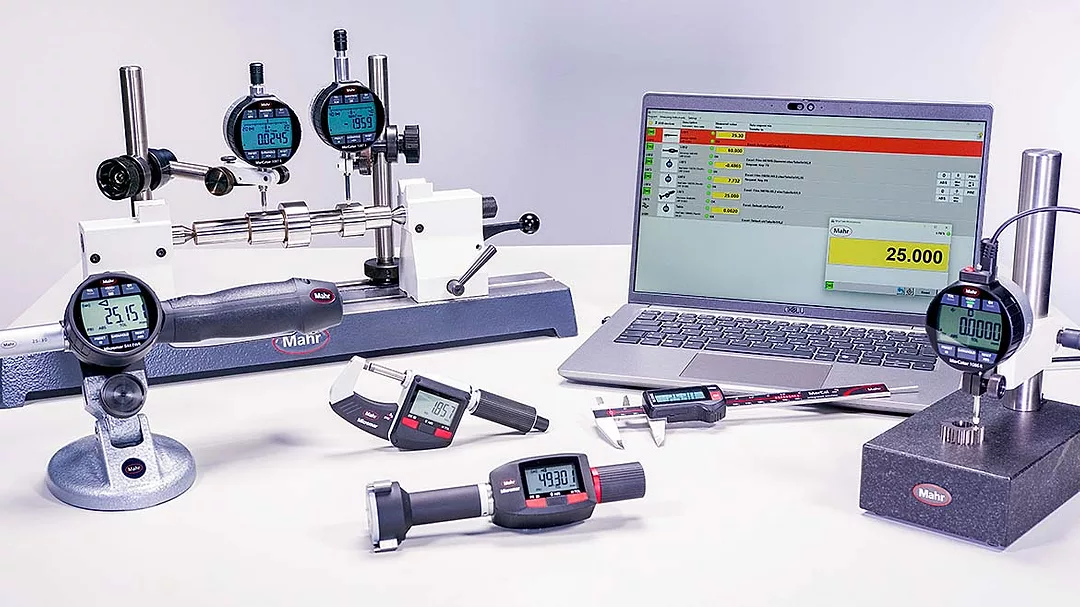
Precision measurement tools, including indicators, digital calipers, micrometers, and air gaging systems, all serve as data sources within this connected environment. When these tools transmit results directly to data collection software, quality data is immediately available for statistical analysis, process monitoring, and integration with manufacturing execution systems.
Modern solutions support both wireless and cabled connections, creating flexibility across environments and generations of equipment. Wireless transmission improves mobility and ergonomics on the shop floor, while cable connections provide reliability where radio communication is restricted or unnecessary. This flexibility enables manufacturers to modernize data collection without replacing functional equipment.
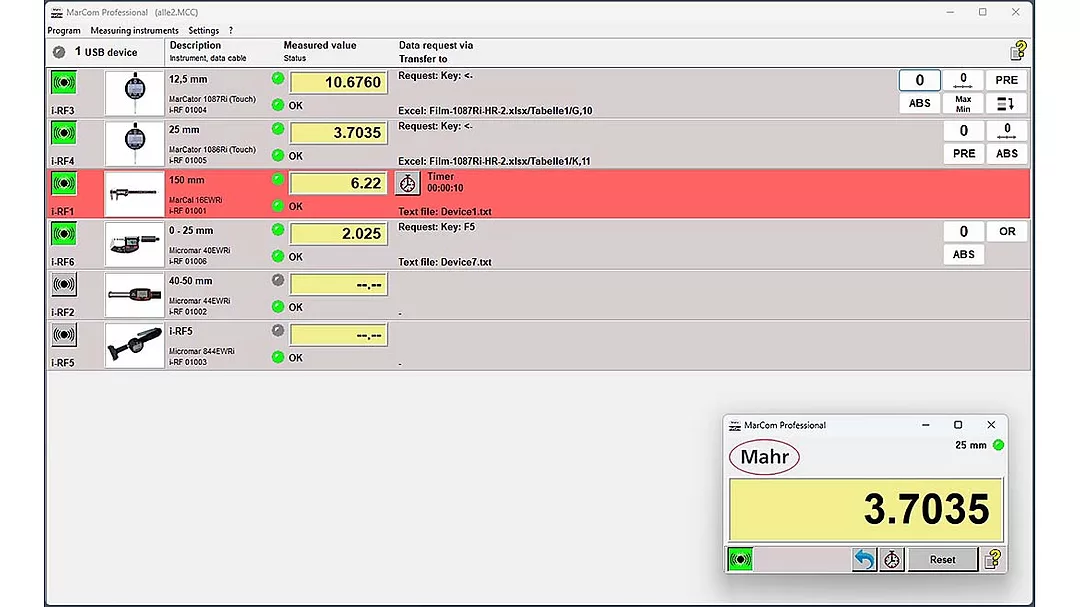
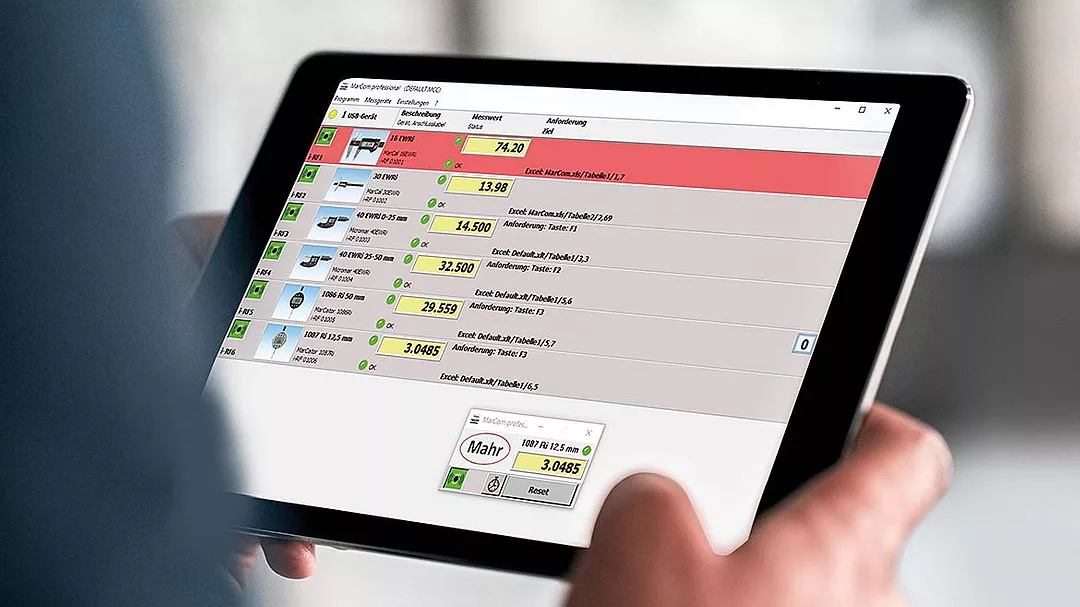
Software platforms demonstrate how connected measuring instruments can export data directly into standard formats such as Excel or text files. This interoperability supports integration with statistical process control systems, enterprise quality platforms, and digital manufacturing infrastructures.
As manufacturers continue to adopt Industry 4.0 principles, the ability to capture and share measurement data in real time is becoming a core capability.
Investment in Digital Measurement Infrastructure
Recognizing the strategic value of measurement data, manufacturers now prioritize digital data output in new equipment purchases. This reflects a growing need for visibility, repeatability, and integration within increasingly digital production environments.
Companies are replacing manual gages with digital instruments that can export measurement results, retrofitting existing indicators and handheld tools with data interfaces, and implementing centralized software platforms to manage and store measurement records. These investments show an understanding that data integrity and accessibility are critical for maintaining competitiveness.
Although the initial cost of upgrading equipment and implementing data collection systems may appear significant, the return on investment is realized through multiple channels:
- Reduced scrap and rework
- Faster identification of process deviations
- Improved productivity through automated recording
- Enhanced audit readiness and compliance
- Greater confidence in quality decisions
In many cases, productivity gains alone justify the investment. Operators spend less time recording results, quality personnel spend less time compiling reports, and engineers gain immediate access to data for analysis.
A Practical Example: Optimizing a Machining Process Through Data Export
Consider a precision-machining operation for a tight-tolerance bore for a component in the energy industry, such as electric vehicle powertrains, wind turbine gearboxes, oil and gas drilling equipment, or high-pressure pumps used in hydraulic fracturing. These applications often involve rotating assemblies, bearing seats, or sealing surfaces where dimensional accuracy directly affects efficiency, durability, and long-term reliability. Operators verify bore size using an air gaging system that exports measurement results directly into a data collection platform.
Over multiple production runs, exported data illustrate a gradual upward trend in bore diameter. Individual parts remain within tolerance, so the shift would likely go unnoticed under a pass/fail inspection approach. However, trend analysis shows the process mean drifting toward the upper limit.
By reviewing measurement history, engineers can correlate the drift with tool life and discover that dimensional growth accelerates after a specific number of machining cycles. With this knowledge, they adjust the tool replacement schedule so it occurs before the drift becomes significant.
The result is a more stable process, reduced variation, and elimination of borderline parts. Scrap is minimized, tool usage is optimized, and production maintains consistent quality without unnecessary interruptions.
This type of optimization is only possible when measurement data is captured consistently and made available for analysis. Without exported data, process drift remains hidden until nonconforming parts appear.
Unlocking the Full Value of Measurement Data
The evolution of metrology from pass/fail inspection to connected data collection represents a fundamental transition in how manufacturers approach quality and process control. Precision measuring tools, from indicators and micrometers to calipers and air gaging systems, have long ensured dimensional accuracy. Today, when paired with digital data capture and analysis, they also reveal process behavior and enable smarter decision-making.
By automatically capturing measurement results, associating them with instrument identification, and exporting them for analysis, organizations gain visibility into process performance and create a foundation for digital manufacturing initiatives. The growing adoption of connected measurement solutions reflects an industry-wide recognition that data is not a byproduct of inspection; it is a driver of performance.
In an increasingly competitive manufacturing environment, organizations that realize measurement data is a strategic asset rather than a temporary inspection result will define the next generation of industrial performance. In modern metrology, the measurement itself is only the beginning; the real value lies in what the data makes possible.
Looking for a reprint of this article?
From high-res PDFs to custom plaques, order your copy today!