Design
Beyond the Checkpoint: Building Quality into Data Centers
Design quality lies at the foundation of any data center project.
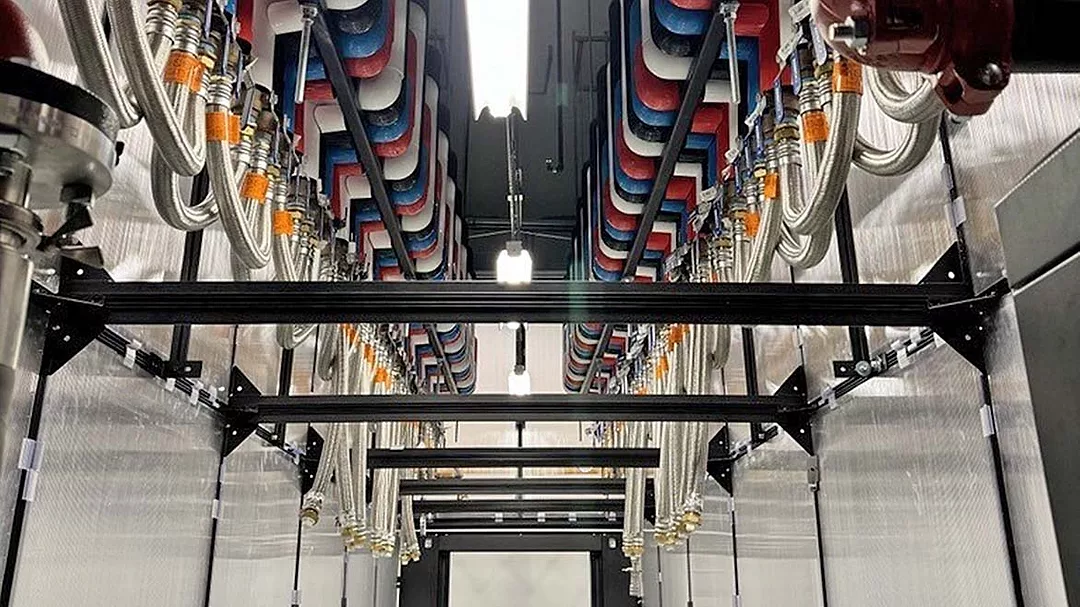

Data centers are evolving at an unprecedented pace, driven by the explosive growth of AI, cloud computing, and other high-performance applications. As demand accelerates, facilities are becoming larger, more complex, and requiring substantial investment to ensure 24/7 uptime, sophisticated power and cooling infrastructure, and advanced security systems. At the same time, market pressures, tight construction schedules, and a shortage of qualified workers are introducing risks that could compromise construction quality and operations.
For data centers, quality control cannot be treated as a single checkpoint— it must be embedded across the entire lifecycle of the facility, from early planning through post-occupancy. This requires coordination across five interconnected pillars of quality: design, manufacturing, installation, commissioning, and operations. When these five pillars are realized with equal focus and continuity, data center owners are more likely to experience long-term value—transforming their investment from a cost center into a durable, high-performing asset.
Design Quality: Preventing Errors in Subsequent Iterations
Design quality lies at the foundation of any data center project. First-of-their-kind data center designs can encounter unforeseen challenges that become embedded in the design and then replicated across future builds if not identified and addressed early. When design issues aren’t communicated across sites, they are treated as new problems, slowing progress and compounding delays. Communicating design problems becomes further compounded when projects involve different teams or lack a structured process for sharing information effectively.
Preventing design mistakes from recurring in subsequent iterations requires continuous input from teams with experience completing previous projects, supported by consistent feedback loops. Sustaining these feedback mechanisms ensures that issues are continuously captured and communicated, improving design outcomes.
Manufacturing Quality: Resolving Equipment Challenges
The manufacturing quality of data center components can be impacted by limited testing. Typically, manufacturers only conduct Level 1 factory acceptance testing (FAT) for first-of-a-kind equipment and major design revisions. At this stage, factory testing and QA/QC checks ensure the equipment functions correctly and meets design expectations before leaving the factory.
However, as manufacturers scale up production of data center components, factory testing becomes a bottleneck. As a result, FAT documentation for major mechanical, electrical, and piping equipment is often incomplete, with other equipment requiring little to no factory acceptance testing. Once the equipment ships and the owner receives the paperwork, the equipment is no longer within the scope of factory acceptance testing, leaving the owner with little recourse.
These challenges carry over to integrators, who face similar schedule and resource constraints. Observations made at integrator facilities are not always properly assigned or linked to issues, leading to them remaining unresolved for longer. Third-party QA/QC is also uncommon at the integrator level, and manufacturing field service representatives are frequently unable to effectively support integrator facilities and correct issues as they are found.
Implementing more rigorous, consistent inspection processes at the factory level would greatly improve overall product quality, thereby reducing equipment issues at the data center site. Regularly checking on integrator observations, reassignment, and the addition of appropriate distribution can also facilitate a resolution, or at least an acknowledgment of the problem within a reasonable timeframe. This can significantly help reduce downstream risks and improve overall equipment reliability.
Installation Quality: Balancing High Standards with Delivery Speed
While a great installation cannot overcome substandard manufacturing quality, the reverse is also true: a high-quality piece of equipment cannot compensate for improper installation. Installation documentation is typically inspected and verified by the electrical and/or mechanical contractor (EC/MC), the general contractor, and the owner. However, installation quality is often reviewed only by the EC/MC and general contractor. Even then, we find EC/MC internal quality programs respond only to the general contractor's quality team.
Poor installation quality comes with significant risk. Data center sites present a higher risk of two of the Occupational Safety and Health Administration’s (OSHA) top three construction fatalities: falls and electric shock. Yet, installation inspections are often conducted by those without the required experience, with more emphasis placed on paperwork than on the work itself. Compounding the issue, experienced quality inspectors are increasingly being reassigned to other roles within the build process, impacting oversight and limiting opportunities to train others.
Establishing standardized, quality-focused installation procedures and inspection protocols—and ensuring they are clearly documented and communicated across teams—can significantly improve overall quality. However, developing processes and training crews takes time and investment, and higher standards can impact installation speed. Employing creative solutions such as prefabricated components and digital tools for planning can help prioritize quality without compromising delivery schedules.
Commissioning Quality: Managing Components and Documentation
Commissioning is typically allotted the least time but often receives the most resources and attention from vendors, contractors, and owners. When everyone is available, issues are often resolved quickly. At the same time, a quick resolution can compromise the quality of design, manufacturing, and installation.
During commissioning, components are sometimes removed or reassigned to meet schedule demands. While this may help accelerate handover or address tight deadlines, it often introduces downstream challenges—including delays, increased costs, and operational issues later in the project lifecycle.
Vendors will often pull parts not only from the active project but also from an adjacent project with a different team involved, without notifying either project team or documenting the removal correctly. This can invalidate previously verified documents and hinder the proper relocation of documentation for transferred components to the current installation. We often see this with current transformers (CTs), potential transformers (PTs), and breakers that have been replaced and require documentation reviews.
Investing in readily available pre-tested spare parts for the commissioning process can help prevent the removal of components from adjacent projects or future phases to meet immediate needs. While this requires a higher upfront cost, the project will benefit from significant time savings and improved overall quality. Additionally, implementing re-testing policies and more formalized processes for inter-project component transfers could ensure documentation is properly relocated and not invalidated.
Operational Quality: Averting Failures and Improving Performance
Operational quality issues are frequently only discovered when failures occur—at which point the cost and impact are highest. These might include cooling system failures, power quality instability, and excessive water consumption. In many cases, issues can be traced back to human error, insufficient training, and maintenance gaps.
Encouragingly, we are seeing organizations involving operations teams earlier in the design and construction process, which helps to improve initial operational readiness and performance. Sustained operational quality, however, depends on how well the organization incorporates lessons learned from successful projects, particularly in areas such as training practices, building management system (BMS) programming, and maintenance procedures.
A key strategy for improving operational quality is to establish a consistent, structured approach to knowledge sharing across teams. By systematically capturing and communicating insights, information can be carried forward to strengthen decision-making and improve coordination. This approach reduces variability in execution and avoidable rework, leading to higher-quality outcomes and more reliable, efficient facility performance.
Invest in Quality Across the Lifecycle
Quality cannot be treated as a checkpoint at the end of a phase — it must be a continuous thread woven through every stage of the lifecycle. Owners who invest in that thread early, maintain it consistently, and demand accountability across design, manufacturing, installation, commissioning, and operations will find that their data centers perform better, cost less to operate, and carry far fewer surprises. Those who don't will keep paying for the same problems at different stages, wondering why the building never quite runs the way they expected.
Looking for a reprint of this article?
From high-res PDFs to custom plaques, order your copy today!



.webp?height=200&t=1765568312&width=200 "ATEQ Metrology Laboratory,")