Leak Testing
Ensuring Reliability in Data Centers: The Evolving Role of Leak Testing
Choose an instrument based on required accuracy, speed, cost, and size.
.webp?t=1765568312)
Figure 1: ATEQ Metrology Laboratory, atequsa.com
Over the past decade, global data-center infrastructure has evolved faster than at any other time in history. AI clusters, cloud computing, and digital services have driven unprecedented increases in power needs and thermal loads. Traditionally, air-cooling methods were used, but they are no longer sufficient to support the next generation of processors and accelerators. As a result, data-center facilities are moving toward liquid-cooling solutions such as direct-to-chip cooling, manifold systems, rear-door heat exchangers, and immersion cooling.
With this shift, leak integrity within cooling systems has become a foundational requirement for manufacturers around the globe. A small leak in a liquid-cooled environment has the potential to completely interrupt operations. As liquid-cooling adoption increases worldwide, leak testing practices are evolving as well.
The Growing Importance of Leak Integrity
With the increased efficiency of new liquid-cooling designs interacting with pumps, fittings, seals, and heat exchangers, any weak point can compromise the entire system’s performance. Even the smallest leak in these systems can affect data-center operations in several ways:
- Equipment Damage
- Reduced Cooling Performance
- Environmental & Safety Concerns
- Operation Impact
A simple leak in the system can reach servers, networking hardware, or even power supplies. Glycol solutions can cause corrosion over time. Similarly, dielectric coolant leaks may reduce insulation effectiveness or contaminate electronic components.
Modern liquid-cooling systems rely on precise flow rates and pressure levels. Micro-leaks can reduce flow efficiency and raise internal temperatures, causing pumps to consume more energy to maintain performance.
As power consumption grows due to expanding data-center infrastructure, facilities are increasingly focused on environmental and safety standards. Leaks require specialized cleanup and may trigger regulatory reporting requirements.
Downtime is one of the most expensive challenges for data-center managers. A single leak can interrupt cooling and lead to service outages costing hundreds of thousands of dollars per hour. For hyperscale operators running AI supercomputing infrastructure, the costs can be even higher.
Common Components in Liquid-Cooled Systems
A clear understanding of where leaks may originate helps engineers determine which components require the most rigorous testing.
Cold Plates
Cold plates sit directly on top of processors or accelerators, removing heat through a network of tiny internal channels. Because these micro-channels are so small and operate under high pressure, even minor defects can cause issues. Common leak points include welded or bonded interfaces, sealing surfaces, inlet and outlet fittings, and small imperfections from machining or assembly. A leak at any of these points can quickly compromise cooling performance.
Manifolds and Distribution Units
To move coolant through a server rack or row, data centers use manifolds with multiple connection points. These assemblies are vulnerable because they contain several mechanical interfaces—quick-disconnect fittings, O-rings, valve blocks, and multi-branch junctions. Thermal expansion and contraction during operation add stress to these joints.
Rear-Door Heat Exchangers
These systems use a liquid-cooled coil mounted on the back of the cabinet to remove heat before it escapes into the room. Common leak locations include brazed coil sections, piping connections, and integrated control valves.
Immersion Cooling Systems
Immersion tanks—single-phase or two-phase—must contain large fluid volumes without loss of integrity. Common risk areas include weld seams, sight-glass seals, pump housings, and inlet/outlet ports. Because these systems hold so much fluid, even a small leak can have major operational and safety consequences.
Leak Testing Methods Used Today
- Pressure Decay Testing
- Nondestructive
- Suitable for medium to large volumes
- Easy to automate
- Well-suited for production environments
- Sensitivity decreases with larger internal volumes
- Temperature changes can influence results
- Mass-Flow Measurement
- High repeatability
- Direct measurement of leak rate
- Effective for complex geometries with parallel channels
- Helium Tracer Gas Testing
- Extremely sensitive
- Ideal for tight tolerances
- Higher equipment and operating costs
- Longer cycle times
- Helium availability and conservation requirements
- Hydrogen/Forming Gas Testing
- Lower cost than helium
- Suitable for many components previously tested with helium
- Challenges:
- Safety considerations
- Material compatibility must be evaluated
- Bubble and Submersion Testing
One of the most widely used methods for evaluating cold plates, manifolds, and piping components.
How it works:
A component is pressurized with air, isolated, and monitored for pressure drop over time.
Advantages:
Limitations:
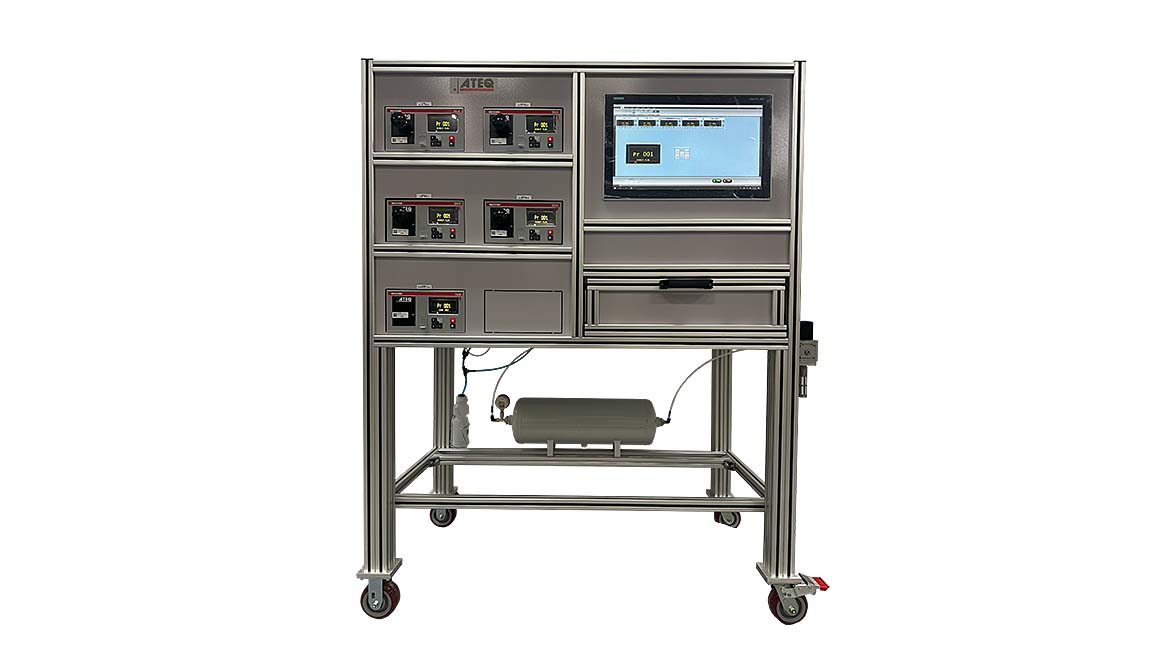
Mass-flow testing measures the flow required to maintain constant pressure. It is useful for multi-channel cold plates or manifolds where flow rates are critical to thermal performance.
Why it’s used:
For components requiring very high sensitivity—such as advanced micro-channel cold plates or hermetically sealed assemblies—helium vacuum testing is used. Because helium molecules are extremely small, helium testing remains a preferred method for detecting very small leaks.
How it works:
The component is placed in a vacuum chamber and exposed to helium. A mass spectrometer detects even the smallest leaks.
Advantages:
Considerations:
Forming-gas testing (typically 95% nitrogen / 5% hydrogen) is a growing alternative.
Benefits:
This low-tech method is still common in maintenance or for large piping segments. While not precise enough for strict leak limits, it offers a visual way to locate leaks.
Best Practices for Leak Testing
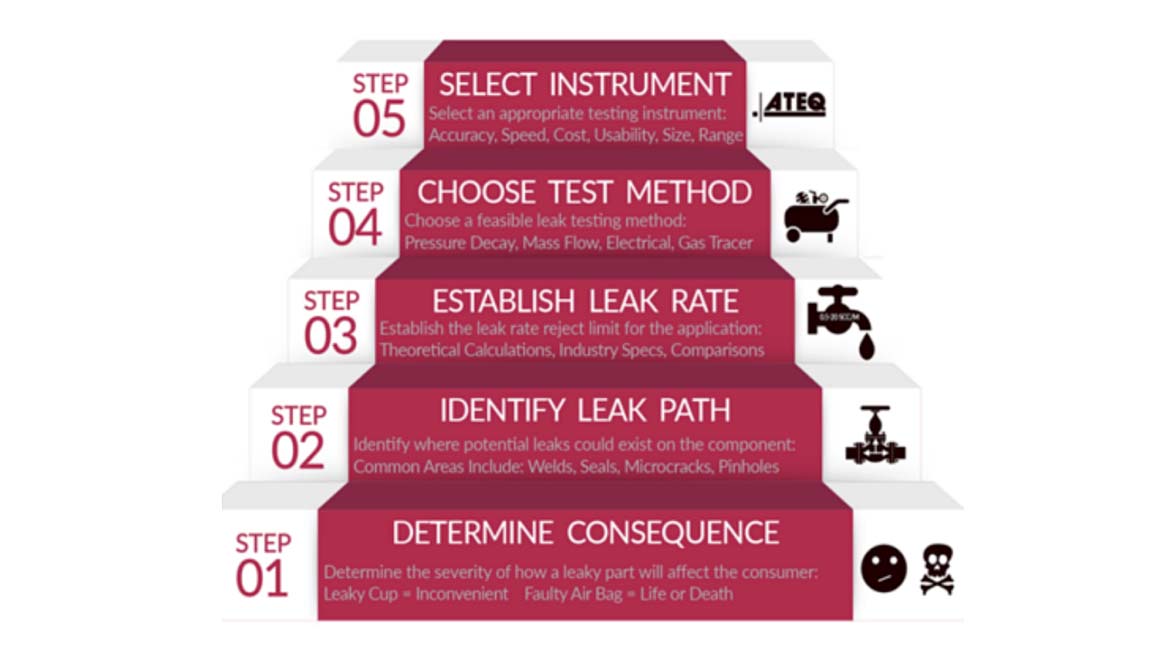
- Determine Consequences. Assess how a leaking component would affect equipment or operations.
- Identify Leak Paths. Identify where potential leaks may exist on the manufactured component to design an efficient test process.
- Establish Leak Rate. Determine the reject limit through calculations and industry specifications.
- Choose Test Method. Select the appropriate method based on application and reject limit.
- Select a Leak-Testing Instrument. Choose an instrument based on required accuracy, speed, cost, and size.
As data centers facilities adapt to the demands of high-performance computing and AI, leak integrity has emerged as a critical engineering priority. Liquid-cooling system offers unmatched thermal performance but also introduce new testing requirements for manufacturing engineers.
Looking for a reprint of this article?
From high-res PDFs to custom plaques, order your copy today!