Medical
The Evolving Role of the Quality Engineer in an AI-Enabled Medical Device Industry
It’s a new era for quality professionals.


The medical device industry is undergoing a quiet but profound transformation. Artificial intelligence (AI), software automation, and digital tools are reshaping not just how devices are made, but how quality is defined, assured, and delivered. Amid this shift, the role of the quality engineer (QE) is evolving — from one rooted in procedural compliance to one grounded in systems thinking, data fluency, and proactive decision-making.
AI in manufacturing and software in devices are not abstract future concepts—they are active forces in today’s production floors and product pipelines. For quality professionals, this is both a challenge and an opportunity: to lead in areas historically seen as technical or IT-focused, and to ensure innovation does not come at the expense of safety or compliance.
Understanding the AI Shift in Manufacturing
AI is making significant inroads into manufacturing environments, particularly in regulated industries like medical devices. At its core, AI enables machines or software systems to detect patterns, make decisions, or automate processes traditionally handled by humans. In manufacturing, this translates into:
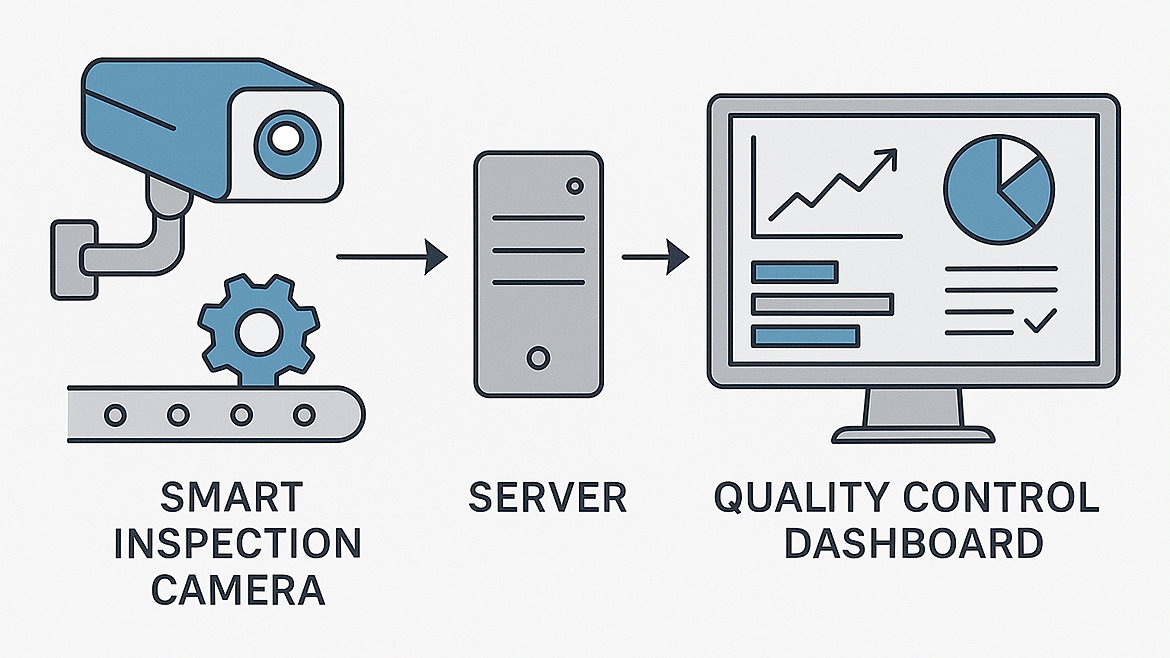
- Vision systems that detect minute surface defects on orthopedic implants with greater speed and consistency than human inspectors.
- Predictive analytics that flag potential equipment failures based on temperature, vibration, or pressure data—minimizing downtime in cleanrooms.
- Digital twins that simulate production processes in real time to support optimization and risk management.
In all these cases, AI isn’t replacing quality—it’s augmenting it. However, these systems must be validated, monitored, and maintained just like any other tool. And that’s where the QE steps in.
Impact on the Quality Function
AI is not plug-and-play. Its outputs are probabilistic, which means quality engineers must understand not only the accuracy of a system but also its false positive and false negative rates—and how those affect product quality and regulatory compliance.
For example, in an automated visual inspection system, a QE may need to assess whether the system is flagging too many false positives (slowing down production unnecessarily) or missing actual defects (risking nonconformance). This requires a shift from manual inspection toward data-driven decision making.
QEs are increasingly partnering with data scientists to define model validation protocols, establish acceptance criteria, and ensure traceability of AI outputs—especially when used in release decisions. The FDA has emphasized the importance of “Good Machine Learning Practice” in its regulatory framework, and quality engineers are key to ensuring that AI systems meet these expectations.
The Rise of Software-Driven Devices
Simultaneously, more medical devices are becoming software-intensive—or entirely software-based. Software as a Medical Device (SaMD), mobile apps for diagnostics, and AI-powered wearables are increasingly common. For QEs, this means adapting to software lifecycle models and ensuring compliance with standards like:
- IEC 62304 (software lifecycle processes)
- ISO 13485 (design control and risk management)
- FDA’s SaMD Action Plan and premarket guidance documents
In one real-world case, a QE working on a digital therapeutic device ensures that every algorithmic update is traceable, validated, and documented. This requires collaboration with development teams, cybersecurity experts, and regulatory affairs to build quality into software from the start.
Another example: An AI-powered diagnostic tool that updates based on user data may require a Predetermined Change Control Plan, something FDA is actively encouraging. Quality professionals must ensure these updates are validated and do not introduce new risks.

What Skills Will Tomorrow’s Quality Engineer Need?
The evolving landscape requires an updated skill set. Today’s QEs don’t need to become data scientists, but they do need to:
- Understand how AI models are trained, validated, and monitored.
- Use digital QMS platforms that automate complaint trending, CAPA management, and audit trails.
- Evaluate risks in systems where software updates happen dynamically, often via cloud-connected platforms.
Soft skills matter too. Quality professionals must collaborate across disciplines—engineering, regulatory, product development, and manufacturing—to ensure end-to-end quality assurance. They must be comfortable with ambiguity and iteration, especially when dealing with AI-based tools or software development models like Agile or DevOps.
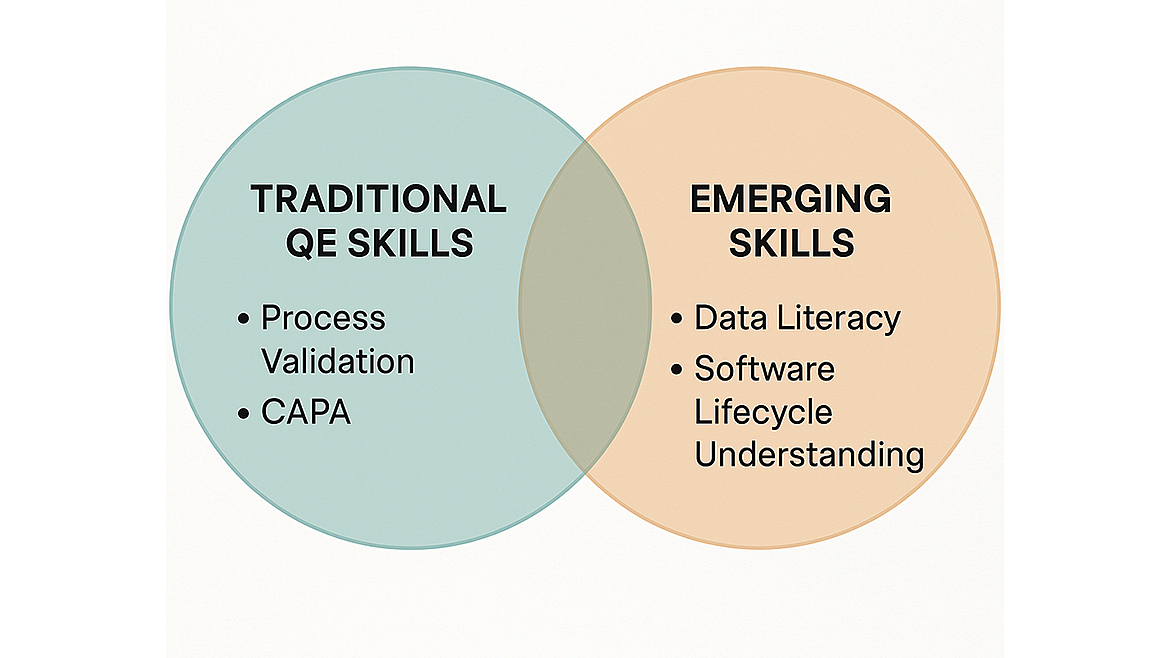
Intersection - QE professionals need a blend of both traditional and modern skills to remain effective
Conclusion: Leading the Way, Not Catching Up
AI and software are not just reshaping how we manufacture and monitor medical devices—they’re reshaping the very definition of quality. For the modern quality engineer, this is not a threat, but an invitation to lead.
Rather than being pushed aside by technology, QEs are becoming critical translators between regulatory expectations and technical execution. Their deep understanding of risk, evidence, and process makes them indispensable in shaping how AI is applied responsibly in both manufacturing and device design.
By embracing new tools while holding fast to the principles of quality and patient safety, today’s quality professionals can ensure that the future of medical device manufacturing is not just smart—but trustworthy.
Looking for a reprint of this article?
From high-res PDFs to custom plaques, order your copy today!