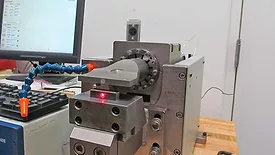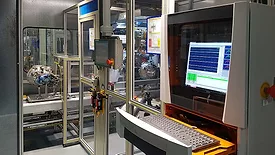
EoL Noise and Vibration (NVH) testing is essential in automotive manufacturing, especially for electric vehicles. Advanced sensors enhance product quality by detecting anomalies, reducing warranty claims, and improving customer experience across various industries.
QA/QC is essential in the automotive industry due to rapid product cycles and complex systems. Automakers must meet strict standards while enhancing quality, cost, and lead time, leading many to adopt advanced, data-driven approaches over traditional inspection methods.
MSI Viking specializes in metrology solutions, focusing on precision measurement, quality control, and industrial efficiency. With over 50 years of experience, we provide advanced products, expert calibration, and reliable repair services to help industries achieve top accuracy and performance.
We all talk about the invention of the airplane, the automobile, or other important products, but we rarely talk about the fascinating history of Quality.
While computed tomography (CT) has garnered attention for its volumetric imaging capabilities, 2D DR remains a faster and more cost-effective option for many production environments. As component complexity and production volumes grow, DR systems with automated image processing provide an effective and efficient solution for quality assurance workflows.
Early design optimization is vital in manufacturing to ensure quality and cost-effectiveness. Delaying it until production can drastically increase costs and risks. Digital optimization before production enables cost-efficient design changes, while late-stage modifications can be exponentially more expensive, emphasizing the need for early optimization.
The latest Rules 6th Edition changes represent the most significant enhancement to the IATF certification scheme in nearly a decade. As the industry prepares for the next revision of the IATF 16949 standard, the upgrades appear to be laying a foundation for future requirements in digitalization and sustainability.
The transition to electric vehicles (EVs) in the auto industry is a significant transformation that requires a shift in process and culture. A Mississippi manufacturing plant is preparing to evolve into a high-performing EV hub, ensuring it meets rising consumer expectations while upholding its core values of quality, community, and innovation.
As we continue to move towards the ultimate phasing out of Internal Combustion Engine (ICE)-powered cars, and Electric Vehicles (EVs) become the dominant technology, more manufacturers are expected to invest in gigacasting equipment.
Gigacasting, or megacasting, is revolutionizing automotive manufacturing by providing substantial cost and efficiency benefits. When combined with a high percentage of recycled feedstock, gigacasting can support circular economy goals by increasing recycled content in vehicles.