NDT | Materials Analysis
Materials Analysis in Automotive Gigacasting
As we continue to move towards the ultimate phasing out of Internal Combustion Engine (ICE)-powered cars, and Electric Vehicles (EVs) become the dominant technology, more manufacturers are expected to invest in gigacasting equipment.
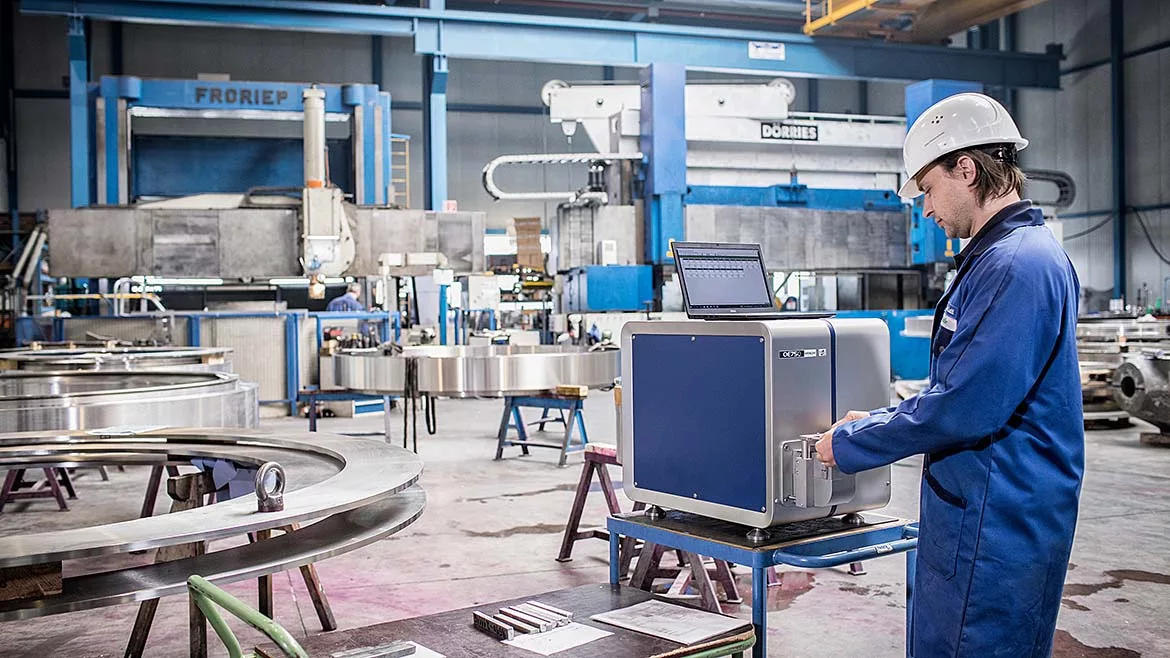
Image Source: Hitachi High-Tech America Inc.
Each year, the global automotive industry produces around 80 million vehicles, using 112 million tons of materials and causing over 10% of the world’s carbon dioxide emissions. With climate change now a priority for governments and businesses alike, driving sustainability is high on the agenda. Beyond government action, leading automotive companies are prioritizing vehicle electrification and decarbonizing their supply chains – critical steps toward a more sustainable future.
One initiative where this is prominent is the use of recycled materials in manufacturing processes like gigacasting. Recycled aluminum production emits only about 3-5% of the CO₂ compared to primary aluminum production.
Gigacasting (or megacasting) is transforming automotive production, offering significant cost and efficiency benefits. While aluminum alloys are the most used material due to their lightweight and durability, other materials like magnesium or composites may also be considered for specific applications. However, achieving defect-free, single-cast components requires precise melt chemistries and exacting quality control – leaving no room for error.
When combined with a high percentage of recycled feedstock, gigacasting has the potential to advance circular economy goals by increasing the use of recycled content in vehicle production. Yet, the balancing act between adopting efficient processes and maintaining the required material quality often pressures manufacturers to rely on newly extracted materials.
The Role of Material Analysis in Gigacasting
Ensuring the quality of gigacasting and minimizing scrap hinges on precise melt chemistry. Each manufacturer has unique, closely guarded melt characteristics. Typically, the long flow lengths needed for gigacasting are achieved with near-eutectic and hypereutectic aluminum-silicon alloys, which may include magnesium for strength, manganese to reduce die soldering, and strontium for eutectic modification.
Using strontium or sodium as modifiers in the aluminum alloy melt requires careful control of phosphorus, antimony, calcium, and bismuth. For instance, to avoid negative impacts on the aluminum casting’s physical properties, calcium levels must be kept below 20 to 40 ppm.
OES Analysis for Melt Control
Optical emission spectroscopy (OES) is widely regarded as one of the most effective methods for melt analysis in aluminum gigacasting. It enables precise measurement of key trace, tramp, and treatment elements in non-ferrous melts and cast products, ensuring quality and consistency in the manufacturing process.
OES offers several practical advantages. It provides accurate detection of low-level elements essential for aluminum melt control and features rapid measurement cycles for efficient process monitoring. The spectrometers require straightforward sample preparation and are user-friendly, needing minimal specialized training. Additionally, its compact and durable design makes it suitable for placement near production lines.
OES works by comparing the intensity of emitted light to the concentration of the substances being analyzed. The spectrometer uses preprogrammed calibration curves to match light intensity with known concentrations, allowing for accurate composition analysis of unknown samples. Ensuring the analyzer is correctly calibrated is essential for reliable results.

The Critical Role of OES Analyzers
Not all OES analyzers are created equal. It is necessary to verify that the analyzer meets the required specifications due to the demanding nature of aluminum alloy melt characteristics for gigacasting. The analyzer should be able to detect extremely low levels of phosphorus, antimony, calcium, and bismuth in near-eutectic and hypereutectic Al-Si alloys. It should also have fast start-up times to keep pace with high production throughput and use argon efficiently to help manage costs.
Aluminum alloys pose unique challenges when obtaining accurate measurements. Like other non-ferrous melts, aluminum alloys tend to segregate on solidification, leading to uneven concentrations of elements. For sampling, this means that the measurement may not accurately represent the melt. In practice, it is just a matter of following some simple instructions: pour the sample with a single drawing process, cool the sample quickly, and keep molds and other equipment scrupulously clean.
By following these steps, the risk of contamination or inaccurate measurements due to segregation can be significantly reduced, ensuring reliable analysis for aluminum megacasting processes.
OES also requires a flat, planar surface of the sample for accurate readings. This means the surface must be machined with a lathe or milling machine prior to analysis. The process must remove any oxides or other inclusions, and there must be a certain degree of surface roughness to aid the measurement. However, contamination should be avoided, and no single hard grains should be torn from the microstructure. Trial and error with the first samples may be necessary to optimize the process.
Scrap Recycling and the Role of Material Analysis to Source Feedstock from End-of-Life Vehicles
With over 30,000 components in a typical car, recycling end-of-life vehicles presents a significant challenge. Regulations in the European Union, for example, now mandate that at least 85% of materials in light vehicles should be reused or recycled. This shift is crucial for achieving sustainability goals and reducing the automotive industry’s carbon footprint.
Gigacasting could revolutionize automotive recycling. By using a large single alloy material, gigacasting simplifies the recycling process for scrap yards. This method drastically reduces the number of components, making it easier to recycle vehicles. Although it will take several years for gigacasted vehicles to become commonplace in scrapyards, material analysis is already playing a crucial role in the automotive recycling supply chain.
Recycling centers face unique challenges, including high volumes of scrap, a wide range of materials, and the need to deliver high-quality feedstock. The material analysis methods used must be fast, accurate, and capable of handling diverse chemical compositions. Three primary methods stand out, each with their own benefits: handheld X-ray fluorescence (XRF), laser induced breakdown spectroscopy (LIBS), and OES.
Materials analysis is essential for driving the circular economy in the automotive industry. With raw materials becoming harder to extract and recycling targets becoming more stringent, accurate chemical compositions are crucial. Material analysis enables the use of a higher proportion of scrap in gigacasting and helps recyclers sort and sell valuable end-of-life metals.

Future Trends in Gigacasting and Recycling
As we continue to move towards the ultimate phasing out of Internal Combustion Engine (ICE)-powered cars, and Electric Vehicles (EVs) become the dominant technology, more manufacturers are expected to invest in gigacasting equipment. Also, as the technique matures and issues around waste and yield are overcome, the cost benefits of gigacasting will be easier to realize and smaller automotive manufacturers will be able to justify the investment.
Materials research will focus on developing new alloys that can meet both strict material characteristics requirements and reduce casting defects. While the focus is on aluminum alloys, magnesium is also a good candidate for gigacasting and we expect to see ongoing development in both these areas.
Until recently, the primary motivation of EV development has been to move away from fossil fuels. This has been extremely successful, however there is still room for improvement in the sustainability of production materials. As it stands, EV manufacturing has tended to move away from using the secondary alloys used extensively in ICE-powered vehicles, with more reliance on virgin aluminum feedstock. With a continued push to meet sustainability goals, and advances in material analysis techniques, we expect this to turn around soon, with more use of recycled materials within gigacasting and EVs.
Conclusion
Materials analysis plays a pivotal role in driving sustainability within the automotive industry. By leveraging advanced techniques like OES, manufacturers can ensure precise melt chemistries and maintain high quality standards, even when incorporating a significant percentage of recycled materials. This not only enhances the efficiency and cost-effectiveness of production, but also significantly reduces the environmental impact by lowering CO₂ emissions associated with primary aluminum production.
The integration of recycled materials and the development of new alloys will be crucial in meeting stringent sustainability goals as the industry continues to evolve. The collaboration between automotive manufacturers, giga press providers, and material suppliers will likely lead to new industry standards, further promoting the use of recycled content in vehicle production. Ultimately, the advancements in material analysis and gigacasting techniques will pave the way for a more sustainable and circular automotive industry, contributing to the global efforts in combating climate change.
Looking for a reprint of this article?
From high-res PDFs to custom plaques, order your copy today!