Automotive
Driving Quality Forward: Advanced Approaches to Automotive QA/QC
The landscape of automotive manufacturing is changing, and traditional inspection-based quality assurance is no longer sufficient to keep pace.
The role of quality assurance and control (QA/QC) in the automotive industry is more critical today than ever. Automakers and suppliers face an environment defined by accelerated product cycles, evolving supply chains, new materials, and increasingly complex systems. At the same time, competitive pressures demand not only compliance with stringent standards but measurable improvements across the manufacturing triangle of quality, cost, and lead time. Traditional inspection-based approaches often struggle to deliver on all three fronts simultaneously, prompting many organizations to adopt more advanced, data-driven methods of ensuring quality.
Motivation for advanced QA/QC
Several converging forces are driving this shift. First, rapid product development cycles are placing new demands on quality departments. The push to bring electric vehicles, advanced driver-assistance systems (ADAS), and lightweight components to market quickly leaves little margin for lengthy inspection processes or post-production rework. QA/QC functions must now deliver assurance at the pace of innovation.
Second, workforce challenges are amplifying the strain. As experienced personnel retire, many quality teams face skill gaps that are difficult to backfill. In some cases, quality programs were originally designed with the assumption that a seasoned operator who has mastered an operation over decades would be at the controls. When that operator retires and a less experienced worker steps in, the program may no longer function as intended. While training is essential, these transitions also highlight the need to rethink quality programs themselves and implement systems that can augment human judgment with consistent, real-time insights.
Finally, quality expectations themselves continue to escalate. OEMs are extending ever-higher standards through multi-tier supply chains, requiring suppliers at all levels to prove conformance with rigorous specifications. For complex assemblies that may involve dozens of suppliers and thousands of parts, even small lapses in quality assurance can cascade into costly recalls or warranty claims. Advanced QA/QC approaches — informed by monitoring, data science, and predictive analytics — are becoming essential tools for managing this complexity at scale.
Approaches to advanced QA/QC
The automotive sector has traditionally relied on end-of-line inspection and statistical sampling to ensure product quality. While effective in many cases, these methods often provide feedback only after defects have already occurred — too late to prevent waste, rework, or costly field issues. Advanced QA/QC strategies are increasingly focused on integrating monitoring, analytics, and predictive methods directly into production processes. Three approaches explored by EWI illustrate this trend.
Process monitoring informed post-process inspection
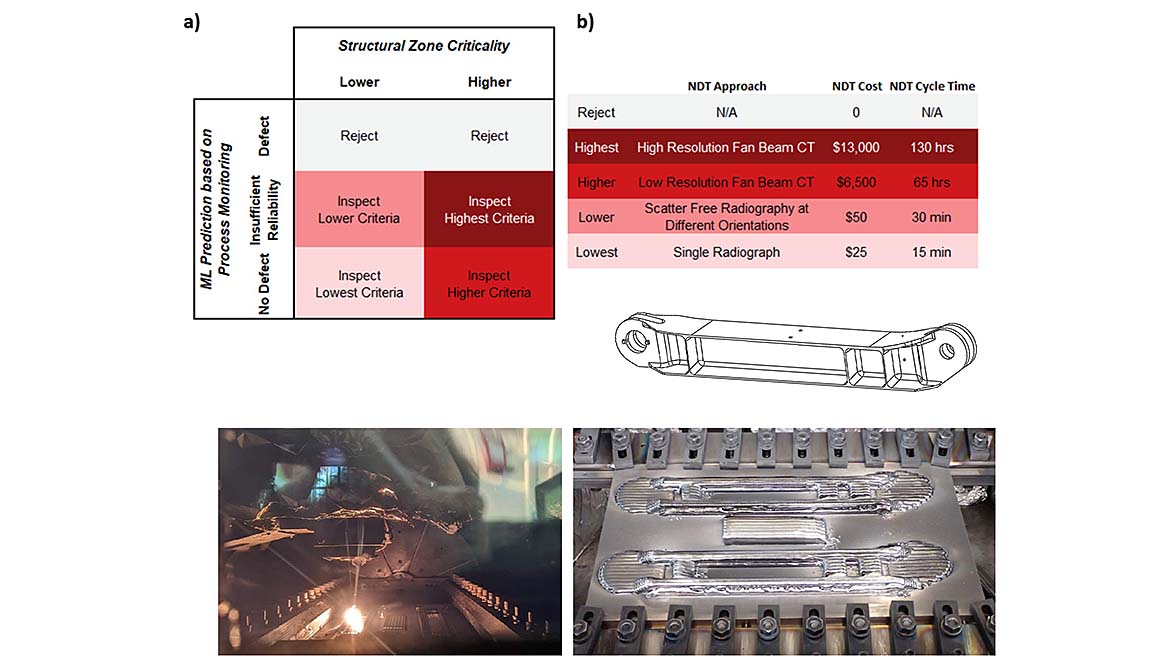
An emerging approach is to combine in-process monitoring with more targeted post-process inspection. In one project, EWI collaborated with GE Research, Oak Ridge National Laboratory, and Lockheed Martin Corporation to improve quality control for electron beam directed energy deposition (EB-DED) (Kitt et al., 2024). The team integrated multiple sensing technologies — including thermal cameras, interpass pyrometers, and melt pool pyrometers — to capture comprehensive thermal data during the build. A defect infusion strategy generated 25 distinct quality scenarios under three production-relevant thermal conditions, ensuring the dataset reflected realistic variations.
By correlating in-process monitoring data with known defect conditions, post-process nondestructive testing (NDT) could be streamlined to focus only on areas of concern rather than inspecting every part in full detail. This reduced NDT costs while increasing confidence that defects were identified efficiently. The project illustrates how pairing process monitoring with inspection workflows can balance thoroughness with cost-effectiveness in advanced manufacturing environments.
Real-time QC
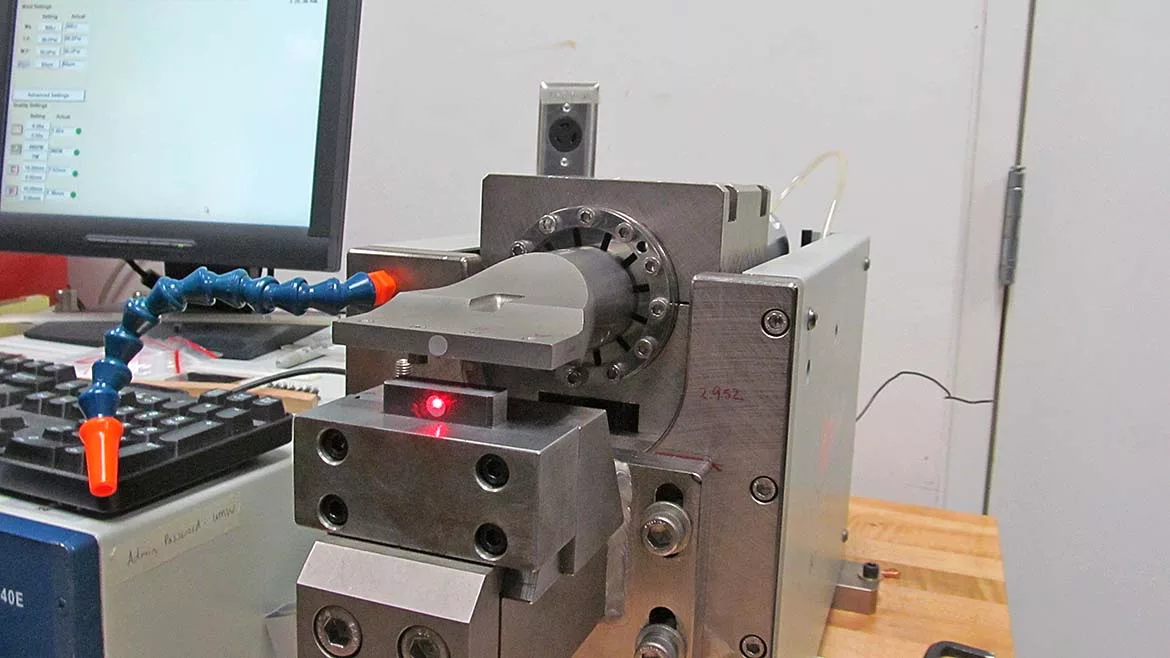
Another example comes from ultrasonic welding of lithium-ion battery tabs, a critical process in electric vehicle production. Traditional QA methods often rely on destructive testing and statistical sampling, which not only delay feedback but also carry hidden costs. Inspecting one part in a thousand means holding 999 units as work-in-progress until results are known. If the tested part fails, the entire batch may need to be scrapped — a costly outcome in high-volume production. To address these challenges in one project, process monitoring systems equipped with acoustic microphones were developed to capture the distinct sound signatures of good versus bad welds (Kitt and Corey, 2023). Machine learning models, trained on datasets that represented a range of production-relevant conditions, enabled real-time analysis of every weld.
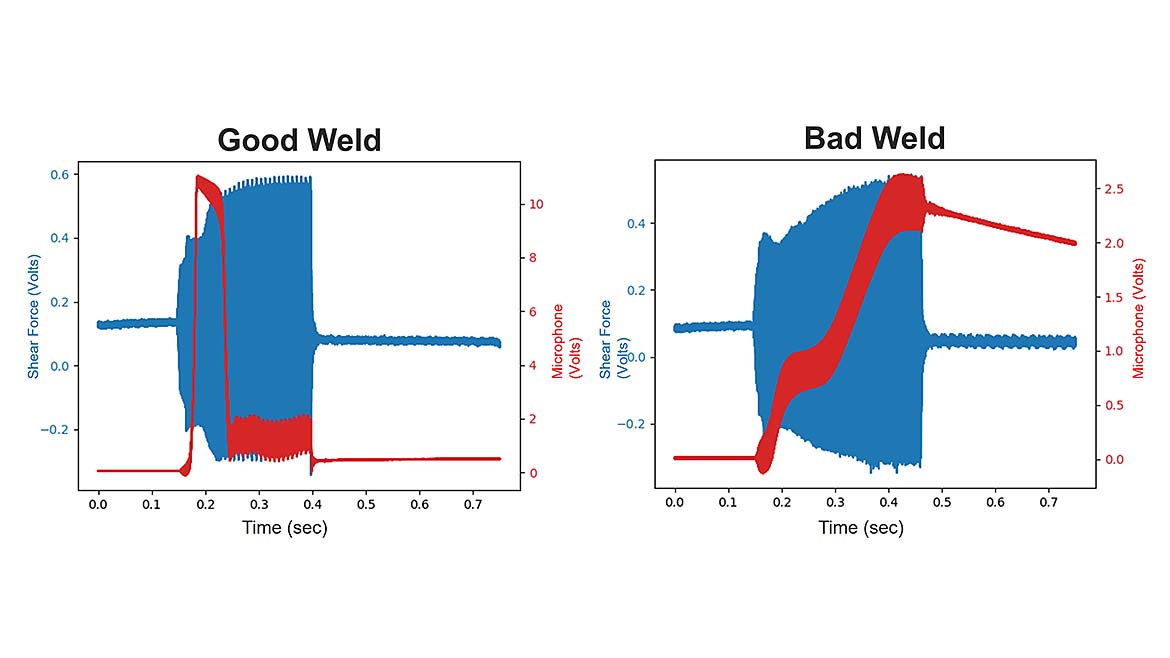
This approach provided 100% in-line quality assessment, giving manufacturers immediate feedback at production speeds. In addition to reducing scrap and rework, real-time QC revealed trends that could flag maintenance needs before downtime occurred. Inspection then becomes a continuous, predictive process, integrating quality assurance into production.
Real-time QA
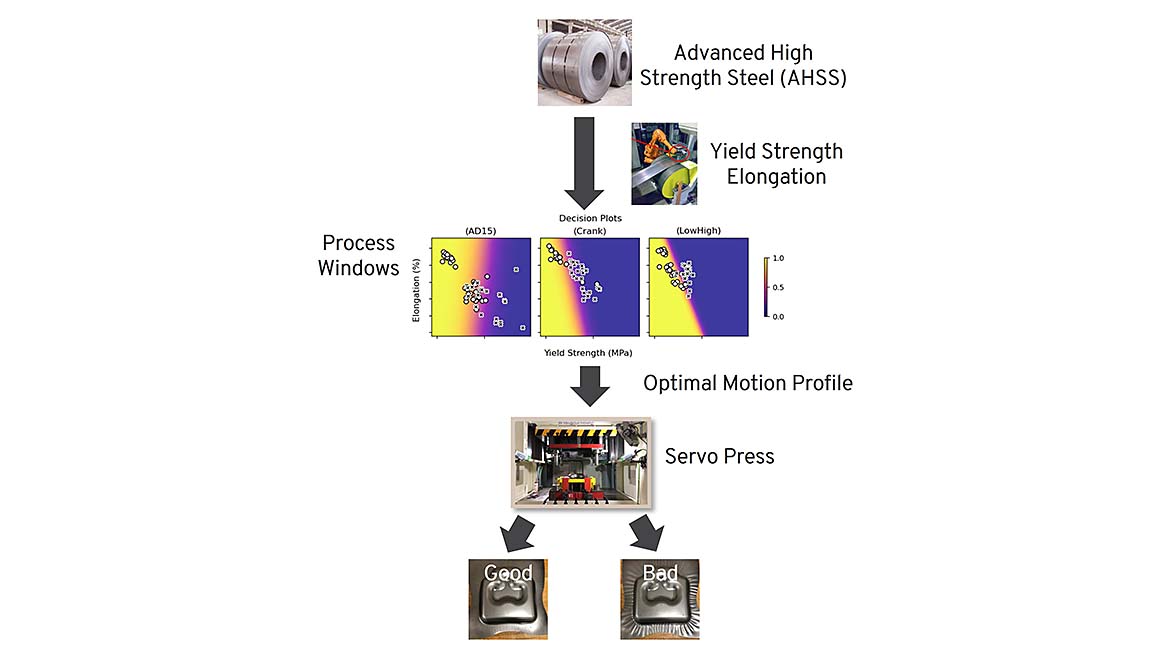
Beyond detecting defects, advanced methods can also guide decision-making to prevent them. One example is the use of Bayesian-based “Smart Forming Algorithms” in servo press forming of advanced high-strength steels. These materials are increasingly used for lightweighting but are also known to exhibit greater variability than traditional steels. This variability in material properties can lead to inconsistent stamping outcomes, but by measuring key inputs such as yield strength and elongation, the algorithm can predict the probability of producing a good part under different press motions. Coupled with expected utility theory, the system estimates defect likelihood and evaluates the profit impact of each decision.
In production simulations, this method consistently outperformed fixed press strategies by adapting to the variability of incoming material (Okuda et al., 2021). It even recommended when it was more profitable to pause production rather than risk excessive defects. Over the course of one year of operation, this approach was expected to save about USD 6.1 million in one use case. In this way, real-time QA enables active process control, which can align quality outcomes with business performance.
Path to implementing advanced QA/QC
Successful implementation of advanced QA/QC requires a thoughtful, phased approach. The first step is the development of production-relevant datasets that capture successful parts and a range of failure modes. Without this foundation, algorithms cannot learn to distinguish subtle variations that may lead to downstream problems. Creating these datasets often involves deliberate defect infusion or controlled experiments to ensure rare but critical conditions are included.
With data in hand, organizations can move into the initial development of algorithms. Early models may be relatively simple, serving as proof-of-concept tools to demonstrate feasibility and highlight the most useful signals. These models evolve through iterative testing and validation to better match production realities.
Implementation typically begins with a “human-in-the-loop” stage, where operators and engineers review algorithm outputs and provide feedback. This collaborative phase builds trust in the system and helps fine-tune its recommendations to fit the nuances of a specific production line. As confidence grows over time, more decision-making can be automated.
Finally, advanced QA/QC systems must account for drift — the gradual changes in equipment, materials, or processes that can erode model accuracy. Periodic retraining ensures that algorithms remain aligned with current production conditions. In this way, QA/QC becomes an evolving capability that adapts alongside the production facility itself.
The landscape of automotive manufacturing is changing, and traditional inspection-based quality assurance is no longer sufficient to keep pace. By adopting advanced QA/QC strategies, manufacturers can shift quality from a reactive safeguard to a proactive driver of performance. The path forward requires investment in data, algorithms, and collaborative integration between people and machines. When executed well, advanced QA/QC reduces defects and costs, and strengthens competitiveness across the entire supply chain.
References
Kitt, A., & Corey, Z. (2023, September 19). A fully automated quality assurance solution for battery tab welds using process monitoring and AI. EWI. https://ewi.org/in-process-inspection-paired-with-ai-machine-learning-create-powerful-quality-assurance-system/
Kitt, A., Ruscitto, D., Rosenberger, B., Lee, Y. (2024, December). In-Process Monitoring for Reduced EB-DED NDT Costs [Poster Presentation]. U.S. Department of Energy AMMTO Stakeholder Listening Event, Washington, D.C.
Okuda, N., Mohr, L., Kim, H., & Kitt, A. (2021). Profit-driven methodology for servo press motion selection under material variability. Applied Sciences, 11, 9530. https://doi.org/10.3390/app11199530
Looking for a reprint of this article?
From high-res PDFs to custom plaques, order your copy today!