Management
The Vendor Police: The QA-QC Manager’s Conundrum
Despite your best QA-QC best efforts, keeping vendors current is not without its challenges.

The challenge
Are your vendors adhering to the latest industry standards? Is your supply chain current in the ever-changing world of specifications? Is your department proactive about staying on top of modifications to key elements governing the products that you buy? Should you be acting as the Vendor Police? After all, the bottom line is compliance, competence and complete adherence to the modern standard.
As a QA-QC professional, your upper management expects you to ensure that your supply chain participants are “up to speed” with the industry and making their products or adjusting their services to reflect the most up to date regulation, specification, by-lay or technical callout. When a governing body such as the International Standards Organization, the American Petroleum Institute, the Federal Aviation Administration or the Nuclear Regulatory Commission decides to modify part of an existing regulation/specification, who ensures your supplier complies?
A good supplier will maintain a complete library of all requirements and assign their own QA-QC person to be aware of and implement all upgrades, modifications and adjustments. But when and how do they advise you? How do you ensure they are fully compliant? This article explores how organizations can foster transparency, accountability, and fairness in their vendor relationships, and why doing so is essential for competitiveness in the 21st century
Vendor integrity
The great Ronald Regan once said “Trust but Verify” in his evaluation of the actions of the Soviet Union when negotiations were underway. While trusting your vendors is the norm, what about verifying them? If your component supplier is making their aileron to a spec that is four years old and not to the current revision, will you have a lawsuit in the event of a failure? The liability may be ultimately theirs, but the first company sued will be yours.
What reporting mechanism are your vendors using to keep you, the end user, informed of updates and improvements in the technical specifications that are your life blood? Are you missing out on cost savings generated with the newest and most modern innovations? Are you aware of the history and track record of your vendor base? Any non-conformance issues? Have there been any quality related lawsuits or settlements that sequester the issues? Have whistleblowers voiced concerns over your supplier’s procedures? Where there is no news that does not mean there is good news.
Culture of accountability
Companies that succeed in keeping vendors honest start by embedding accountability into their culture. Your procurement policies need to be specific as to adherence to requirements and specifications and insist on regular and detailed notification when things change. Your purchasing employees should be trained to recognize red flags, such as vague technical descriptions, missing spec references, outdated revisions and the like. Scheduled reviews are a good motivator to ensure compliance is current. Companies now deploy platforms that track performance, flag anomalies, and provide real-time visibility into supply chains.
Case in point
In the energy sector, the regulatory body API sets exacting standards for all aspects of exploration, production and transportation of petroleum products. There are hundreds of specifications governing every aspect of the process. Periodically, revisions are introduced, discussed, modified, proposed, voted upon and adopted to improve quality, safety and cost containment. Some specifications have remained in effect for dozens of years while the technology they govern grows by leaps and bounds.
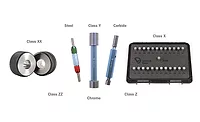
Since October 1999 API Specification RP (recommended practices) 5B1 has overseen the measuring and gaging of thread forms for casing, tubing and drill stems. These threads at times need to contain highly volatile gases and fluids at pressures exceeding 10,000 PSI. Thread failure can be catastrophic and even deadly and thread integrity is critical to both measure and insure. In February, a new revision will come into effect. The new revisions embrace over 100 changes, some dramatic. In particular, the new revision makes strong new requirements about training thread related personnel in language never seen before.
How long might it take your vendors to obtain, review, adapt and implement these vital new modifications? How will you know when they do and how will you ensure that your organization will reap the benefits? Will your vendor report their full compliance with the new spec? Will you ask? Do you have a mechanism for your company to benefit from their enacting these improvements?
Challenges in vendor oversight
Despite your best QA-QC best efforts, keeping vendors current is not without its challenges. With global supply chains, monitoring vendors across multiple countries introduces complexity, especially where regulatory environments differ. Smaller companies may lack the budget for sophisticated auditing systems. There can be resistance from vendors as full transparency may come with a financial cost to them and become discouraging. Some suppliers may view transparency requirements as intrusive or burdensome and let information transfer slip.
Addressing these challenges requires creativity. For example, smaller firms can collaborate with industry associations to share auditing resources, while global companies can prioritize high-risk regions for closer scrutiny. You as the customer can become proactive and create understandable and usable “updated reporting matrixes” to help guide your vendor into keeping you fully informed when regulatory changes occur.
Conclusions
Clearly the old saying applies: “You get what you pay for” and it is vital to know exactly what it is you are getting for your investment. Your position in the supply chain may prevent you for having a direct finger on the pulse of the regulatory agencies forcing you to trust your vendors for compliance. In the electronic age, there is no excuse for not being up to date on what is going on with the governing bodies that impact your bottom line through your procurement. What you don’t know can hurt you. As the QA-QC manager, you are the last line of defense for your organization. Be sure you are out there “walking the beat” as an effective Vendor Policeman.
Looking for a reprint of this article?
From high-res PDFs to custom plaques, order your copy today!