Management
Tariffs Trigger Shifts in Supply Chains and Quality Strategy
U.S. manufacturers respond with reshoring, digital tools and renewed QA discipline as sourcing disruptions escalate.
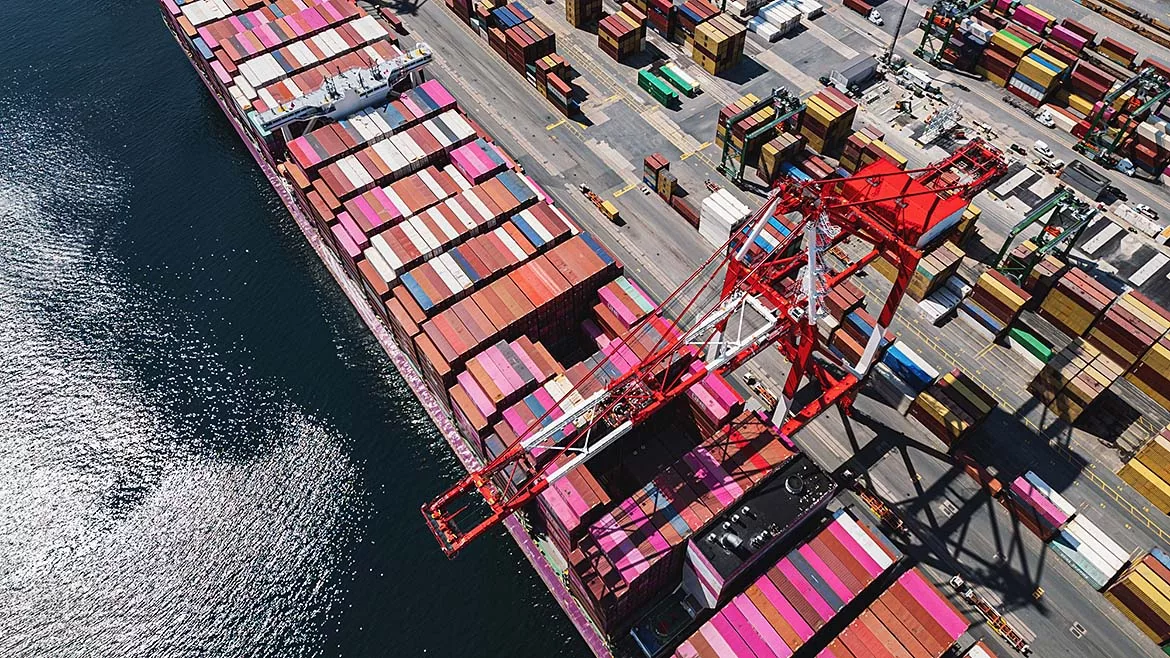
Image Source: shaunl / E+ / Getty Images
As tariffs impact global supply chains, U.S. manufacturers are reevaluating how they source, staff and maintain quality across increasingly complex systems. These pressures have triggered renewed interest in reshoring, with some seeing it as a long-term solution.
Many are accelerating efforts to bring production back to the United States, building on a reshoring trend that has grown for more than a decade.
Harry C. Moser, founder and president of the Reshoring Initiative, said about two million manufacturing jobs have been reshored since 2010. He expects that number to keep rising as tariffs drive more companies to reconsider offshore production.
"Reshoring will continue to grow, accelerated by tariffs," Moser said. "As companies get busier, they will have to invest in automation and quality to meet demand and will be financially able to do so."
While the momentum behind reshoring may reflect long-term opportunity, manufacturers face immediate challenges. Trade tensions are forcing fast decisions that carry real consequences for quality assurance and supply chain performance. As some industry leaders adapt by leaning into Lean principles and quality systems, others remain wary of the risk.
Sourcing Shifts and Quality Load
Many companies are taking a hard look at sourcing. Tim Clark, vice president of supply chain operations at Vail Health, said his team took preemptive action. "We worked to identify China-sourced products and began identifying and sourcing alternative supplies. We are leveraging contract terms to hold pricing to agreed-upon terms," Clark said. "We have heard from at least one vendor who indicated they were engaging in the Force Majeure clause of the contract, citing government policies."
That kind of uncertainty, he added, comes with risk. "We are concerned about material availability issues, similar or perhaps worse than the COVID period. With the ports down 35%, there is some expected cargo that will not arrive."
Some have avoided impact so far. "We have not been impacted at this point by tariffs. We do expect to start seeing impact in the next few months," said Wayne Meyer, vice president of operations at Teijin Automotive.
Others argue the link between tariffs and quality has been overstated. "Why would it impact quality?" said Rich Fitzgerald Jr., CEO of the Nelson Miller Group and executive board member at AME. "We pick partners that do it flawlessly, and tariffs don’t impact that. That’s an excuse in my opinion. Most global partners are suffering deeply during these times. Quality isn’t a problem at all."
Increased Quality Demands During Supplier Transitions
Still, supply chain transitions, even when successful, often require additional quality oversight. Fitzgerald noted that while performance remained stable, his team faced a significant increase in quality-related workload. He emphasized the importance of maintaining consistent outcomes with new suppliers, even if the exact processes differ.
Jeffrey Cianciola, CEO of Accupoint Software, agreed that quality can remain stable, but only with increased effort. "We would expect that [quality assurance] teams may be required to spend more time verifying results and following up on paperwork, like [nonconformance reports], as existing suppliers may no longer be in the mix due to tariffs," he said.
Padma Raghunathan, product marketing manager at Deltek, noted that even compliant materials can introduce quality variability. "Tariff-driven changes to suppliers often cause variability in materials or processes, even when they meet specifications," she said. "This increases the quality assurance workload as teams revalidate consistency and performance."
According to the 2025 Deltek Clarity Government Contracting Industry Study, 30% of manufacturers rank quality control as a top concern. The same study found the supply chain to be the number one risk area, linking trade disruptions directly to quality impact.
Quality Teams Step Up
As manufacturers pivot quickly, quality professionals are playing a more central role. "We are seeing [quality assurance] being pulled into cross-functional teams earlier to help evaluate and guide purchasing and sourcing decisions," Cianciola said. "With the potential for tariff-related supply disruptions, we expect this trend to continue."
This expanded role has also changed how organizations vet suppliers. Cianciola observed that many manufacturers are revisiting their supplier onboarding processes, adopting more rigorous inspection and validation practices. While not always a direct result of tariffs, these changes reflect a broader push to tighten internal process controls and reduce risk during transitions.
Padma Raghunathan, product marketing manager at Deltek, echoed this. "Quality teams are increasingly embedded in sourcing decisions, especially when evaluating new suppliers," she said. "Their input is critical to balancing cost, compliance and risk."
Raghunathan cited the 2025 Deltek Clarity Government Contracting Industry Study’s findings, which show that 35% of manufacturers now track cost of quality as a top performance indicator, and 25% are redesigning processes to improve traceability and documentation (Deltek, 2025, pp. 55, 58).
Reshoring Drives Investment in Quality
While short-term uncertainty persists, some manufacturers are using this moment to double down on improvement. "Tariffs are impacting decision making, and organizations are hesitating to make investments—however, there is no indication tariffs are impacting quality," said Kim Humphrey, president and CEO of AME. "There is clear evidence that the best-performing organizations are using this as an opportunity to make continuous improvements. Continuous improvement can help lower internal costs to offset tariff impacts."
Humphrey added that adaptability is foundational. "Adaptability is a core tenet of Lean. Lean organizations focus on value, customer needs and iterative adaptive processes that allow them to respond proactively to changes."
Clark echoed that sentiment, warning that while some quality issues are likely as reliability drops, the specific impacts are difficult to predict and plan for in advance."
Digital Tools Provide Stability
As supplier relationships change quickly, manufacturers are turning to digital tools to keep quality processes consistent and responsive. For example, many companies are digitizing their quality management systems to streamline supplier oversight, Cianciola said. These systems allow teams to track supplier performance in real time, flag potential issues early and reduce delays before they impact production.
Raghunathan highlighted a similar trend, pointing to findings from the Deltek Study showing that 58% of organizations have not yet automated their operations. Those that have adopted integrated digital systems are better equipped to adjust quickly and maintain consistent quality as suppliers change, highlighting a gap, and an opportunity, for improved visibility and process control.
"Visibility drives stability," she said. "Those who invest in integrated systems position themselves to adapt quickly and uphold quality."
Advice for Fast Decisions
For organizations responding quickly to shifting sourcing conditions, experts advise staying grounded in proven processes. "Follow your process, do not deviate from what works, and be present all the time," said Fitzgerald.
Experts note that reacting quickly isn’t enough; organizations must have systems in place that keep quality on track as changes unfold. Cianciola emphasized that companies able to adapt quickly without losing grip on quality tend to share certain traits: strong communication with suppliers, cross-functional collaboration and a flexible quality management system. These elements, he said, help mitigate the risks of supply chain disruption by keeping oversight aligned and responsive.
Raghunathan added that rushing decisions without a clear quality framework can lead to costly missteps. She stressed the importance of defining quality expectations early, assessing supplier capabilities and documenting risk. A strong quality management system, she said, allows teams to move fast without sacrificing rigor or traceability.
Quality’s Expanding Role
As disruptions become more frequent, quality assurance is "no longer a back-office function—it's a strategic lever," said Raghunathan. "Companies that invest in scalable, integrated quality systems are better positioned to adapt to global disruptions."
That shift is especially important as tariffs and trade policy continue to drive change. For U.S. manufacturers, quality assurance is helping to stabilize operations and reduce risk at a time when both are in short supply.
Looking for a reprint of this article?
From high-res PDFs to custom plaques, order your copy today!


.webp?height=200&t=1774901299&width=200 "This image shows a container terminal, a crucial node in global supply chain logistics where cargo ships are loaded and unloaded.")