Management
The Role of Lean Daily Management in Sustaining a Lean Culture
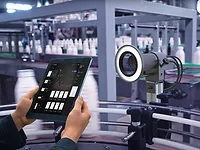
With Lean day-to-day management, employees are empowered as they play an active role in detecting and resolving problems.

Image Source: Morsa Images / E+ / Getty Images
Many companies that experience great success with Lean hold kaizen workshops to rapidly implement Lean tools. It’s no secret, however, that many of these companies find that the improved system quickly reverts back to its non-Lean state. The problem is that Lean is a people-dependent system. All the Lean tools, such as posting standard work, require people to use them daily and if they do not understand them, or care about them, the tools will quickly decay. We need to develop people so that they want to use the tools for daily improvement. There is no single tool that develops people, but there is a methodology that can aid in their development often referred to as Lean Daily Management.
Lean Daily Management is a systematic strategy for building Lean habits and managing continuous improvement and daily operations in the workplace. It involves multiple aspects, such as Leader Standard Work and Lean management routines, visual management boards, daily accountability, and problem-solving where the work happens (Gemba).
Lean organizations make use of Lean Daily Management systems, a structured process to focus employee’s actions to continuously improve their day-to-day work. Lean Daily Management empowers employees to identify potential process concerns, recommend potential solutions, and learn by implementing process changes. Lean Daily Management, if done right, can be a critical tool in any organization’s toolbox to engage frontline staff in problem-solving and to deliver customer value.
Lean Daily Management Components
Lean Daily Management includes three components: (1) alignment of goals and effort; (2) visual data management, daily huddles, and problem-solving; and (3) leader standard work.
Alignment of Goals and Efforts
When we launched our Lean Daily Management program, we noticed that frontline staff often were not aware of the goals and targets set by senior leaders. Therefore, we emphasized the cascading nature of system goals and the importance of alignment between system and hospital goals during training.
Our goals fall under the pillars of Safety, Quality, Delivery, Cost, and People/Culture, Each department utilizing Daily Management set its own goals and targets in each of these pillars in alignment with system and facility goals. We found this exercise of aligned goal-setting to be incredibly valuable in that it not only improved awareness of goals among frontline staff, but it also helped them to see how their work contributes to the success of the system.
Visual Data Management, Daily Huddles, and Problem-Solving
Visual data management: Each department utilizes a visual board to display its goals, targets, and performance metrics. The look and feel of the visual board is standard across our system, with each board including the standard pillars mentioned above as well as a designated space for discussion and prioritization of improvement ideas. The visual board in each department is located in an accessible area in the Gemba so that the data and metrics stay in front of everyone.

Daily huddles: Daily huddles take place at the department level and last for about 10 to 15 minutes. Huddles are led by the staff and are attended by all members of the department. Huddles take place directly in front of the visual board so that the metrics that are displayed on the board can be discussed and updated as needed.

Problem-solving: A unique aspect of our problem-solving process is the systematic feedback loop from senior leaders back to the department. We recognize that staff cannot implement all solutions or process improvement ideas alone and that process changes often involve other departments or functions. For this reason, part of the daily huddle is dedicated to problem-solving. This portion of the huddle includes a review of improvement ideas submitted by staff, a progress update on ideas that have been selected for implementation, and feedback received from senior leaders on ideas that have been submitted to senior levels for implementation and/or resourcing. Accountability is achieved through review of progress on implemented ideas with use of a simple WWW (What, Who, and When) form. This process of problem-solving (idea generation), reviewing progress, and providing feedback is key to sustaining team engagement.
Leader Standard Work
The third component of our program relates to the role of leadership. For the Lean Daily Management program to be successful, it is critical for leaders at all levels of the organization to be committed to the program and visibly present at huddles. The role of these leaders at huddles is to encourage teamwork and collaboration, help remove barriers, mentor and coach frontline staff (who often do not have enough exposure to the big picture), and foster systems thinking (that is, an understanding of the interactions between the work and processes from one team to another).
Lean Daily Management is a powerful and peerless method for engagement. The technical approach is simple enough to understand. But it is not a “plug and play” technique. To make it work requires a level of leadership understanding and commitment that is often missing. If you approach daily management as a stand-alone installation for the workers, it will fail. Daily Management, if done right, can be a critical tool in any organization’s toolbox to engage frontline staff in problem-solving and in bringing value for customers, employees, and the organization.
Tips for Conducting Effective Lean Daily Management
Here are my tips for running an effective Lean Daily Management meeting.
Segregate Meetings with Management Levels (Tier 1, Tier 2, Tier 3)
It is important to segregate meetings with management levels (tier 1, tier 2, tier 3) because it allows for more focused and efficient communication within each level. Each level of management has different responsibilities, expertise, and decision-making authority, and holding separate meetings allows each level to discuss issues and make decisions that are most relevant to their respective roles.
Tier 1 meetings typically involve front-line supervisors and focus on day-to-day operations and problem-solving. Tier 2 meetings involve middle managers and focus on longer-term planning and strategy. Tier 3 meetings involve senior executives and focus on high-level strategic planning and decision-making.

Meet In Person Near the Gemba
These meetings should be conducted on the shop floor in a safe area where communication is easily heard. While there are many digital solutions these days I prefer the manual versions.
Set a Time Limit
Time is of the essence in a factory, and employees often have limited time to spend in meetings. Therefore, it’s essential to keep these meetings short and focused. Aim for a maximum of 15 to 30 minutes and prioritize the most critical issues that need to be discussed.
Start with Positive News
Starting the meeting on a positive note can set the tone for the rest of the meeting. Begin by sharing any good news, such as meeting production targets, or recognizing team members for their hard work.
Safety is Next Concern
Safety is a top priority in any factory, and daily huddles provide an opportunity to discuss any safety concerns or near-misses that have occurred. Discussing safety measures can help prevent future incidents and ensure the safety of all employees.
Don’t Solve Problems in Real Time
An effective daily huddle makes it so someone can acknowledge that they can help a fellow team member without turning it into a troubleshooting session.
Capture Action Items
When action items are assigned, they should be owned by the person responsible for them. This should include specific tasks that need to be completed before the next meeting or when it will be completed.

Sustaining Success with Daily Management
Lean Daily Management offers the leadership structure to build sustainable Lean enterprises by bridging top-down goals with frontline execution through effective daily activity and continuous improvement systems.
Thanks to structured processes such as visual and tiered management, Lean Daily Management ensures that the company’s strategic objectives are translated into concrete daily actions. Every operational decision supports the company’s overall priorities.
With Lean day-to-day management, employees are empowered as they play an active role in detecting and resolving problems. This direct involvement increases motivation and the sense of contribution to the company’s success, with employees who want to stay with the company and perform better.
Adopting Lean Daily Management means committing to a rigorous process that structures each day around clear objectives and meticulous execution. This methodology does more than simply improve short-term performance indicators; it makes Kaizen part of the organization’s DNA, making every team member a key player in its success.
Looking for a reprint of this article?
From high-res PDFs to custom plaques, order your copy today!