Management
Obeya: Introducing The Lean War Room
Creating an Obeya room is akin to creating a command center that draws together leaders from across departments.

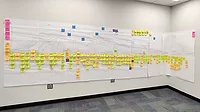
Figure 1: Obeya room is visual management and structured meeting cadence. All Images Source: Tim McMahon
Projects are important for generating growth for organizations. Projects enable organizations to achieve various business objectives, such as increasing efficiency, reducing costs, improving quality, enhancing customer satisfaction, or developing new products or services, improving existing ones, or expanding into new markets. By undertaking well-planned and executed projects, organizations can leverage their resources and capabilities to create value for their customers and stakeholders, which can translate into increased revenue and profitability.
Furthermore, projects can also help organizations adapt to changing market conditions and customer needs. By undertaking strategic projects, organizations can stay ahead of their competition, innovate, and explore new opportunities for growth and expansion.
Why Obeya?
Successful projects don’t just happen; they require hard work and collaboration from both project managers and team members to ensure all tasks are completed and goals are met, on time and on budget. However, many projects ultimately fail or are abandoned because the team does not work together to achieve shared goals. Much like how two people in a canoe won’t get anywhere if they’re rowing in opposite directions, projects will be doomed to fail if all members are not working towards the same end product.
To avoid this unfortunate fate, project managers can find help with visual management and the Obeya room. Visual management is a Lean best practice used to inform and involve anyone in the process (even those who are unfamiliar with the details), and quickly allow them to see what is going on so that everyone ultimately understands what is under control and what is not. Obeya is a form of visual management. When combined with a cadenced meeting structure it becomes a powerful management system.
What is an Obeya?
Toyota first created Obeya rooms during production of the Prius in the 1990s. Since then, organizations across many industries have put the concept into action. Obeya, which means “large room” in Japanese, involves bringing together departmental leaders to focus on big picture issues involved with a single project or initiative.
Creating an Obeya room is akin to creating a “war room,” a command center that draws together leaders from across departments in an organization. While most often associated with product development, Obeya also is useful as the command center for managing a new business strategy, software development, project management and workflow management. Obeya helps you to generate ideas, collaborate with management and stakeholders, and gain a full overview of the projects and any problems that need to be resolved.
Understanding Obeya Room
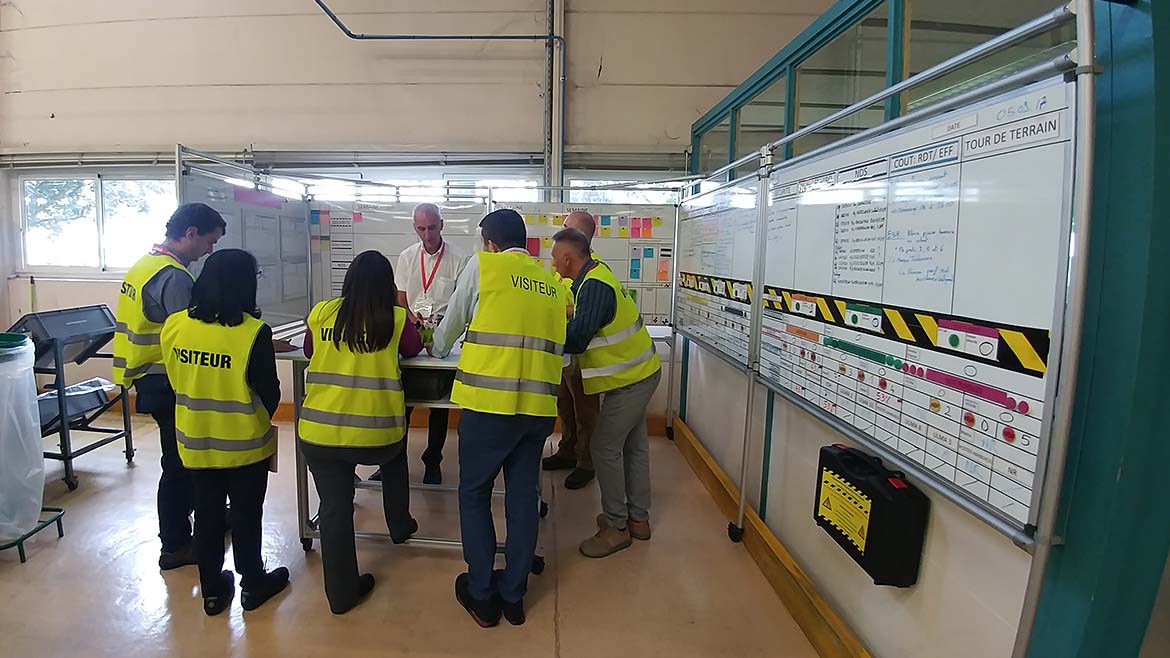
An Obeya is not a process island. Simply putting all of your engineers in a single, big room does not an Obeya make. By the same token, a glass-walled room studded with monitors displaying and rotating real-time data every 30 seconds also doesn’t qualify as an Obeya if it isn’t used routinely to collaborate and manage the business. While the room may be visually eye-catching, that may be all it is.
The idea behind an Obeya is to break down the barriers that prevent employees from collaborating and sharing information to make efficient decisions. Obeyas are most effective when established and outfitted to solve singular problems or work on specific projects.
Obeya rooms are a process management tool that fuels creativity and collaboration between decision-makers on all levels while developing problem-solving skills. An Obeya promotes quicker, nimbler problem-solving by speeding up the Plan-Do-Check-Act (PDCA) process.
Here’s a breakdown of the PDCA cycle:
- Plan: Define a problem and develop potential solutions.
- Do: Implement a proposed solution.
- Check: Evaluate the results to see whether a solution is working.
- Act: Take one of two actions: return to the planning step if the results aren’t satisfactory or standardize the solution if the results are sufficient.
Rather than communicating across departments over the course of days or weeks, an Obeya brings together key decision-makers to implement the PDCA cycle and develop solutions quickly.
How to Use an Obeya Room Efficiently?
One of the most essential components of a successful Obeya room is choosing what will be visually represented in the room. Obeya rooms rely on visual management to spur collaboration, and it is important that only relevant and important information is posted in order to keep the focus. For instance, posting customer complaints will keep managers focused on meeting customer requirements and their satisfaction. Other information that can be used in an Obeya are A3 reports, KPI’s, and the results of previous projects. The documents posted in an Obeya room should be clear and easy to understand, set up in a logical manner. It should flow from one side to the other and tell a complete story.
Visibility of information, transparency that applies to all relevant information, and visual organization are important quality attributes. When you walk into a well-equipped Obeya with your team, you would like to have easy access to everything you need. Information should be clear so that there are no misunderstandings. Then you are adequately enabled to identify improvements, make decisions and take action.
But this is just the foundational layer. First and foremost, it’s about the people. Nothing happens with all that neatly collected information if there are no people around willing to commit to each other and use the given platform to take action in pursuit of process improvement.
The Obeya connects information to people and therefore people to each other. By applying a repeatable rhythm and fixed structure, people in the Obeya meet other experts in their own field. All that expertise is needed to realize the strategic intention of the organization. Team members evaluate the status of their work and assess whether they are on schedule. Barriers can be discussed. Managers assess where resources can be deployed and see, at a glance, what that could mean for other initiatives.
Accountability is further supported through frequent “daily” reviews, which highlight responsibilities involved in executing project tasks and apply more pressure on the implementation of corrective actions. For those looking to analyze and improve their project processes more, this also can be a great place to begin your daily Gemba walks.
The Benefits of Obeya
Companies using an Obeya may enjoy a number of benefits. Those include:
- Efficiency: A project’s leadership team can save time by bringing helpful visuals, necessary information, and vital resources together in one place
- Focus: Having key team members in the same room for collaboration and discussion means that project leaders can focus on the right issues
- Collaboration: An Obeya fosters an environment in which employees can work together across disciplines and in real-time, rather than via email or in rushed meetings
Virtual Obeya Rooms
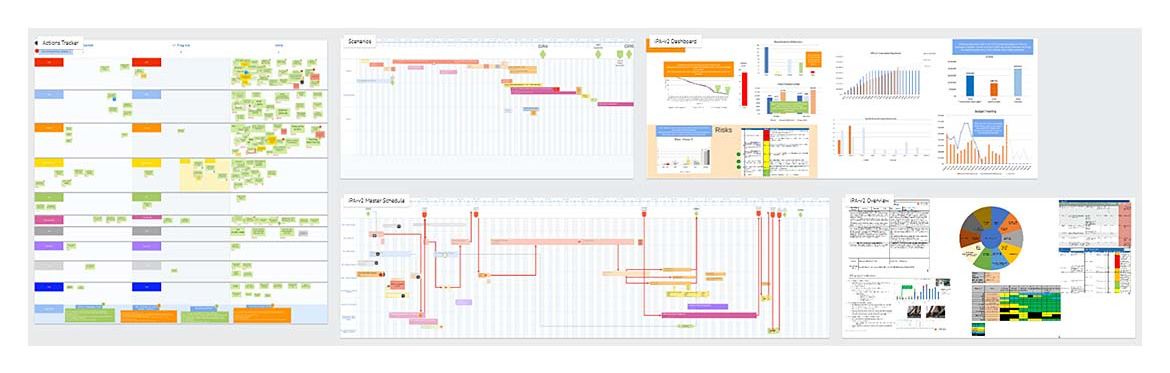
In addition to physical Obeya rooms, organizations can leverage virtual workspace solutions to facilitate collaboration and decision-making. Virtual Obeyas provide a shared platform for teams to communicate, brainstorm ideas, and access real-time information. These digital workspaces are accessible from any location, eliminating geographical barriers and enabling globally distributed teams to collaborate seamlessly.
Conclusion
For project managers struggling to establish teamwork, visibility and accountability on their projects, Obeya may be the solution. With the ultimate goal of breaking down walls between team members and getting everyone working on the same page together, Obeya rooms provide big gains in both collaboration and problem solving, two features that are essential in project management.
Looking for a reprint of this article?
From high-res PDFs to custom plaques, order your copy today!