Quality Magazine logo
search
cart
facebook twitter linkedin youtube
  • Sign In
  • Create Account
  • Sign Out
  • My Account
Quality Magazine logo
  • NEWS
  • PRODUCTS
    • FEATURED PRODUCTS
    • SUBMIT YOUR PRODUCT
  • CHANNELS
    • AUTOMATION
    • MANAGEMENT
    • MEASUREMENT
    • NDT
    • QUALITY 101
    • SOFTWARE
    • TEST & INSPECTION
    • VISION & SENSORS
  • MARKETS
    • AEROSPACE
    • AUTOMOTIVE
    • ENERGY
    • GREEN MANUFACTURING
    • MEDICAL
  • MEDIA
    • A WORD ON QUALITY PUZZLE
    • EBOOK
    • PODCASTS
    • VIDEOS
    • WEBINARS
  • EVENTS
    • EVENT CALENDAR
    • IMTS
  • DIRECTORIES
    • BUYERS GUIDE >
      • Supplier Insights
    • NDT SOURCEBOOK
    • VISION & SENSORS
    • TAKE A TOUR
  • INFOCENTERS
    • Digital Quality Management Systems
    • NEXT GENERATION SPC & QUALITY ANALYTICS
  • AWARDS
    • ROOKIE OF THE YEAR
    • PLANT OF THE YEAR
    • PROFESSIONAL OF THE YEAR
  • MORE
    • Expert Columns
    • NEWSLETTERS
    • QUALITY STORE
    • INDUSTRY LINKS
    • SPONSOR INSIGHTS
  • EMAG
    • eMAGAZINE
    • ARCHIVES
    • CONTACT
    • ADVERTISE
  • SIGN UP!

Customizing Optical Metrology Systems

By Ken Parlee
July 31, 2008
Special optical systems such as this one can be engineered to create multiple views of a part. Source: Starrett Kinemetric Engineering Division


Most manufacturers feel increasing pressure to introduce enhanced new products with ever-narrower time-to-market windows. A demanding marketplace is driving new measuring technology solutions to meet product engineering and production challenges.

Custom optical metrology systems have become a popular solution for demanding measurement and inspection requirements. Large and small manufacturers have experienced fast returns on the investment in time and capital necessary to find a supplier, determine an effective design and implement an optical measuring system that has been engineered and built for their specific requirements. Diligent management throughout the project, from conception to implementation, will reduce risks and ultimately provide satisfactory results.

A custom optical inspection machine can be defined as a system that has been designed and built to perform a specific measuring task for which it has been determined there is not a suitable standard product available. The scope of such a project can range from low-cost enhancements to standard optical metrology systems to extensive engineering projects involving custom hardware and software.

Even relatively small projects can seem overwhelming to the prospective operator who thinks that a custom project might be the solution but has not had experience with such a project. However, suppliers of custom metrology systems can work with manufacturers to design and build custom systems. To ensure a successful result, suppliers recommend that manufacturers use a phased approach to every project with careful implementation of each phase.

Phase I: Defining Needs

Manufacturers should start with the appointment of a project leader. This is a person who ideally has project experience, an engineering perspective and a strong knowledge of the processes that will be the focus of the project. A familiarity with optical systems and measurement technology may be an additional requirement depending on the scope of the project.

The project begins with an assessment of the goals that result in creating a foundation for all of the project phases that follow. This is simply an outline of what a potential supplier will need to know. It should include the key system requirements such as throughput, accuracy, repeatability and other considerations including space needed and environmental conditions.

A requirement such as operators with limited computer experience and a maximum of two hours training will be able to successfully use the system is an example of other information that may be a design consideration.

The next step is to research what is available as an off-the-shelf solution. Because this is purely an information collection task, the most efficient method is to research available products from company Web sites. Most list fairly complete specifications online which enable manufacturers to determine if a standard product is a viable option, or at least weed out all but the potential suppliers.

If manufacturers suspect some standard product suppliers might have a product that conforms to their needs, the next step should be a phone interview. In the interview, it should be made clear to the potential supplier that this is the process of determining if a standard or custom product solution is best for the application. Requesting a budgetary price range on any potentially suitable product models is reasonable at this point.

At this stage manufacturers should have enough primary information to determine if a custom solution or standard product is the best option. If it is clearly a custom solution, it is time to move on to Phase II.
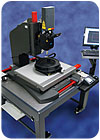
A custom engineered, high magnification, high accuracy, automated system is used in the electronics industry. Source: Starrett Kinemetric Engineering Division

Phase II: Finding a Supplier

Determining a reliable supplier is critical to the success of the project. With the information collected in the needs assessment phase, manufacturers will have an informed position on the scope of the project. This helps establish a fit between requirements and a custom optical metrology systems supplier.

When selecting potential suppliers, examine knowledge, experience and reputation. During the assessment process, customers will have additional criteria specific to their application which should be weighted for importance. An objective supplier evaluation can become complex and time consuming, however the effort is warranted. Making a good supplier choice is the single most important decision in the entire project.

At this point a preferred supplier may be obvious; in any case, the field should be narrowed to no more than two or three candidates. In the final selection process, manufacturers should meet with each potential supplier to:

  • Discuss and brainstorm design options

  • Establish preliminary design

  • Determine budgetary price range

  • Establish soft assessment elements of supplier such as professionalism and credibility. Is this a company that is comfortable to work with?

    The last item in the list above should be weighted heavily during final assessment. It might be helpful for manufacturers to develop a list of questions that would serve as a reference point for each interview. These are questions used to evaluate how the potential supplier responded to key matters such as:

  • Does the supplier seem to present their engineering and technology capability honestly and completely?

  • Is there a tendency for suppliers to oversell their capability in any aspect of the potential project? Is there confidence that what is being proposed can be accomplished by this supplier?

  • Has the supplier responded to mitigation of risk considerations? If there are questions in the concepts proposed, has the supplier proposed building a breadboard or proof of concept/functionality model for further evaluation? This may increase the cost of the project but may be critical in determining ultimate success.

  • Has the potential supplier provided all of the objective and subjective information that will allow a confident decision to proceed or not?

  • Does the supplier project leader have extensive and relevant experience in designing and building systems that would fit the application?

    From the potential supplier interviews manufacturers should have an idea of what the system will cost. At this point, a preliminary budget would be useful in starting to address the financial aspects of the project.


  • Phase III: Design and Contract Process

    After a supplier has been selected, the focus becomes system design. This process may involve several meetings with the supplier and is usually an iterative process. The supplier will suggest initial design concepts based on their knowledge and experience. The works accomplished in Phase I will be useful now as the objectives carefully determined in the initial needs assessment become the foundation for the design criteria.

    In this phase, and for the remainder of the project, the key is a functional working relationship between the supplier and customer. Both must hold a clear, well-understood vision as to project objectives and implementation.

    As much as possible, the final quotation document should outline all critical aspects of the project such as:

  • Proof of concept plans. This is a practical way to reduce risk if performance outcomes of some of the components are not completely predictable.

  • Final design drawings

  • Expected performance results

  • Documentation that will be provided such as operations and service manuals

  • Cancellation penalties

  • Material specifications

  • Agreements regarding non- re-occurring engineering

  • Estimated mean time between failure of components, if appropriate

  • Payment schedules

  • Delivery schedule

  • Buy-off plan

  • Installation plan

  • Operation training plan

  • Procedures for final acceptance

  • Service agreements

    The quotation is a critical document and once signed by both parties should leave no doubt as to the outcome of the project. However, it would be impractical to include minute details on every aspect of the project. On most projects it becomes necessary to trust the builder to follow basic conventions considered good practice.
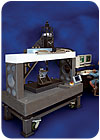

  • Custom optical systems range in size from small benchtop systems to very large floor models such as the multiaxis granite measuring system. Source: Starrett Kinemetric Engineering Division

    Phase IV: Contract Acceptance

    After there is a thorough understanding of the quotation and resultant meeting of the minds, it is time to issue a purchase order and get started. This may take more than one supplier/customer meeting. It is imperative that all issues of contention be completely resolved.

    Given a competent supplier choice and good project management, the purchase of a custom optical metrology system will yield a fast return on investment with minimized risk in the key factors established:

  • Trust. The customer has thoroughly researched the background and competency of the supplier. It is prudent to rely on a supplier’s knowledge and professional guidance in determining and implementing an optimized solution.

  • Communication. There should be full communication on every issue that can potentially affect the outcome of the project.

  • Business professionalism. Consensus on all aspects of design and execution must be established. Any differences of opinion on any issue must be successfully resolved, in writing if necessary.

  • Avoid surprises. This is the responsibility of all parties. If the unexpected occurs, initial diligence in supplier selection will yield additional benefits. Q


  • Tech Tips

  • A custom optical inspection machine is a system that has been designed and built to perform a specific measuring task for which there is not a suitable standard product available.

  • In planning, include key system requirements such as throughput, accuracy, repeatability and other considerations including space needed and environmental conditions.

  • When selecting potential suppliers, examine knowledge, experience and reputation.


  • Quality Online

    For more information on optical measurement, visit www.qualitymag.com to read these articles:
    • “Be Precise with Optical Measurement”
    • “Defining Optical Measurement”
    • “Sorting Through Optical Options”

    Share This Story

    Looking for a reprint of this article?
    From high-res PDFs to custom plaques, order your copy today!

    Ken Parlee is regional sales manager for the Starrett Kinemetric Engineering Division (Laguna Hills, CA). For more information, call (949) 348-1213 or visit www.starrett.com.

    Recommended Content

    JOIN TODAY
    to unlock your recommendations.

    Already have an account? Sign In

    • 2024 Quality Rookie of the Year Justin Wise 1440x750px banner with "Quality Rookie of the Year" logo inset

      Meet the 2024 Quality Rookie of the Year: Justin Wise

      Justin Wise is an exceptional individual who has been...
      Aerospace
      By: Michelle Bangert
    • Man with umbrella and coat stands outside while it rains at night looking at a building.

      Nondestructive Testing: Is there an ethics problem?

      I was a whistleblower who exposed fraudulent activities...
      NDT
      By: Dale Norwood
    • Unraveling Deflategate: Football stadium with closeup of football on field

      Unraveling the Tom Brady Deflategate

      The Deflategate scandal erupted following the 2014 AFC...
      Measurement
      By: Greg Cenker and Henry Zumbrun
    Manage My Account
    • eMagazine Subscriptions
    • Newsletters
    • Online Registration
    • Subscription Customer Service
    • Manage My Preferences

    More Videos

    Sponsored Content

    Sponsored Content is a special paid section where industry companies provide high quality, objective, non-commercial content around topics of interest to the Quality audience. All Sponsored Content is supplied by the advertising company and any opinions expressed in this article are those of the author and not necessarily reflect the views of Quality or its parent company, BNP Media. Interested in participating in our Sponsored Content section? Contact your local rep!

    close
    • This image shows a person seated next to a Bobcat T66 compact track loader.
      Sponsored byPolyWorks by InnovMetric

      Supercharging Digital Gauging at Bobcat North America

    • Dorsey Calibration Lab photo by Tom LaBarbera Picture this Studios
      Sponsored byDorsey Metrology International

      Ensuring Product Quality in a Competitive Manufacturing Landscape

    • This image displays a Eddyfi Technologies Cypher portable inspection instrument alongside a scanner for non-destructive testing (NDT).
      Sponsored byEddyfi Technologies

      A Safer, Smarter Approach to Weld Inspection: Why Advanced Ultrasonic Testing Is Redefining Industry Standards

    Popular Stories

    a titanium diaphragm speaker driver

    The One Thing Elon Gets Right Is Designed to Scare You

    This image shows a person seated next to a Bobcat T66 compact track loader.

    Supercharging Digital Gauging at Bobcat North America

    Dorsey Calibration Lab photo by Tom LaBarbera Picture this Studios

    Ensuring Product Quality in a Competitive Manufacturing Landscape

    2026 Quality Professional of the Year!

    Events

    June 9, 2026

    Future-Proof your Quality Processes with Advanced 3D Optical CMM Technology

    Discover how to effortlessly capture complex data, leverage true multi-sensor automation, and ensure continuous operation without creating inspection delays.

    June 22, 2026

    Automate 2026

    Automate is North America's largest robotics and automation event — and the best place to take your ideas from insight to impact.
     
    Our show floor features the world’s leading automation solutions, from AI and robotics to motion control, vision systems, and more. Plus, our educational conference is second to none, led by the brightest minds in automation today.
     
    Ready to transform the way you work? Take the next step at Automate.
    View All Submit An Event

    Products

    Lean Manufacturing and Service Fundamentals, Applications, and Case Studies

    Lean Manufacturing and Service Fundamentals, Applications, and Case Studies

    See More Products
    Quality Podcast Channel Custom Content

    Related Articles

    • Mahr Inc. to Feature Complete Line of New MarSurf Surface Finish and Contour Measurement Systems, MarSurf CM Optical 3D Surface Metrology Systems, and Integrated Wireless Product Family at The Quality Show 2019

      See More
    • Zygo Receives System Orders for Metrology Systems

      See More
    • Multisensor Metrology Systems Quest 650

      Multisensor Metrology Systems: Quality’s Swiss Army Knife

      See More

    Related Products

    See More Products
    • Kanban Systems DVD

    • Measurement and Gaging DVD

    See More Products

    Events

    View AllSubmit An Event
    • August 12, 2025

      Enhancing Shop Floor Metrology: The Case for 3D Optical Gauges in Quality Management

      On Demand This webinar will discuss how 3D optical gauges can help you qualify and quantify your inspection callouts, defects, geometries of interest, and surface finish in seconds – right on the shop floor.
    View AllSubmit An Event

    Related Directories

    • Optical Metrology Solutions LLC

      Optical Metrology Solutions is a consulting company specializing in helping companies use optical metrology tools such as machine vision, laser gages and 3D vision to address manufacturing needs. With over 80 years of combined experience working in manufacturing, 200 papers, 88 US patents and a deep understanding of optical technology, Optical Metrology Solutions can help your company find the right solution.
    • Spectrum Metrology

      Spectrum Metrology is the approved technical/applications support and service center for the world-renowned Taylor Hobson range of electro-optical metrology products, including autocollimators, Micro Alignment Telescopes, Clinometers and precision electronic levels. Taylor Hobson is an Ametek ultra-precision technology company operating at the highest levels of accuracy within the field of surface and form metrology and alignment.
    ×

    Stay in the know with Quality’s comprehensive coverage of
    the manufacturing and metrology industries.

    Newsletters | Website | eMagazine

    JOIN TODAY!
    • RESOURCES
      • Advertise
      • Contact Us
      • Directories
      • Manufacturing Division
      • Store
      • Want More
    • SIGN UP TODAY
      • Create Account
      • eMagazine
      • Newsletters
      • Customer Service
      • Manage Preferences
    • SERVICES
      • Marketing Services
      • Market Research
      • Reprints
      • List Rental
      • Survey/Respondent Access
    • STAY CONNECTED
      • LinkedIn
      • Facebook
      • YouTube
      • X (Twitter)
    • PRIVACY
      • PRIVACY POLICY
      • TERMS & CONDITIONS
      • DO NOT SELL MY PERSONAL INFORMATION
      • PRIVACY REQUEST
      • ACCESSIBILITY

    Copyright ©2026. All Rights Reserved BNP Media, Inc. and BNP Media II, LLC.

    Design, CMS, Hosting & Web Development :: ePublishing