Quality Magazine logo
search
cart
facebook twitter linkedin youtube
  • Sign In
  • Create Account
  • Sign Out
  • My Account
Quality Magazine logo
  • NEWS
  • PRODUCTS
    • FEATURED PRODUCTS
    • SUBMIT YOUR PRODUCT
  • CHANNELS
    • AUTOMATION
    • MANAGEMENT
    • MEASUREMENT
    • NDT
    • QUALITY 101
    • SOFTWARE
    • TEST & INSPECTION
    • VISION & SENSORS
  • MARKETS
    • AEROSPACE
    • AUTOMOTIVE
    • ENERGY
    • GREEN MANUFACTURING
    • MEDICAL
  • MEDIA
    • A WORD ON QUALITY PUZZLE
    • EBOOKS
    • PODCASTS
    • VIDEOS
    • WEBINARS
  • EVENTS
    • EVENT CALENDAR
    • IMTS
  • DIRECTORIES
    • BUYERS GUIDE >
      • Supplier Insights
    • NDT SOURCEBOOK
    • VISION & SENSORS
    • TAKE A TOUR
  • INFOCENTERS
    • Digital Quality Management Systems
    • NEXT GENERATION SPC & QUALITY ANALYTICS
  • AWARDS
    • ROOKIE OF THE YEAR
    • PLANT OF THE YEAR
    • PROFESSIONAL OF THE YEAR
  • MORE
    • Expert Columns
    • NEWSLETTERS
    • QUALITY STORE
    • INDUSTRY LINKS
    • SPONSOR INSIGHTS
  • EMAG
    • eMAGAZINE
    • ARCHIVES
    • CONTACT
    • ADVERTISE
  • SIGN UP!

Quality 101: Digital Calipers Go Beyond Basics

By George Schuetz
June 30, 2010
Measuring OD


Measuring calipers have been around for nearly 150 years. In that time they have evolved into full-featured digital measuring systems. But it is a testament to the simplicity and versatility of the original design that the evolution has been so slow and that so few changes have been required to produce the instruments we are familiar with today.

Here are some of the highpoints of the caliper’s evolution since it was introduced in the 1860s:

  • In 1899 a second pair of jaws was added, allowing inside as well as outside measurement.

  • In 1951 the Vernier scale was recessed for better protection.

  • Around the same time, a dial indicator was added to allow for fast, comparative readings and higher resolution.

  • The 1980s saw the first digital readout, an advance which eventually led to data collection.

  • The early 21st century saw the employment of shop hardened electronics for use in wet environments.

  • And just recently, improved scales incorporate a reference point so that they never lose their position.

    Today you are apt to see digital calipers as the tool of choice for the most common shop, automotive and hobby measuring tasks. But when most people pick up today’s digital caliper, they still see a tool for just measuring outside diameters (OD) and inside diameters (ID). Yet there is a lot of versatility built into this tool. Let’s take a closer look and see what a caliper can do.


  • Measuring ID Source: Mahr Federal Inc.

    Caliper Basics

    All calipers, whether vernier, dial or digital, include the same basic components. They have two jaws. The fixed one is the reference jaw and the sliding one makes the measurements. All calipers incorporate a little “hump” where your thumb goes to help move the measuring scale back and forth. Some incorporate a thumbwheel to help improve repeatability by trying to maintain constant gaging pressure (the wheel disengages when the sliding jaw comes into contact with the part).

    Usually, the sliding scale will have a round or flat rod associated with it. This extends out the back of the caliper and is used for making depth measurements. Electronic calipers usually also have controls to set the zero point, change units and turn the units on/off. There may even be a connector for sending measured values to a data collection device.

    As with any measuring tool, it is important to make sure a caliper is in proper operating condition and ready to do its work. Always check to make sure its calibration is current, the scale moves freely and there are no nicks or burrs on the jaws. Clean the jaws with a soft piece of cloth to remove any dirt. Close the jaws and make sure the instrument reads “0” or set it to zero, using the zero button on a digital caliper or set the dial to zero on a dial caliper.

    Fundamental Measurements

    When using a vernier, dial or digital caliper, the process of making fundamental OD, ID, depth and step measurements seems pretty obvious. But what may not be so obvious is how easy it can be to make them incorrectly. The caliper is a very operator-dependent tool. If the part is not placed in the middle of the jaws, if the caliper is not 90 degrees to the measurement, or if the operator applies too much force to the sliding scale, there is a good chance the measurement will not be very accurate. Here are some tips:
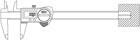
  • When making an outside measurement, place the jaws over the part so that it contacts the fixed jaw in the middle of the anvil.

  • Use the small jaws on the top of the caliper for inside measurements. Bring the sliding scale to “0,” then place the part over the jaws. Slide the jaws open until they make contact with the part and are squarely in place.


  • Measuring Depth Source: Mahr Federal Inc.

  • Depth measurements are made with the blade that extends out the back of the caliper. Place the end of the caliper squarely onto the top of the hole to be measured. Ensure the caliper reads zero, then open the caliper until the depth rod meets the bottom of the hole.


  • Step Measurements Source: Mahr Federal Inc.
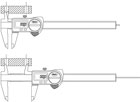
  • Step measurements are an often overlooked way of making depth measurements. Zero the caliper and place the sliding jaw on the upper step of the part. Then open the jaws of the caliper until the reference jaw contacts the lower step.

  • When using a caliper for any measurement, always repeat the process to ensure the measurement is repeatable and reliable.


  • Measuring Center Distance Source: Mahr Federal Inc.

    Compound Measurements

    Digital electronics are great. The advent of the electronic calculator has saved countless hours. The electronics in the digital caliper can do the same by doing some of the math during the measurement process.

  • Center distance. One check that can be made by making two measurements is finding the center distance between two holes having the same diameter.

    The first step involves using the inside jaws to measure the diameter of one of the holes. After having the caliper in position and reading the diameter, use the zero button to set the caliper to zero.

    Then, while still using the inside jaws, measure the distance between the two furthest surfaces of the two holes. The caliper reading is the distance between the outside edges of the two holes, minus the diameter of one hole. Since the diameter is twice the radius, the reading is actually the distance between the centers of the two holes.
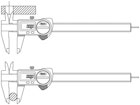


  • Comparing ID and OD Source: Mahr Federal Inc.

  • Comparing an ID and an OD for fit. Often one may be faced with boring a cylinder to fit a piston or making a shaft to fit a hole. The digital indicator can be used to calculate the fit so one can machine the part to the correct size. Let’s start with a hole and match a shaft for it.

    First, use the inside jaw set to find the diameter of the hole. While the caliper is in place, reset the zero.

    Now measure the shaft OD using the outside jaws. The caliper will show the difference between the shaft and the hole. A plus dimension will mean the shaft is oversize while a minus dimension will mean the shaft is smaller than the hole. The positive reading can be used to make the shaft to the proper size fit to the hole.
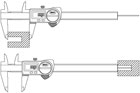


  • Measuring Thickness Left Source: Mahr Federal Inc.

  • How much thickness is left. When creating a blind hole in a part, it may be important to know how much material remains between the bottom of the hole and the other end of the workpiece. A digital caliper can help with this.

    First use the outside jaw set to measure the total width of the part. Again, while the caliper is in place, use the zero button on the digital caliper to set the tool to zero.

    Then use the depth rod/blade to measure the depth of the hole. The caliper reading is the remaining thickness left in the part. Using this process, the reading will be a negative number-but it represents how much material is left.

  • Share This Story

    Looking for a reprint of this article?
    From high-res PDFs to custom plaques, order your copy today!

    George schuetz

    George Schuetz has been employed with Mahr Inc. for over 40 years in the metrology business.  During that time, he has worked in the applications areas for Precision Gages, Special Gage Designs, Surface and Form Gaging working to solve customer's specific gaging problems.

    Over the years, he has contributed articles to magazines including Quality in Manufacturing, Quality Digest, Quality Magazine, and is a monthly contributor to Modern Machine Shop. He has also written a book entitled Quality Gaging Tips, a compilation of modern machine shop tips.

    Presently George is responsible for Precision Gage Product management at Mahr Inc. For more information, call (401) 784-3392, email [email protected] or [email protected] and visit www.mahr.com.

    Recommended Content

    JOIN TODAY
    to unlock your recommendations.

    Already have an account? Sign In

    • 2024 Quality Rookie of the Year Justin Wise 1440x750px banner with "Quality Rookie of the Year" logo inset

      Meet the 2024 Quality Rookie of the Year: Justin Wise

      Justin Wise is an exceptional individual who has been...
      Aerospace
      By: Michelle Bangert
    • Man with umbrella and coat stands outside while it rains at night looking at a building.

      Nondestructive Testing: Is there an ethics problem?

      I was a whistleblower who exposed fraudulent activities...
      NDT
      By: Dale Norwood
    • Unraveling Deflategate: Football stadium with closeup of football on field

      Unraveling the Tom Brady Deflategate

      The Deflategate scandal erupted following the 2014 AFC...
      Measurement
      By: Greg Cenker and Henry Zumbrun
    Manage My Account
    • eMagazine Subscriptions
    • Newsletters
    • Online Registration
    • Subscription Customer Service
    • Manage My Preferences

    More Videos

    Sponsored Content

    Sponsored Content is a special paid section where industry companies provide high quality, objective, non-commercial content around topics of interest to the Quality audience. All Sponsored Content is supplied by the advertising company and any opinions expressed in this article are those of the author and not necessarily reflect the views of Quality or its parent company, BNP Media. Interested in participating in our Sponsored Content section? Contact your local rep!

    close
    • Key Takeaways for Quality Leaders
      Sponsored byComplianceQuest

      Key Takeaways for Quality Leaders from the 2026 Gartner Magic Quadrant™ for QMS

    • This image shows a person seated next to a Bobcat T66 compact track loader.
      Sponsored byPolyWorks by InnovMetric

      Supercharging Digital Gauging at Bobcat North America

    • Dorsey Calibration Lab photo by Tom LaBarbera Picture this Studios
      Sponsored byDorsey Metrology International

      Ensuring Product Quality in a Competitive Manufacturing Landscape

    Popular Stories

    iStock-1352825159-jpg.jpg

    U.S. Should Substantially Boost Support for Manufacturing USA Program, Issue National Industrial Manufacturing Strategy, Says New Report

    Dorsey Calibration Lab photo by Tom LaBarbera Picture this Studios

    Ensuring Product Quality in a Competitive Manufacturing Landscape

    Visions Sensors Ebook

    eBook | How AI-driven Vision Systems Are Transforming Automotive Quality Control

    2026 Quality Professional of the Year!

    Events

    June 22, 2026

    Automate 2026

    Automate is North America's largest robotics and automation event — and the best place to take your ideas from insight to impact.
     
    Our show floor features the world’s leading automation solutions, from AI and robotics to motion control, vision systems, and more. Plus, our educational conference is second to none, led by the brightest minds in automation today.
     
    Ready to transform the way you work? Take the next step at Automate.
    July 14, 2026

    Quality Leaders Forum: Better Communication, Better Quality Data

    The Quality Leaders Forum is a quarterly, editor-moderated fireside chat series hosted by Quality Magazine, featuring candid conversations with senior manufacturing and operations executives shaping enterprise-level quality.

    View All Submit An Event

    Products

    Lean Manufacturing and Service Fundamentals, Applications, and Case Studies

    Lean Manufacturing and Service Fundamentals, Applications, and Case Studies

    See More Products
    Quality Podcast Channel Custom Content

    Related Articles

    • air gaging

      Air Gaging Beyond The Basics

      See More
    • 3056-b Crpd

      Mastering with Deviations for Increased Gaging Performance

      See More
    • QM0225-FEAT-MeasureMahr-_p1FT-MarCal--16-EWRi---Machinist-Measr-Part-at-CNC--BI_DSC03834-B.jpg

      Enhancing Manufacturing Efficiency with Integrated Wireless Gages and Quality 4.0 Principles

      See More

    Related Products

    See More Products
    • Juran Institute's Six Sigma Breakthrough and Beyond Quality Performance Breakthrough Methods

    See More Products

    Events

    View AllSubmit An Event
    • July 29, 2025

      Beyond the Checklist: Restoring Integrity in Aerospace Quality Assurance

      On Demand As aerospace systems become increasingly digitized, it’s more important than ever to uphold the proven value of hands-on Quality Assurance (QA) and nondestructive testing (NDT).
    View AllSubmit An Event

    Related Directories

    • 1stVision Inc.

      1stVision is North America’s most experienced and committed distributor of the best machine vision cameras, 3D sensors, lenses, frame grabbers, cables, lighting systems, and software in the imaging industry. We’re the stocking distributor you can rely on when your needs go beyond the shipment of parts.
    • Digital Surf

      Digital Surf has been developing surface imaging & metrology software for profilers and microscopes for over 35 years. Mountains® software helps the industrial and scientific community visualize, analyze and report on data obtained with a wide range of instruments. Integrated by leading instrument manufacturers worldwide, embedded in their equipment or available as an option, Mountains® software has become the reference software for studying micro and nano surfaces.
    ×

    Stay in the know with Quality’s comprehensive coverage of
    the manufacturing and metrology industries.

    Newsletters | Website | eMagazine

    JOIN TODAY!
    • RESOURCES
      • Advertise
      • Contact Us
      • Directories
      • Manufacturing Division
      • Store
      • Want More
    • SIGN UP TODAY
      • Create Account
      • eMagazine
      • Newsletters
      • Customer Service
      • Manage Preferences
    • SERVICES
      • Marketing Services
      • Market Research
      • Reprints
      • List Rental
      • Survey/Respondent Access
    • STAY CONNECTED
      • LinkedIn
      • Facebook
      • YouTube
      • X (Twitter)
    • PRIVACY
      • PRIVACY POLICY
      • TERMS & CONDITIONS
      • DO NOT SELL MY PERSONAL INFORMATION
      • PRIVACY REQUEST
      • ACCESSIBILITY

    Copyright ©2026. All Rights Reserved BNP Media, Inc. and BNP Media II, LLC.

    Design, CMS, Hosting & Web Development :: ePublishing